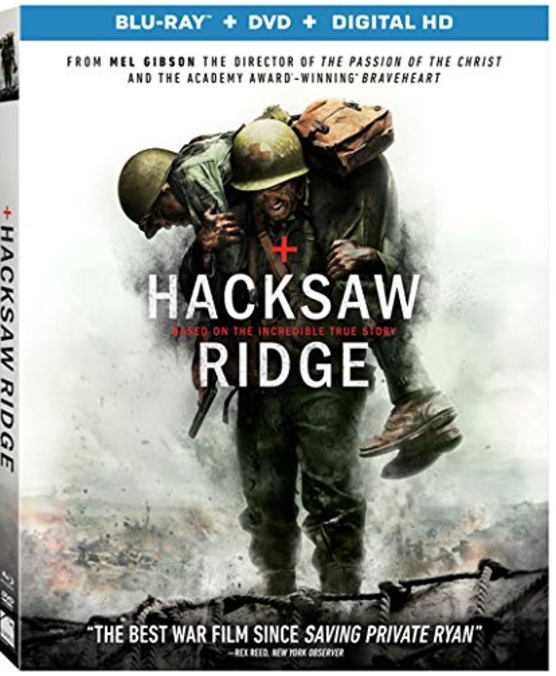
I have a copy of the Oscar-nominated “Hacksaw Ridge” to give away! Andrew Garfield plays Desmond Doss, a conscientious objector who served in WWII as a medic and personally saved more than 70 soldiers in one of the bloodiest battles of the war.
To enter, send me an email at moviemom@moviemom.com with Hacksaw Ridge in the subject line and tell me your favorite branch of the military. Don’t forget your address! (US addresses only). I’ll pick a winner at random on March 3, 2017.
WIN FREE TICKETS to see “The Shack” — Based on the Faith-Based Best-Seller
Posted on February 23, 2017 at 10:44 pm
If you are in the Washington DC area, you can win two free tickets to see “The Shack” at a special premiere on March 2, 2017. The movie is based on the best-seller about a grieving father who receives a mysterious invitation to explore the timeless question “Where is God in a world so filled with unspeakable pain?” The film stars Sam Worthington and Octavia Spencer.
The Premiere Night showing includes a Special Celebration after the film, Featuring exclusive cast interviews, behind the scenes footage, and a special musical performance by Dan & Shay (who are also hosting).
To win tickets, send me an email at moviemom@moviemom.com with “Shack” in the subject line. Four winners will each get two tickets to attend the screening. Good luck!
Action-style cartoon peril, chases, predators, no one hurt
Diversity Issues:
A metaphorical theme of the movie
Date Released to Theaters:
February 24, 2017
Copyright Lionsgate 2016
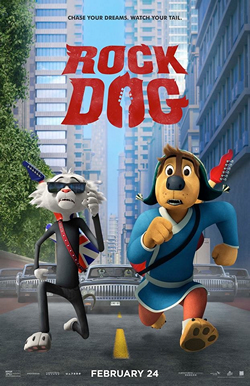
The second movie in three months featuring cartoon animals singing pop songs is “Rock Dog,” based on a Chinese graphic novel.
Luke Wilson provides the voice for Bodi, a sheepdog in Tibet, raised by his martinet father Khampa (J.K. Simmons). Bodi is never able to muster the “Kung Fu Panda” style mystic power his father tries to teach him as a part of the elaborate defense system he has put in place to protect the sheep from the Mafia-type wolves (led by Lewis Black as Linnux). At one time the community had two passions, making music and making wool. But after an attack by wolves, the instruments have all been locked away so that there will be no distractions from civil defense.
When a radio literally drops from the sky (an airplane loses some of its cargo), Bodi realizes his true purpose. He is not a watchdog — he is a musician.
Inspired by the music of rock star Angus Scattergood (Eddie Izzard), he decides to leave the mountain to follow in his footsteps: he will find a band in the legendary Rock ‘n’ Roll Park and play music no matter who tries to stop him. “Play your guts out and never stop, even when your dad tells you to stop, don’t stop.” He realizes that this is “the answer to my life,” and soon he is making music for delighted new fans.
Khampa reluctantly agrees to let Bodi go, but makes him promise he will return if he does not succeed. In the big city, he finds the Rock ‘n’ Roll Park, where he encounters a bully (Matt Dillon) who sends him to Scattergood’s booby-trapped fortress of a house as a prank.
Scattergood is desperately trying to come up with the new song his record label is demanding, but he is so isolated that he has run out of ideas, like Dana Carvey playing “Choppin’ Broccoli.”
There are some charming details (the sheep’s pub is called the Warp and Weft and serves shots of wheatgrass), and its international production team is reflected in its settings, like the Japan-inspired Rock ‘n’ Roll park, where Bodi and the bully have a shred-off. Bodi is a likeable hero and it is fun to see his cheery optimism paired with the burned-out, cynical Angus. Like the music they create, it is pleasantly entertaining.
Parents should know that this movie has cartoon action-style peril and violence, including predators, chases, fire, and some pratfalls, although no one is hurt. There is also some schoolyard language.
Family discussion: Why was it so hard for Angus to write a song? Why did he think he did not want to see anyone? How did Bodi know that music was his destiny?
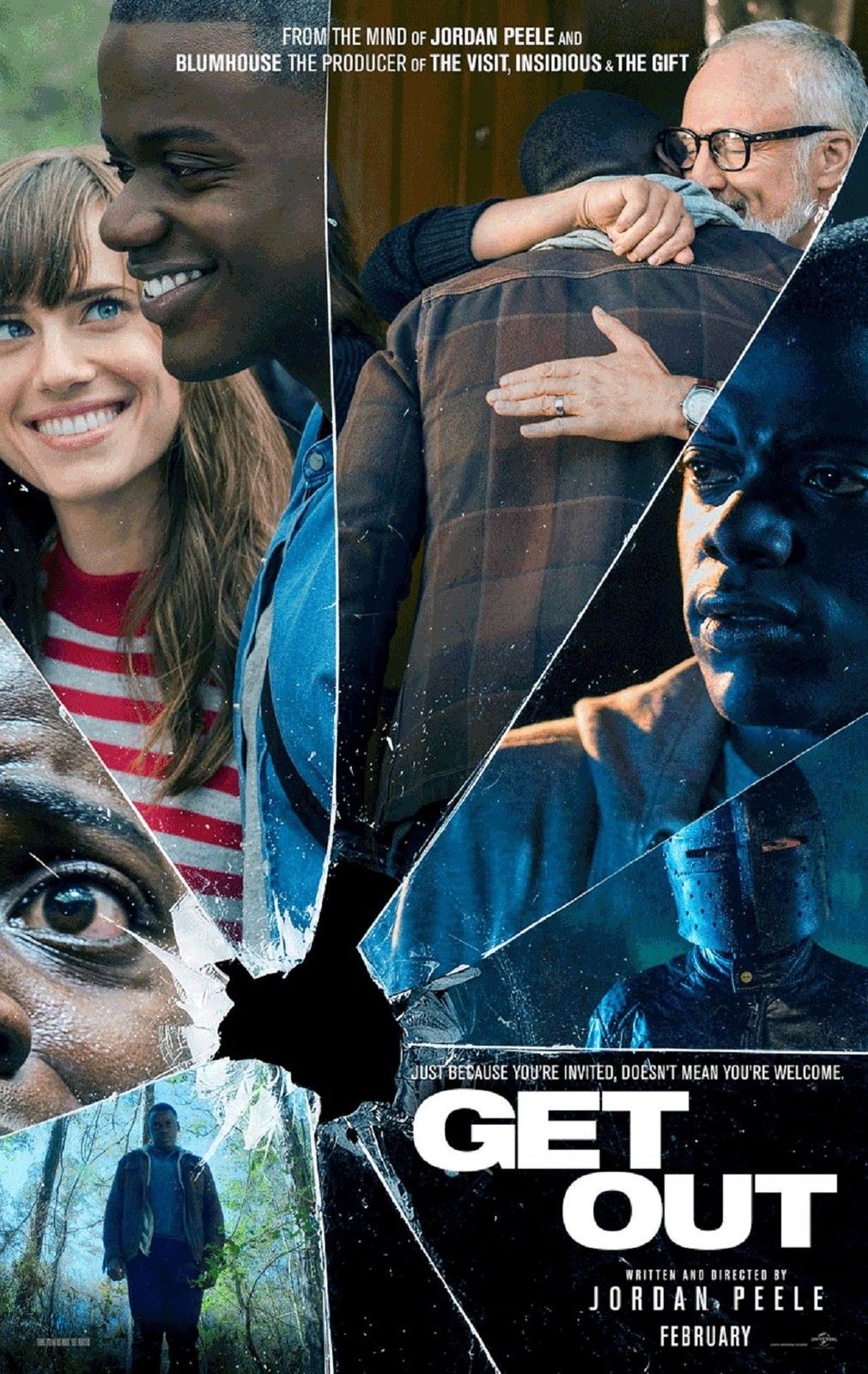
Two caveats before I begin the review: First, I am not very knowledgeable about horror films and therefore do not have the context I normally bring to evaluating a film. Second and more important, this movie has complex themes about race and privilege that I do not pretend to have authority to speak to. I strongly recommend that people who are interested in understanding this film read the perspectives of critics who are African-American or people of color, and I will post links to some of the ones I especially admire at the end of this review. With those limitations in mind, here are my thoughts on “Get Out,” in my opinion a superb film on many levels.
Writer/director Jordan Peele, like his “Key and Peele” partner Keegan-Michael Key, is biracial, which gives them both a lifelong experience with being both part of and observer of black and white culture and a lifelong fascination with code-switching, as we saw in their film “Keanu,” written by Peele. Moving from comedy to horror, Peele continues to explore the themes, giving depth and emotional power to a genre film. Unlike Quentin Tarantino, who carelessly purloins historic settings as a shortcut to the audience’s emotional investment so he can get right to the gore, Peele cannily plays the conventions of the genre and the discomfort and hostility about race off of each other.
It is one of the most terrifying prospects of ordinary life: meeting the family of the significant other. This familiarly excruciating prospect can be played for comedy (“Meet the Parents”) or drama (“Guess Who’s Coming to Dinner?”), but horror is perhaps its best fit, with room for some comedy and drama as well. The fact that Rose (“Girls” star Allison Williams) has not told her parents that her boyfriend of five months, Chris (Daniel Kaluuya), is black, adds another layer of tension. She assures him it does not matter. “They would have voted for Obama for a third time if they could!”
Kaluuya gives a star-making performance with help from cinematographer Toby Oliver, who makes this that rarest of movies, one that knows how to light African-Americans, especially those with darker skin, so that we can really see what they bring to the role. Watch his face in the early scenes as Chris navigates the fatuous pleasantries of Rose’s parents (Bradley Whitford and Catherine Keener, both excellent), and then the bro-ish thuggery of Rose’s brother, and then the condescending appraisals of the friends who all seem like they are on their way to the yacht club. We see him calibrate each of these interactions, trying to be a good sport, trying to go along, trying to make his girlfriend’s family feel comfortable with him, but starting to lose his patience. One of the film’s many shrewd understandings is the way that a lifetime of having to reassure white people that he is not going to hurt them or make them uncomfortable makes him slow to pick up on or slow to doubt himself about the creepiness of Rose’s family. An early scene, where Chris and Rose get questioned by a highway patrolman after hitting a deer is subtle but sharply drawn. And before you can say “foreshadowing,” Chris is getting a tour of the house and Rose’s dad is explaining that the basement had to be sealed off because of black mold. Hmm. And did I mention the prologue when a black guy walking down a peaceful suburban street is followed and then captured? And that the only person of color beside Chris at the party (the always-great LaKeith Stanfield) is strangely subdued and doesn’t know about fist bumps?
It would be a disservice to say any more about the plot. I won’t spoil the twists. I’ll just say that Peele knows what scares us and how to scare us and make us enjoy it, and gives us a lot to think about about some comedy as well. And that it may be that the scariest thing about the movie is the reminder that it has taken far too long to shine the correct light — literally and figuratively — on stories that should be told because they are just that good.
Parents should know that this is a horror film with theme of racism and exploitation, extended peril and violence including gun, choking, and bloody, graphic, and explicit medical images and sounds, characters injured and killed, suicide, references to sad loss of a parent, some strong language including racist epithets, sexual references and a non-explicit situation, and smoking.
Family discussion: When does the story turn from insensitive to offensive to sinister? What makes Chris decide that he has to leave?
If you like this, try: “Rosemary’s Baby,” “The Wicker Man” (original version) and “The Stepford Wives”
Rated PG-13 for sequences of fantasy action violence
Profanity:
None
Alcohol/ Drugs:
None
Violence/ Scariness:
Extensive, intense, military and fantasy violence with scary monsters, spears, arrows, explosions, characters injured and killed
Diversity Issues:
Diverse characters but some insensitive portrayals
Date Released to Theaters:
February 17, 2017
Copyright Universal 2017
I get that you need a big Hollywood star to get big Hollywood money. But in “The Great Wall,” that means that Matt Damon has to save the day in ancient China, and having him share the fight with a tough female military leader (Tian Jing) who is Chinese (and very beautiful) does not reduce the quease factor.
Damon plays William, a mercenary who has fought for and against armies of several European nations, now traveling through China in search of the “black powder” they have heard is a new weapon of massive power to destroy. (Gunpowder, the first explosive, was developed by Chinese alchemists in the 9th century.) All of his group are killed except for his closest friend Tovar (Pedro Pascal) in an encounter with a mysterious beast. William kills it and keeps the claw to help find out what it was. When they are captured by an enormous army, it is the claw that keeps them from being killed. The army, a part of the Nameless Order, is stationed by the Great Wall to fight off those creatures, called Tao-Tie. They are dragon-like predators who are learning and evolving, becoming more powerful and working together to develop what can only be called strategy. The Nameless Order has to stop them before they can no longer be contained and take over China, and, after that, the world.
The six people who wrote the film include top-level screenwriters including Edward Zwick and Marshall Herskovitz (“thirtysomething,” “Nashville”), Max Brooks (“World War Z”), and Tony Gilroy (“Michael Clayton”) were not able to add any more depth than a videogame, and Matt Damon’s talent and charisma can only take his one-dimensional character so far, but the real star here is director Yimou Zhang, whose gift for visual imagery is always a pleasure to behold. In the grand tradition of Cecil B. DeMille or Busby Berkeley, his eye for epic scale, pageantry, and battle is superb. Blue-armored female soldiers leap off ledges to fight the Tao-Tie via military-grade bungee cords. Two interlopers are suddenly surrounded by a storm of red arrows, shot to keep them at the center of a perfect circle. A soldier accused of having a bow “not to the level of your skill” demonstrates what it — and he — can do with three arrows shot at once, one to adjust the trajectory of a tossed bowl and other two to pin it to a column. The film has no dialog about trust or what it means to risk your life, whether for money or for your community, no bromantic banter, and no discovery of the surprising secret to defeating the animals that comes close to the power of the endless row of faces, resolute, honorable, and determined it to whatever it takes to fight the Tao-Tie.
NOTE: Matt Damon and co-star Andy Lau both played the same character in the American and Chinese versions of the film that in the US was called “The Departed.” The Chinese version was “Infernal Affairs” and both are excellent.
Parents should know that this film includes extended military vs. monsters violence with many characters wounded and killed and disturbing images, arrows, spears, and explosions. While it features strong, brave female soldiers and officers and tries to balance the skill and courage of the Chinese and western characters, it is still disturbing to see in 2017 a movie where the indigenous people cannot solve the problem until the European arrives. You may wish to read the director’s statement on this issue.
Family discussion: Were William and Lin Mae alike? How did they earn each other’s trust?
If you like this, try: “House of the Flying Daggers” and “Curse of the Golden Flower”