In honor of this week’s release of the second Hobbit movie, featuring Benedict Cumberbatch as the dragon Smaug, here are some of my other favorite movie dragons.
1. How to Train Your Dragon One of the best animated movies in the last decade is this story of a Viking boy who learns that dragons are not as scary as the people in his village believe. The variety of dragon species is endlessly entertaining in this smart, exciting, and heartwarming film. I’ve seen clips from the upcoming sequel and it looks just as awesome.
2. Pete’s Dragon Disney’s live action/animated musical about a boy and his dragon friend features 60’s pop star Helen Reddy and Jim Dale, best known today as the narrator of the Harry Potter audiobooks.
3. Dragonslayer Peter MacNichol plays a young apprentice to a wizard who is sent to kill the dragon that has been devouring girls from a nearby community. The setting is at the end of the era of fantasy, as Christianity takes hold.
4. The Reluctant Dragon Humorist Robert Benchley visits the Disney animation studios to persuade them to make a cartoon from his story of a dragon who would rather write poetry than fight.
5. Mulan Eddie Murphy provides the voice for a small dragon named Mushu in this classic Disney story based on the legend of a girl who disguised herself as a male soldier to save her people.
6. ShrekIn this delightfully skewed fairy tale, not only is the ogre the hero, but the dragon falls in love.
7. Sleeping Beauty When the evil fairy has to fight the gallant prince, to keep him from waking the princess, she transforms herself into a fire-breathing dragon and they have an epic battle.
8. Spirited Away Hayao Miyazaki’s story about a girl who finds an enchanted land where she meets a dragon and recognizes that he is really a boy who has been transformed.
9. DragonheartSean Connery provides the voice of the last dragon, who must work with a knight (Dennis Quaid) to defeat an evil king.
10.Enchanted Susan Sarandon plays the evil queen who transforms herself into a dragon.
And here’s a list from Leigh Singer. How many can you name?
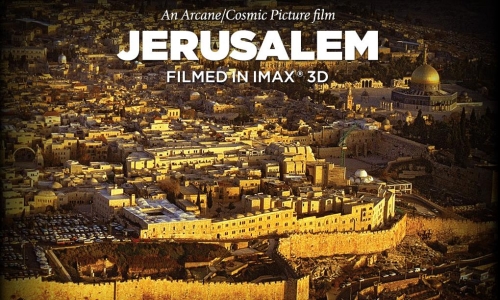
Daniel Ferguson told an audience that making his extraordinary 3D IMAX film about Jerusalem required four years and “thousands of cups of tea.” It took four years. But he was able to persuade Muslims, Christians, and Jews to allow him to film the most sacred places of the city. He attended seders and Shabbat dinners, Easter celebrations, and Iftar dinners. His goal was to challenge assumptions, and “overcome fatigue,” to show “the same spots with different narratives.” While it was daunting to try to fit 5000 years of history into 45 minutes, he knew that “the best IMAX films are poems in honor of their subject.”
He talked to me about making the film, choosing the music, finding the three girls to represent the three religions of Jerusalem, and working with narrator Benedict Cumberbatch.
Let’s start with the music.
Michael Brook is the composer. We did license some music, obviously, but I would say 85 percent of it is Michael’s. And Michael has done all kinds of different films. He had done music for “Into the Wild,” the Sean Penn film and “The Fighter,” “Heat,” “An Inconvenient Truth.” He did the film about Palestinian Statehood, State 194. He did “Perks of Being a Wallflower.” He’s incredible. Michael’s background is he worked with Real World, Peter Gabriel’s label, so he knows all kinds of musicians. We worked with Michael on “Journey to Mecca,” and what’s great about Michael is he didn’t do a sort of typical era pastiche thing. Obviously, we have some sort of typical belly dance tunes or whatever to kind of play to that and make it fun for kids but I think what’s great is that Michael was able to find a musical language that was actually culturally, religiously, and maybe even emotionally somewhat neutral. Because the hard thing about music, frankly the hard thing about the film in general, but the music is the ultimate microcosm for this is Jerusalem is never one thing.
It’s a total leap off a cliff because the music could be too spot-on. I think both Michael and I struggled with the music. He’d send me a cue and I would say, “It’s gorgeous but for another movie.” “It’s too exuberant,” you know? I need something that has a bit more darkness in it, that has something that’s unsettled that sort of searching. How do you compose for that? It’s a totally abstract concept and yet we went back and forth. We tried to have a unified theme as well, sort of a Jewish return theme. The notes were very subtle and in fact, they were largely in the same key and all kinds of layers to work on a sort of subliminal level to convey the synchronicity between traditions.
Your narrator, Benedict Cumberbatch, is excellent. He seems to be everywhere this year.
We had a lot of narrators thrown at us and we needed someone who was sort of neutral in a way. I didn’t really know his work that well. I started to watch “Sherlock,” and I really got into it. He’s young; he’s sort of up-and-coming so he was the first one we reached out to. We thought of a woman’s voice, that was our first choice and, in fact, we had a woman in our initial trailer. But the reality was we had three girls and Dr. Jodi Magness and so everyone said, “You need a male counterweight to this.” We heard Benedict sort of doing books on tape and we thought, “Wow! This guy could do something understated, wouldn’t be bombastic about it, he’s an actor, and he’s a voice actor. Because the images were so big. Benedict was able to play the mystery and be respectful, and it’s like the kind of nuance when we do a line like Prophet Mohammad’s travel on a miraculous journey. I mean you could do that line like he did a reading and said, “No, that sounded far too fairytale. Let me do that again,” and he knew the nuance. He would make little tweaks and changes. He came totally prepared. He had notes all over the script, he’d seen the cut so many times. And he said, “Oh yes, this is where Farah comes in. Let me do this. How about a bridge like this?” It was amazing. He gave me at least four takes for every line. They were all totally different.
It’s a little poignant in the end where the girls say “Maybe someday, we would meet.”
I think it’s very poignant. We filmed alternate endings just because as a filmmaker, you should have everything in your back pocket. We were worried about audiences would be very upset with that as an ending. And I’ll be honest. We actually let the shot play a little longer in the earlier cut and our test audiences absolutely hated it. Do you know what it was? It was the fact that they literally passed each other and the audience said, “Oh my God! You took me through this whole time and you went and punched me in the stomach.” And it wasn’t my intent. It was just that was for me was the reality. It was the tragedy of the city that these girls have similar interests, they look the same. They have the same food. Yeah, that’s the point. And so the casting was somewhat deliberate for that. And yet there is no natural opportunity for them more so between the Arab Christian and the Arab Moslem because similar language and they would live a bit closer to one another but nonetheless, not as much as you would think. I mean there are coexistence programs in Jerusalem that’s fantastic. A lot of them funded from outside.
Have the girls seen the movie?
Only one girl has seen the movie. The Moslem girl, Farah, saw it in Houston. She’s studying in Dallas. She’s studying Genetic Engineering. It’s amazing because I meet her when she was 15. And now she’s just turned 18. And she’s so mature. Anyhow, Farah loved the movie. So I was so nervous. She wrote me to say the ending is perfect because we filmed so many different versions of it like we had a scene where the girls talked and they had a conversation. And it was thrilling, and interesting, and they would say things like “I thought you had to always wear that headscarf?” “No. No. I only wear it when I go to the mall.” “Oh really?” “And I thought you were not allowed to wear jeans. Don’t all Jews have to be in black and white?” “No! Are you kidding?” “Are you Orthodox? What are you?” It was really interesting. “What kind of Christian are you?” “Well, it’s complicated. My father’s Greek Orthodox, my mother’s Catholic.” It was like, “What? How does that..?” So that was like another movie. It could have gone on and on and on.
The problem is it took like two minutes and the whole film is not like a talkie movie so you had to find the same way to do that in a way it was more poetic, more cinematic, and frankly more poignant because the girls were good sports and they did everything that I asked but sometimes they would be uncomfortable.” So I had to find like a neutral place where they can all be there and even then, we started filming early in the morning. So it was really tricky, I think, especially in the old city because I think a lot of Israelis are sort of ambivalent about the old city. They feel like it isn’t the safest place so they have to be careful. They stick within a quarter and I was forcing them. I’ve maintained such a careful line where I have not stepped in the political camp and I don’t feel comfortable to do that. All I hope is that a film like this could just reframe the dialogues so that one could say, “I didn’t know your narrative before.” And that was really it. And that was my way of doing without getting into checkpoints, suicide bombing, and the heaviness of all that which the great films have been made about it but that isn’t the market for this. I firmly believe that.
I’ve been in it but I don’t think I’ve seen it on film before.
No. Western crews’ generally not allowed. I mean look, they would say flat out, “How do we know this isn’t like some propaganda film?” And so we had done a film in Mecca which helped. We were very honest about our mandate, who we were. I was Canadian. I’m not Israeli, I’m not Palestinian. I don’t have any stakes other than my job is to entertain and educate National Geographic brand is tremendously helpful. The IMAX brand is tremendously helpful. We brought key stakeholders to Paris, to London to see other films we’ve done. And I think the museum is a place like Smithsonian that carries so much weight for these kinds of permissions. So people say, “Wow! This is not just a television documentary or one of. Let’s take a chance on this” so people really put their necks out like if this doesn’t work, I’m going to lose my job. There was risk and heaviness. People invite me to their families, their homes. And these countless cups of tea would be over meals and it would just be like there’s no contract. It’s just a handshake. Don’t screw this up.
It was the same way with every community; Ashkenazi, Sephardic, Mizrahi Jewish, Greek Orthodox, Catholic, Protestant, Mormon, I mean Evangelical, Sunni, Even Shia, I mean even if there’s no market, try and weave a line where you get what you’re looking for at a picture, so if you’re Christian, you get to walk in the footsteps of Jesus but then you get to learn something about another community that’s outside your comfort zone.
I think it was very wise to focus on the three girls because they’re young and they’re the future.
And each one of those girls is curious about the other. That was the key for me. Even if they said things about “I grew up… I hate the other” Honestly, there was some of that and I said, “Why?” “I’m not sure. I inherited this.” And they’re willing to have that and that was honest for me. I didn’t get kids who were so politically correct that they were involved in coexistence, whatever the new dramatic tension. Anyhow, that was important for me.
It must have been a challenge to use the IMAX equipment in these locations.
We shot with five different camera systems. The IMAX camera itself and three of the cameras like bigger than a washing machine. It sounds like a machine gun. The film magazines are just three minutes and take ten minutes to load. So if you’re doing the Via Dolores procession which is once a year, sometimes you need three cameras at once. We filmed in Digital 3D, we had lightweight system, we built new rigs to put it on the body and have the person walk with the camera attached to them on steady cam so we could do all the Western Wall stuff and in the streets. So it was a lot of problem-solving. And then there was, “Okay, we got to get underground” so we need a lightweight night kind of low light cameras so that would be another set of test: How little light can we go? Can we go candlelight? A lot of testing, a lot of research and development which is the cool part about making IMAX films which is like taking a camera to space, taking a camera underwater, taking a camera to Jerusalem.
What did you learn from living there that you didn’t learn from all your research trips?
Oh, goodness, just the daily rituals and the idea of the ritual of having the three Sabbaths for example. I love that. I actually really love that because I was always invited somewhere else. Friday, Shabbat dinner was fantastic or meals in the West Bank or in East Jerusalem or something. And always so welcoming, and that’s the thing. Obviously I had the unique vantage point. I’m a filmmaker but I was curious and people had stories to tell.
HBO’s new documentary is “Six by Sondheim,” the story of six songs from the remarkable lyricist of “West Side Story” and “Gypsy” and composer/lyricist of “A Little Night Music,” “Sweeny Todd,” “Company,” “Follies,” “Into the Woods,” and many, many more. It premieres tonight on at 9 Eastern. My friend Odie Henderson writes for Rogerebert.com:
Mixing interview footage with performances of the titular number of songs, “Six by Sondheim” is a love letter to the greatest living American composer, Stephen Sondheim. This is the man who gave Mama Rose her turn, Mrs. Lovett her pie filling, and every Jet on NYC’s West Side a mission statement. If you are familiar with these characters, and love them as I do, “Six by Sondheim” will play like a little slice of HBO broadcasting heaven. If not, this excellent documentary provides all the juicy details you’ll need to become a lifelong fan.
Steven Spielberg’s film about Oskar Schindler and the 1200 Jews he saved from being killed by the Nazis came out twenty years ago, based on the novel by Thomas Keneally (originally titled Schindler’s Ark). Keneally happened on the story when he stopped in a Beverly Hills luggage shop and chatted with the owner, who turned out to be one of the people saved by Schindler. Keneally later wrote Searching for Schindler: A Memoir, about his research, writing the book, and his dream of “an Oscar for Oskar” that came true when the movie was made in 1993.
The anniversary is just one of many good reasons to remember Schindler and ten of the lessons from the film.
1. Even if you cannot stop a great wrong, you can do something that will be very meaningful.
2. Heroes are not always exemplars of integrity and sacrifice. Oskar Schindler worked for the Nazis and was for much of his life an opportunist and self-promoter. Keneally once said that what interested him about Schindler was “the fact that you couldn’t say where opportunism ended and altruism began. And I like the subversive fact that the spirit breatheth where it will. That is, that good will emerged from the most unlikely places.” No one is perfect.
3. And a related lesson — sometimes a person’s faults are assets when it is time to rebel against authority.
4. Schindler was able to save 1200 people by insisting that they were essential employees in his business and contributing to Germany’s wartime efforts. This shows that people in business can — and must — make as much or an even greater contribution to the public good as government and non-profits.
5. The Nazi camp commander played by Ralph Feinnes shows us how a soul is destroyed by evil. The more corrupt he becomes, the more he must wall himself off from any sense of compassion or decency.
6. This movie was made half a century after the events it depicted and nearly 20 years after Schindler’s death. Sometimes it takes a while for us to be able to begin to understand historical events.
7. Some historical events are so enormous and so tragic they can never be fully understood. The best we can do is tell as many different pieces of the story as possible. The story of a small group who were saved must help us better understand the reality of those who did not survive.
8. As we reach the end of the time when living witnesses will be able to share their stories directly, it is even more important that we make sure that these stories are remembered. Making this film inspired director Steven Spielberg to create the Shoah Foundation and an archive of interviews.
9. Even a child can save a life with quick thinking and courage.
10. To quote the line from the Talmud in ring given to Schindler by the Jews he saved: “Whoever saves one life saves the world entire.”
Many thanks to Betty Jo Tucker for inviting me on her show to talk about the upcoming 50th anniversary of one of the greatest family films of all time, Mary Poppins. Stay tuned for my review of “Saving Mr. Banks,” the upcoming film with Tom Hanks as Walt Disney in the story of his 20-year effort to persuade P.L. Travers to allow him to make a movie based on her books about the magical nanny.

 In honor of this week’s release of the second Hobbit movie, featuring Benedict Cumberbatch as the dragon Smaug, here are some of my other favorite movie dragons.


 7. Sleeping Beauty


 . And the neglected gem,
  , co-written by Sondheim, a nasty little murder mystery with a great twist and a wickedly funny take on Hollywood egos. But most of all, I recommend the songs.
 . Keneally happened on the story when he stopped in a Beverly Hills luggage shop and chatted with the owner, who turned out to be one of the people saved by Schindler. Keneally later wrote
  , about his research, writing the book, and his dream of “an Oscar for Oskar” that came true when the movie was made in 1993.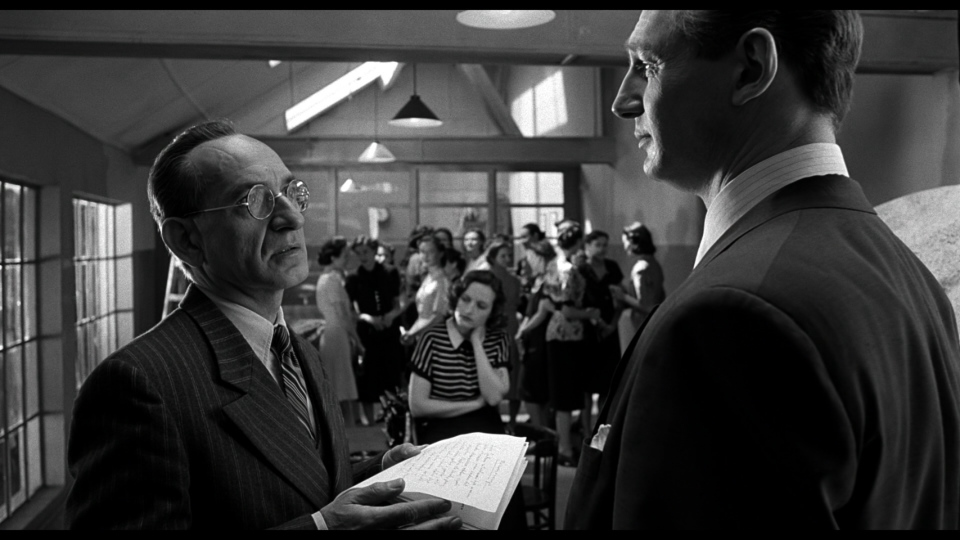
 . Stay tuned for my review of “Saving Mr. Banks,” the upcoming film with Tom Hanks as Walt Disney in the story of his 20-year effort to persuade P.L. Travers to allow him to make a movie based on her
  .
.