Little Women

Little Women

Posted on December 24, 2019 at 5:00 pm

A-
Lowest Recommended Age: 4th - 6th Grade
MPAA Rating: Rated PG for thematic elements and brief smoking
Profanity: None
Alcohol/ Drugs: Social drinking, brief smoking
Violence/ Scariness: Very sad death, references to other deaths including death of a baby
Diversity Issues: A theme of the movie
Date Released to Theaters: December 25, 2019
Date Released to DVD: April 6, 2020
Copyright 2019 Sony Pictures

You need to know where I’m coming from on this one. There is no book more central to my life than Louisa May Alcott’s Little Women. My mother, Josephine Baskin Minow, has been Jo since she first read Little Women when she was a child, And now our children call her Marmee. I loved it so much that I read all the other Alcott books on the library shelf (I especially recommend Eight Cousins and An Old Fashioned Girl). Little Women has been central to the lives of young women for more than 150 years, inspired by its heroine, who was inspired by Alcott herself. Jo March is fiercely loyal, impetuous, impatient, and a writer, both eager and reluctant to find her own voice. Authors who name the book as a major influence range from Cynthia Ozick, Simone de Beauvoir, Doris Lessing, Margaret Atwood, Jane Smiley, Anne Tyler, Jhumpa Lahiri, Ursula Le Guin and Nora Ephron to “Twilight”‘s Stephenie Meyer.

Alcott’s semi-autobiographical story of four sisters has been adapted many times, including a Broadway musical, a 48-chapter Japanese anime series, an opera, and films starring Katharine Hepburn, Elizabeth Taylor, and Winona Ryder. The most recent BBC version (of four) was shown in the United States on PBS. One of two major adaptations last year was a modern-day retelling with a quartet of appealing young actresses, adapted with skill and understanding by writer/director Clare Niederpruem.

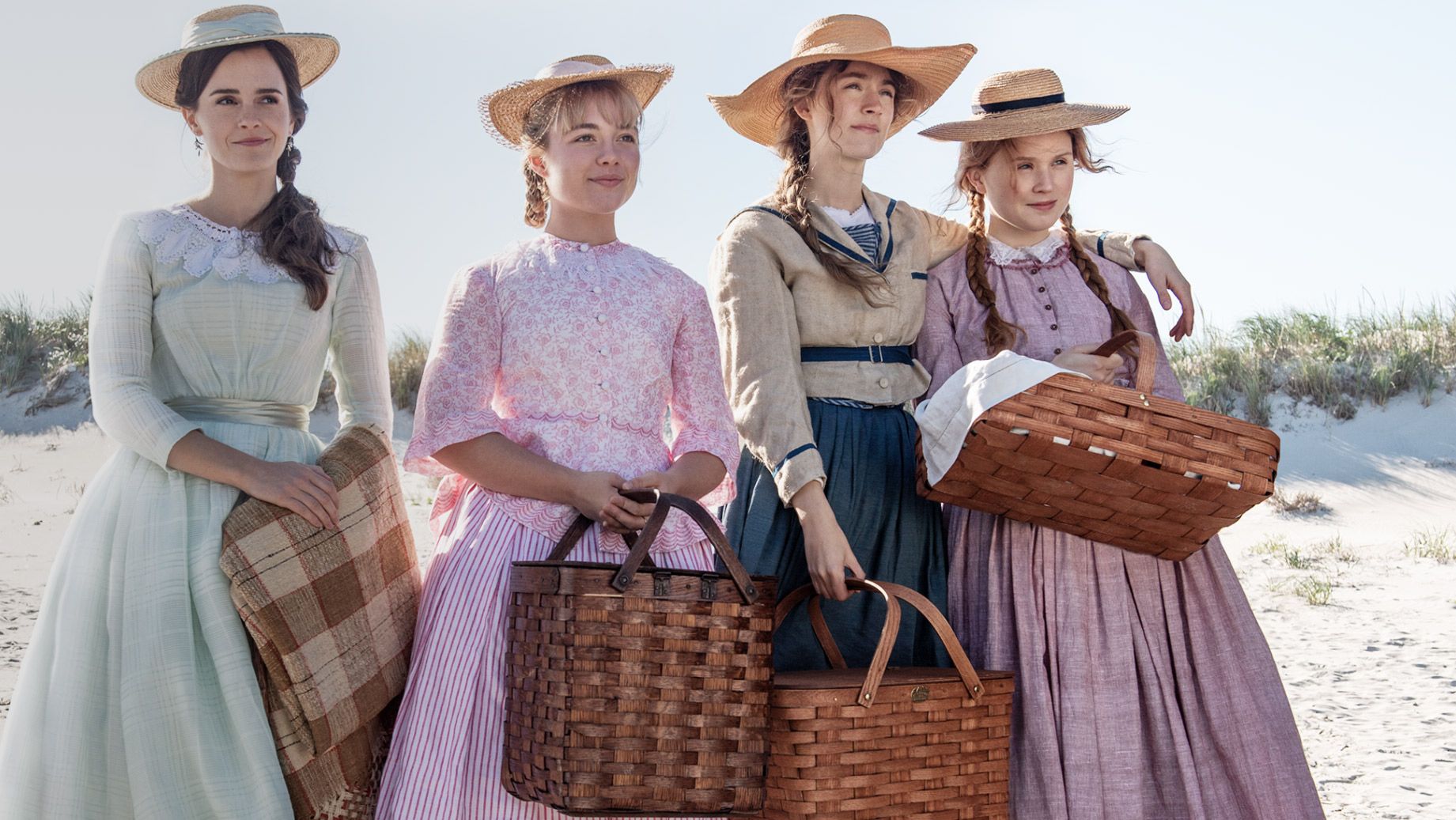
So, my standards and expectations could not have been higher and it is my very great pleasure to tell you that this new film from writer/director Greta Gerwig exceeded them all. Writer/director Greta Gerwig not only loves and understands the book, she also appreciates that in 2019 we are only beginning to catch up to Alcott’s vision of what is possible for young women and for all of us. Those who do not know Alcott’s work or have only seen the early versions may think that Gerwig has “modernized” the story. But every part of it comes from Alcott (some from other writings) and every part of it is entirely consistent with her fierce, independent, and devoted spirit and rebellious energy. And Saoirse Ronan is the best Jo March yet, her long-limbed coltishness not so much “boyish” as vitally engaged in a world that cannot always keep up with her.

The book was originally written in two parts, but the second volume (called Good Wives) has been a part of what we know as Little Women for more than a century. Gerwig begins the story in the middle of the second book as the now-adult Jo (a teenager in the first volume) meets with a newspaper publisher (a charmingly crusty and wry performance from playwright Tracy Letts, last seen as Henry Ford II in “Ford v. Ferrari”). In case we are not as quick as he is to see through her claim to be bringing stories written by a “friend,” Gerwig lets us see the ink that still stains her fingers. When her story is accepted (with the moralizing parts cut out), she exuberantly races home.

Then, as we will throughout the film, we go back and forth between the two parts of the story, indicated by different color pallattes, the warmer hues for the earlier years, when the girls were all at home and their father (Bob Odenkirk) was a Union volunteer in the Civil War. There were struggles and growing pains, but there was also a sense of purpose and possibility that is not as clear in the cooler-hued older years, when Jo is in New York living in a boarding house, and Amy (Florence Pugh) is touring Europe and studying art. Pugh may be too old for Amy in the early scenes, but she and Gerwig give Amy far more depth than any previous portrayal (perhaps including Alcott’s). Emma Watson is lovely as oldest sister Meg (obligatory complaint about what was left out of this version — the scenes of Meg coming to John’s defense when Aunt March attacks him and the scene of her showing off her “new dress” to him). Gerwig’s script softens the professor’s critique of Jo’s more lurid stories-for-hire and his involvement in getting the book-within-a-book published, but the scene of his telling her that the melodramatic stories she is writing for money are not good is still an important turning point.

Laura Dern plays Marmee, a woman of character, courage, and intention. The private moment she takes in the foyer of the house to make sure she can greet her daughters with good cheer on Christmas morning after caring for the impoverished Hummels is a small master class of acting. When Marmee tells Jo that she still struggles with anger every day, we see where Jo got her inner fire and how inner fire can become the foundation for determination and principle.

And then there is Timothée Chalamet as Laurie, the sensitive boy whose temperament is protected from becoming headstrong and careless by the example of the March family, their attitude toward work and also their attitude toward fun. Like Laurie to Jo, Chalamet is a perfect match for his “Lady Bird” co-star Ronan, and we could happily watch a whole movie of them putting on plays, attending riotous meetings of the Pickwick Society, and skating on the pond.

It is still one of the all-time great coming-of-age stories of a family and an artist finding her voice. By putting making the early year portion of the film flashbacks that comment on, provide context for, and deepen the “present-day” storylines, Gerwig makes us ready for a perfect ending that brings Alcott, her fictional avatar, and the story of all of us who have tried to tell our stories together.

Parents should know that this film includes a sad death and reference to other deaths including the death of a baby, family stress and conflict, and brief smoking and drinking.

Family discussion: Which sister is most like you? Was the publisher right about the ending to the story? Why do so many women, especially writers, say that this story was their most important inspiration?

If you like this, try: the book by Louisa May Alcott and the other movie and miniseries versions of this story
Related Tags:


Based on a book Classic Coming of age Drama DVD/Blu-Ray Epic/Historical Family Issues For the Whole Family movie review Movies -- format Remake

Trailer: Jane Austen’s Emma With Anna Taylor-Joy

Posted on November 21, 2019 at 10:26 am

I’m a big fan of Jane Austen’s Emma (the novel she famously described as having a heroine no one would like) and the movie version with Gwyneth Paltrow, Jeremy Northam, and Toni Collette. This new version, starring Anna Taylor-Joy, Johnny Flynn, Bill Nighy, Mia Goth, Miranda Hart, Josh O’Connor, Callum Turner, Rupert Graves, Gemma Whelan, Amber Anderson, Tanya Reynolds, and Connor Swindells, looks just as delightful.

Related Tags:


Based on a book Epic/Historical Remake Trailers, Previews, and Clips
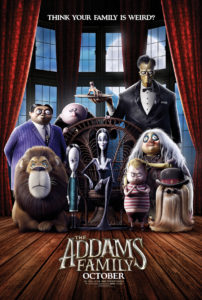
The Addams Family

The Addams Family

Posted on October 10, 2019 at 5:16 pm

B-
Lowest Recommended Age: Kindergarten - 3rd Grade
MPAA Rating: Rated PG for macabre and suggestive humor, and some action
Profanity: Some schoolyard language
Alcohol/ Drugs: None
Violence/ Scariness: Comic/action peril and violence, car accident, explosions, no one hurt
Diversity Issues: A theme of the movie
Date Released to Theaters: October 11, 2019
Date Released to DVD: January 20, 2020

Copyright 2019 MGM
My full review of this film is at rogerebert.com.

An excerpt:

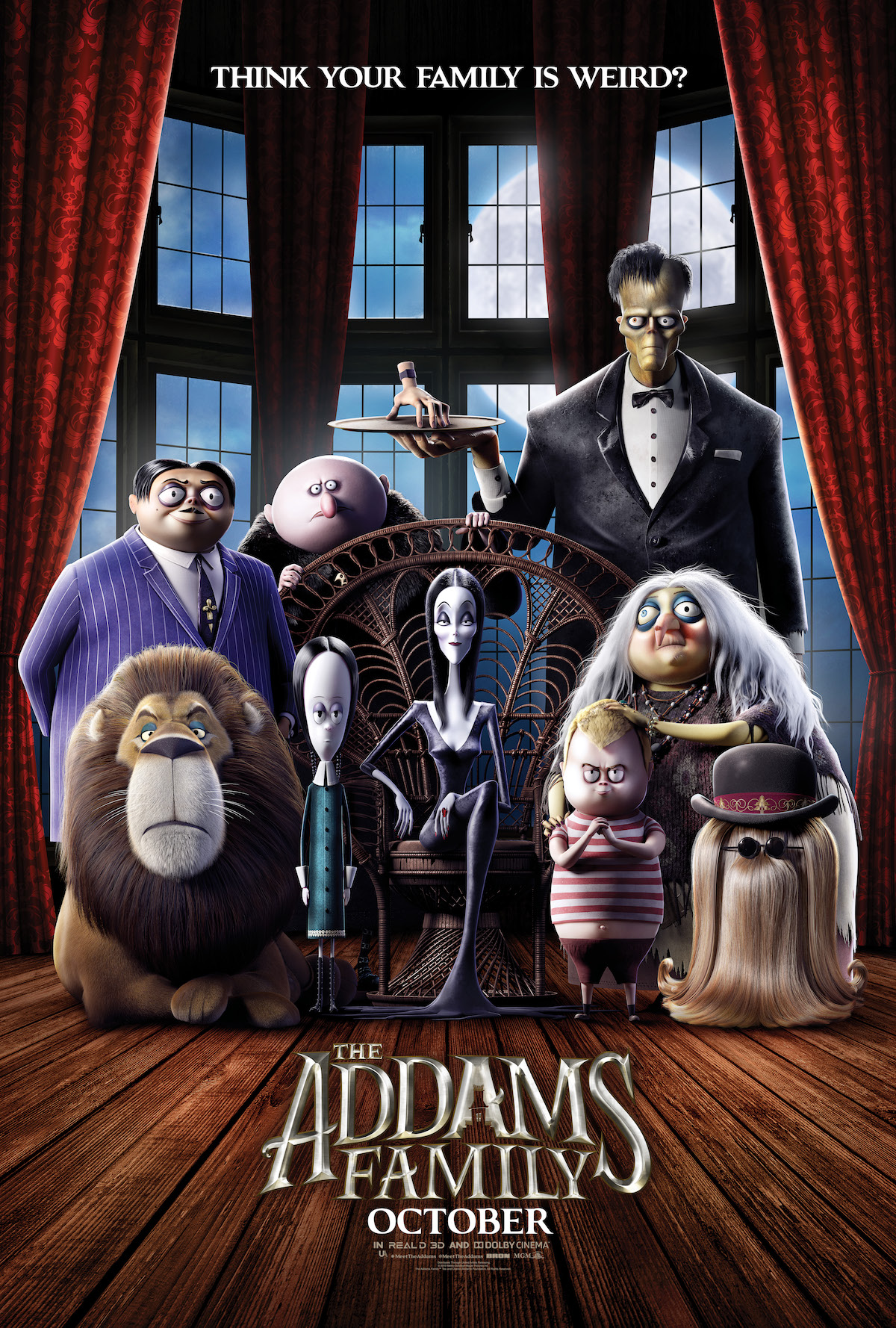
There are about half a dozen bright spots in the new animated feature “The Addams Family,” but in between them is the unbright and unoriginal storyline about how the real monsters are the ordinary people, not the weird people.

Parents should know that this film includes monsters and peril. It is more funny-scary than scary-scary but there are some images that might disturb sensitive viewers, as well as comic/action-style peril with no one hurt, bullies, a neglectful parent, potty humor. Some may be disturbed by a casual portrayal of child who decides to live with a different family

Family discussion: Which characters are really scary? What does “assimilation” mean? What does your family do to recognize adulthood?

If you like this, try: “Hotel Translyvania,” “Igor,” and the “Addams Family” television books, series and films

Related Tags:


Animation Based on a book Comedy DVD/Blu-Ray Family Issues Fantasy movie review Movies -- format Remake
The Lion King

The Lion King

Posted on July 16, 2019 at 1:22 pm

B +
Lowest Recommended Age: 4th - 6th Grade
MPAA Rating: Rated PG for sequences of violence and peril, and some thematic elements
Profanity: None
Alcohol/ Drugs: None
Violence/ Scariness: Peril and violence, very sad and scary death of a parent
Diversity Issues: None
Date Released to Theaters: July 18, 2019
Date Released to DVD: October 21, 2019

Copyright Disney 2019
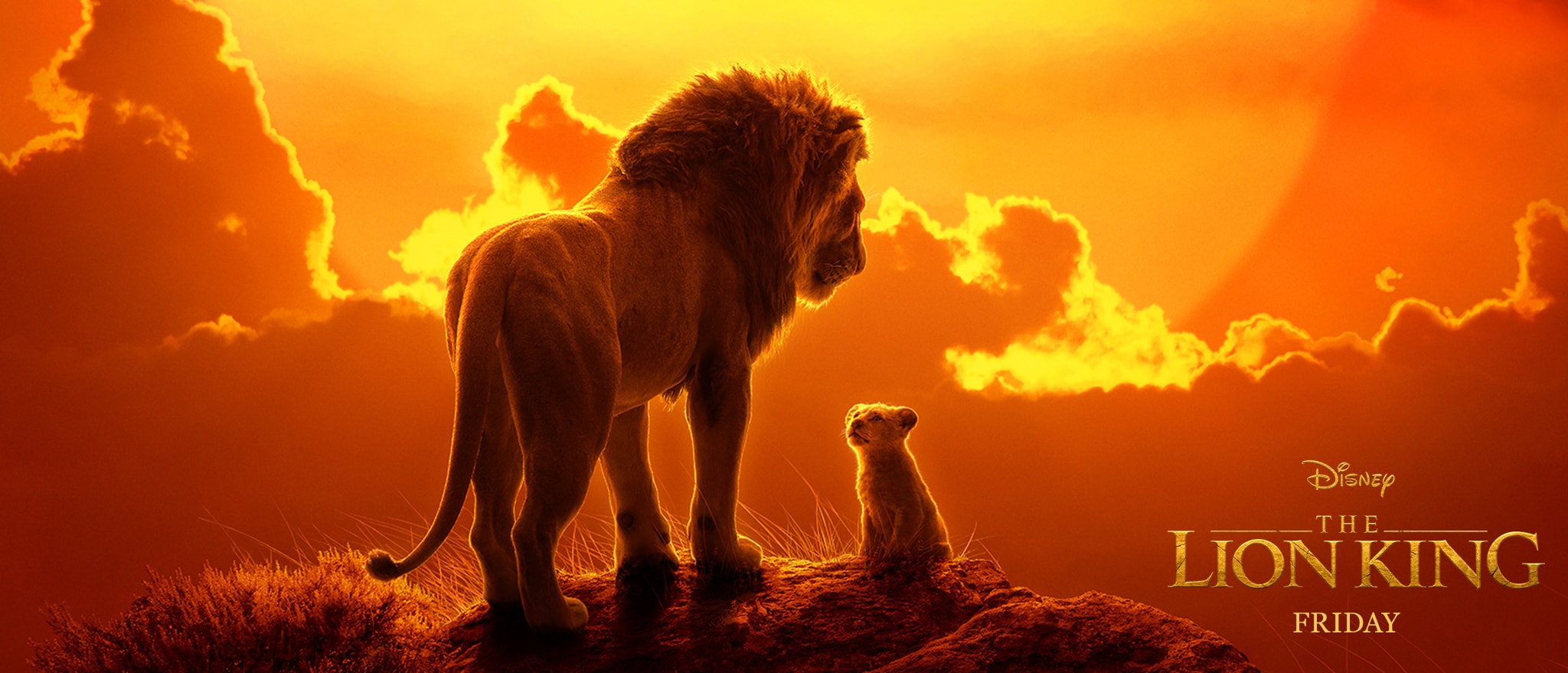
I had a lot of skepticism going in to the “live action” remake of “The Lion King.” The last two live action remakes of animated Disney classics were disappointments. Even the best so far (in my opinion, “Beauty and the Beast“), could not escape its, well, remake-ness and justify itself as an independent work worthy of the time and attention of the filmmakers and the audience.

Also, I am not the biggest fan of the original “Lion King.” I would not go as far as this very extreme critique, but it always bothered me that all the animals were supposed to sing happily about the circle of life when that means something very different to those at the lower end of the food chain to those at the top. The idea of Simba’s right to the throne made me uneasy (Nala is much more worthy, or maybe let the lions choose who is best). And I never got past the Hakuna Matata idea that a good way to deal with life’s problems is to run away from them. Plus, how can they call this live action when the animals are CGI?

All of which is to explain that I was very pleasantly surprised and it won me over. The opening scene is a shot for shot recreation of the original, but more spectacularly beautiful, thanks to Director of Photography Caleb Deschanel (the cinematographer of the most beautiful film of all time, The Black Stallion). The quality of the light, the texture of the terrain, the fur, the feathers all lend a grandeur to the story. And the music is sumptuously produced, evoking the holiness of the natural world.

We all know the story, which draws from Shakespeare (“Hamlet” and “Henry IV”), the myths collected by Joseph Campbell (the hero’s journey), and perhaps from the Bible as well (the prodigal son). Simba is the lion prince, born to rule as far as he can see. But his father, Mufasa (voiced again by James Earl Jones, as in the original) teaches him that the ruler serves those he rules. Simba will be responsible for their welfare, Mufasa tells him. “It will be yours to protect…A true king searches for what he can give.” Still, Simba chafes at the rules and dreams of a day when he is king and can do anything he wants.

Mufasa’s brother Scar (Chiwetel Ejiofor) wants to be king. He resents Mufasa and Simba. In a brutal scene that will be too intense for younger children and many older children and adults, he kills Mufasa and blames Simba. The cub is devastated, and runs away. He is befriended by a warthog (Seth Rogen as Pumbaa) and a meerkat (Billy Eichner as Timon), who sing to him about the pleasures of a worry-free life. (Eicher has a great singing voice! Who knew?)

The lions believe Simba died with his father. But when Nala (Beyonce) finds him, she tells him that Scar and his hyena henchmen have all but destroyed their community. Can he be the hero they need?

This version makes an attempt to address some of the issues that concerned me in the animated feature, though Mufasa’s explanation of the circle of life is not entirely reassuring. But director Jon Favreau (“Iron Man,” “Chef,” Happy in the Avengers movies) brings together the realism of the animals, who come across as authentic and expressive, with a capable balancing of humor and drama. John Oliver’s Zazu and Keegan-Michael Key’s Kamari are comic highlights. Was this necessary? No. But it earns its place.

Parents should know this film has some intense scenes of peril and violence, very sad death of a parent as the child watches, severe feelings of guilt and abandonment, murder and attempted murder, predators, some potty humor, and references to the “circle of life.”

Family discussion: Why is a group of lions called a “pride?” What from your family do you carry with you? What is the difference between Mufasa’s idea about responsibility and heritage and Timon’s idea that nothing matters?

If you like this, try; the animated “Lion King” and “Lion King 1 1/2” and “The Black Stallion” a beautiful film from the same cinematographer

Related Tags:


Coming of age DVD/Blu-Ray Fantasy movie review Movies -- format Musical Remake Talking animals
THE MOVIE MOM® is a registered trademark of Nell Minow. Use of the mark without express consent from Nell Minow constitutes trademark infringement and unfair competition in violation of federal and state laws. All material © Nell Minow 1995-2026, all rights reserved, and no use or republication is permitted without explicit permission. This site hosts Nell Minow’s Movie Mom® archive, with material that originally appeared on Yahoo! Movies, Beliefnet, and other sources. Much of her new material can be found at Rogerebert.com, Huffington Post, and WheretoWatch. Her books include The Movie Mom’s Guide to Family Movies and 101 Must-See Movie Moments, and she can be heard each week on radio stations across the country.

Website Designed by Max LaZebnik