Not Easily Broken

Posted on May 2, 2011 at 8:00 am

B
Lowest Recommended Age: High School
MPAA Rating: PG-13 for sexual references and thematic elements
Profanity: Some mild language
Alcohol/ Drugs: Social drinking
Violence/ Scariness: Car accident, character injured, tense confrontations
Diversity Issues: Diverse characters
Date Released to Theaters: January 9, 2009
Date Released to DVD: May 7, 2011
Amazon.com ASIN: B001QUF7DS

This week’s release of T.D. Jakes’ “Jumping the Broom” is a good time to take another look at his earlier film about marriage and in-laws, “Not Easily Broken.”

If we believe the movies, the tough part of relationships is getting to the “I dos.” Everything after that is some vaguely imagined “happily ever after.” But “Not Easily Broken,” based on the popular novel by preacher T.D. Jakes, is frank from its very first moments that “happily ever after” requires a lot of work and a lot of prayer. It starts where most movies end – with the wedding. Before pronouncing them husband and wife, the minister tells Clarice (Taraji P. Henson) and Dave (Morris Chestnut) that life will try to knock them down and they will need to hold on to each other and their faith in God to stay together. He says there are three strands in a marriage – the bride, the groom, and God and that they must honor all three to keep the bond strong. But the newlyweds will not fully understand what that means until they learn some very hard lessons. Or, as one character says, “You’ve got to let life turn you upside down so you can learn how to live right side up.” Dave struggles with disappointment. He once hoped to play professional baseball but was injured and ended up working in construction. Now his greatest satisfaction comes from coaching a team of young boys and from his hopes for having children. Clarice struggles with pride and selfishness. Her ambition at work puts a lot of pressure on their relationship. Both of them feel neglected and dissatisfied. And then things really get bad. Clarice is badly injured in an automobile accident when Dave is driving. Her physical and emotional recovery is painful and it puts even more stress on the marriage, especially when her mother (the great Jennifer Lewis) moves in with them to help out. Unlike this season’s other movie about marital struggles, “Revolutionary Road,” this film makes no pretence of sophistication and has no literary aspirations. But its lack of subtlety turns out to be one of its strengths. Its narrative force is grounded in an emotional sincerity and open spirituality that creates an instant connection to the audience and deepens as the story unfolds. And it is good to see a film that is completely at ease in portraying the church as a sustaining force in the life of is characters and community. The movie also benefits from two exceptionally talented and appealing performers in the lead roles. Henson is an actress of such extraordinary range that audiences might not realize she is the same person who played the warm-hearted adoptive mother who ages over decades in “The Curious Case of Benjamin Button,” half of an all-female team of hired killers in “Smokin’ Aces,” and the tough-talking woman with the enormous Afro and microscopic miniskirts in “Talk to Me.” Here Henson plays what is in some ways her most challenging role to date because her character is not an extreme one. She has to make Clarice careless and inconsiderate without losing our interest in making sure she is happy. Henson makes it work and makes us see why Dave loves Clarice even when he is not sure he still does.Chestnut (who also executive produced) has been too often relegated to “best friend” roles in big films (“The Game Plan”) and leading roles in smaller films (“The Perfect Holiday”). He is the essence of a leading man, a superbly gifted actor with effortless star power. Chestnut brings a depth and complexity to Dave that goes far beyond the script. Indeed, he makes Dave so sympathetic that he comes close to throwing the story off-balance by making it seem that Clarice is responsible for most of the couple’s problems. But Chestnut’s ability to make Dave’s integrity and devotion palpable shows us why the couple’s bond is important and, though often stretched, not easily broken. (more…)

Related Tags:


Based on a book Date movie Drama DVD/Blu-Ray Pick of the Week Romance Spiritual films
For Easter: The Gospel According to St. Matthew and more

For Easter: The Gospel According to St. Matthew and more

Posted on April 21, 2011 at 3:59 pm

Reposting for Easter — Have a blessed celebration, everyone!

Ben-Hur is the traditional Easter classic, but there are some other films that beautifully illuminate the themes of this holy season. I like The Gospel of John, a very reverent re-telling of the story of Jesus. The rock musicals Jesus Christ Superstar and Godspell can be very inspiring. But I have a special fondness for The Gospel According to St. Matthew, the understated, intimate re-telling of the story filmed by Pier Paolo Pasolini.

http://www.youtube.com/watch?v=k7DnjPrpc4E


For kids, the Veggie Tales have the delightful ‘Twas the Night Before Easter. And while it does not have much to do with Easter beyond the title song, Fred Astaire and Judy Garland make “Easter Parade” a family classic everyone will enjoy.


http://www.youtube.com/watch?v=Q77wqDDUDsc
Related Tags:


Drama Epic/Historical Holidays Rediscovered Classic Spiritual films
List: Passover Movies

List: Passover Movies

Posted on April 19, 2011 at 9:59 pm

Reposting — Hag Sameach! Passover is not just about remembering the story of the Exodus from Egypt. It is about telling the story. Thousands of years before people talked about “learning styles,” the Seder included many different ways of telling the story, so that everyone would be included, and everyone would feel the power of the journey toward freedom. The Haggadah makes the story come alive through taste, smell, and touch as well as sight and hearing, and through the example of the four sons it presents the story to the wise, the simple, the skeptic, and most especially to the young — one of the highlights of each Seder is when the youngest person present asks the traditional four questions, beginning with “Why is this night different from all other nights?”If they had known about movies back in the time of Moses, they would have included that form of story-telling, too. For younger children, The Prince of Egypt and Joseph – King of Dreams are a very good introduction to the story of how the Jews came to live in Egypt and how Moses led them out of slavery. Older children and adults will appreciate Charlton Heston’s The Ten Commandments and the more recent versions of the story, starring Burt Lancaster, and Ben Kingsley.

Related Tags:


Drama Epic/Historical For Your Netflix Queue Holidays Lists Movie Mom’s Top Picks for Families Spiritual films

The Chronicles of Narnia: The Voyage of the Dawn Treader

Posted on April 5, 2011 at 8:11 am

A gallant warrior mouse and a dragon with a secret join the two youngest Pevensie children for a voyage and a quest in the third and best so far in the Narnia series. War has come to England and Edmund (Skandar Keynes) tries to enlist, protesting “I’ve fought wars and led armies,” when he is rejected for not being old enough to join. Peter (William Moseley) and Susan (Anna Popplewell) are on the brink of the adult world. But the younger children, Lucy (Georgie Henley) and Edmund are packed off to live with relatives, including their arrogant meanie of a cousin, Eustace (“Son of Rambow’s” Will Poulter), a young man who believes that he (with the help of science and logic) has all the answers. Time for a trip to Narnia, this time via a magic painting of a ship at sea, which suddenly floods the bedroom and washes them away.

They are picked up by a ship called the Dawn Treader, led by their old friend King Caspian (Ben Barnes). And soon they are on a quest to find seven banished lords and their seven swords.

They will face daunting challenges, some of the most terrifying coming from themselves, sometimes amplified by malevolent magic and sometimes just a reflection of their own youth, inexperience, and insecurities. They accuse each other of not being up to the tasks as they wonder themselves whether they are. They are drawn to worldly prizes. Lucy is so eager to be as pretty and grown up as her big sister that she steals a spell from a book of incantations. Eustace keeps stoutly insisting that he wants them to get the British consulate to sort things out and tries to stuff treasure into his pockets. Edmund sees a vision of the White Queen, still tempting him to betray the others. In one moment reminiscent of “Ghostbusters,” “Harry Potter,” and “1984,” an evil force brings into life whatever is most feared by the people it is attacking.

The movie succeeds most as a visual treat. The title vessel is genuinely enchanting, exactly what you would want a fairy tale ship to look like. The series moves smoothly into 3D, designed more to draw you into the world of Narnia than to make you swat away distracting objects seemingly suspended in front of your nose. It also achieves a nice balance, accessible to those who are not familiar with the books and the first two movies or interested in the Christian allegory but satisfying for those who are.

(more…)

Related Tags:


Based on a book Contests and Giveaways Fantasy Series/Sequel Spiritual films Stories About Kids Talking animals
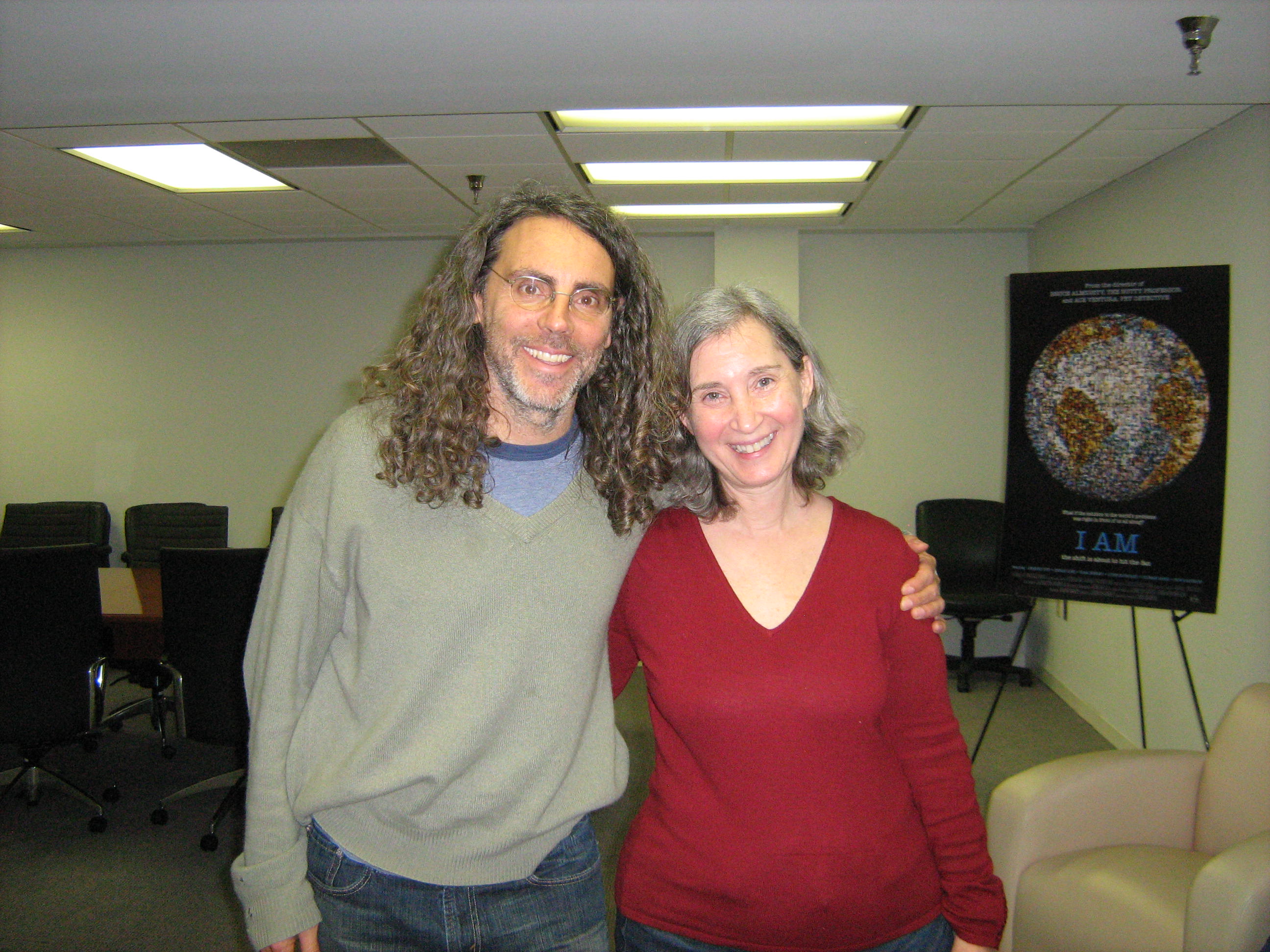
Interview: Tom Shadyac of ‘I Am’

Interview: Tom Shadyac of ‘I Am’

Posted on March 30, 2011 at 8:00 am

Tom Shadyac was one of the most successful directors in Hollywood. He had wealth and fame. He worked with superstars like Eddie Murphy and Jim Carrey. But a bicycle accident left him in terrible pain, physical and spiritual. He realized he was not happy or satisfied. And so he made a small documentary about two questions: what’s wrong with our world, and what can we do to make it better? The movie is filled with fascinating encounters with people who are questioning some of our most fundamental assumptions about the way we interact with each other and the universe, from cutting-edge scientists to people who study history, culture, and theology. It was a great pleasure to speak with him about his literal and spiritual journey.

How are you feeling now?

I feel so much better. I’m 95 percent and if this is as good as I get, I’m beaming. I didn’t think I’d come out of it, so even getting to 70 percent, I’m blessed. The mind-body-spirit is definitely connected for me. Not only did I call in the accident into my life because I didn’t have the courage to get out of my head and speak to my heart. So what better accident than one where I had to leave my head to feel my heart. I had been living this way in the closet and my head said you should not do a film about this or talk about it. and I didn’t have the courage to see outside the box. I believe that when I finally said I would start this conversation and share this story the tension was released in my healing and it improved by leaps and bounds.

The most profound moment for me in the film was when you said that after you had the dream house you realized it didn’t make you happy.

I had that message and I went on my merry way suppressing it, ignoring it. So I accumulated more — I bought a bigger house. I was being pulled along by the way we do things. Maybe the thought was there that this situation will be better, but it was a sleepwalk. That bell or this whistle will fill that emptiness.

Your late father appears in the film and he seems to have happiness figured out. He did meaningful work as the co-founder of St. Jude’s hospital in providing free medical care for sick children.

There was a sadness, though, in my father. I don’t think he saw what he did or how capable we are of creating societies based on compassion. At the end of the interview, he says he doesn’t think mankind can build businesses based on compassion because of who we are. People behave one way on Sunday and then forget about it the rest of the week. But I believe we behave that way, but that is not who we are. We’ve deluded ourselves that those ideas have to stay inside those churches and cannot walk in our daily lives. He didn’t see what he had done. He thought of the world outside St. Jude’s as competitive, angry, always at odds with each other.

The indigenous peoples you describe in the movie are very peaceful but there are others who are very violent, just like more developed societies.

That wasn’t the overriding indigenous way. They had conflicts and no one would suggest that a new society wouldn’t have conflict. But the conflicts were limited. If a person was hurt or a piece of land was taken payment had to be made for that, a warrior against a warrior. But not genocide. Not what’s happening today. There’s an ideology underlying that about our disconnection that’s run amok and it allows us to do all kinds of insane things.

You mention in the film how important it is to you to know your neighbors. That really requires a smaller community like indigenous tribes or small towns, doesn’t it?

It isn’t just the idea of small, the size of it, though that is important. But there are no barriers, no one was isolating themselves, taking all the land. A Native American had a tent; he didn’t get to own a peninsula. What we’ve built out of our society exacerbates the gap between us, between what are called the rich and the poor, though I don’t subscribe to those terms because the rich can be very poor and the poor can be very rich.

There were spiritual elements in some of your big-budget films, like “Bruce Almighty,” in which Jim Carrey gets to exercise God’s powers and learns that sacrificing for others is the most powerful thing he could do.

With my left hand I may have been helping to heal the world but with my own life I was fighting that message. “I want a more just world but not so just I can’t have everything.”

Do you think that there is a way in the context of a blockbuster film to convey the message you want to get across more effectively than with this small documentary?

That’s the kind of linear thinking that is not where I want to live. It’s important for me to do what’s on my heart and if I am called on to make a film that may touch a handful of people, I’ll do that. I do not want to be a servant of what Emerson called “the idolatry of magnitude,” that it has to be big to be important. The only giving mentioned in the Bible is the widow’s mite. She gave a penny but it was all she had and it was important. It was all she had. If a narrative film comes to me and it demands to be served, I will do it. It’s not that I wouldn’t make “Ace Ventura 3.” I would make another comedy because I believe it is sacred, a beautiful experience to bring people together to share laughter. But I would hope to behave differently as the director, not how I treat people — I always treated people respectfully. But in how I do the economy of my life. I don’t want to stand on top of a movie and say, “I am more valuable than you.” I want to say, “I want to be your brother, your sister, and I want you to be my sister, my brother,” and to have that reflected in the way I do the economic drawer of my life. If additional profits come, I want to distribute them to others. It was never mind in the first place.

How did you pick the people who appeared in this movie?

They changed me. Through the course of reading their work, seeing them interviewed, learning about their lives. “The People’s History of the United States” is a beautiful, brilliant work. The poetry of Rumi. The life of Desmond Tutu.

What was it like to meet them?

I walked into Howard’s office and it was as modest an office as I have ever been in. It spoke volumes about his modesty and humility. That is what I call integrity. Emerson says, “If you look in any drawer of a person’s life you know what a person is.” When I saw how he greeted me, when I saw his office, I saw he was open, compassionate, humble. But my economic drawer was taught to me by my society, not by my heart.

What was it like to go from a big budget film to a four-person crew?

Remember when Mel Gibson yelled out “Freedom!” in “Braveheart!?” It was very freeing to be able to see a shot and get the camera out and get the shot and not have to get a permit and a license and get the lighting and bring 240 people out there and the craft services truck. I like traveling light, an artistic extension of what is going on in my life.

Tell me more of what you have learned.

I’m much happier in this walk than I was in the isolated walk. I don’t think it’s about changing who we are; it’s about waking up to who we are. We know external things bring us joy to a certain point, but beyond that it doesn’t. How about competition bringing us together instead of separating us. Ignorance comes from the word “ignore.” We experience heaven when we serve each other. I felt that power with my father. When we feed others, we feed ourselves.

Related Tags:


Directors Interview Spiritual films
THE MOVIE MOM® is a registered trademark of Nell Minow. Use of the mark without express consent from Nell Minow constitutes trademark infringement and unfair competition in violation of federal and state laws. All material © Nell Minow 1995-2026, all rights reserved, and no use or republication is permitted without explicit permission. This site hosts Nell Minow’s Movie Mom® archive, with material that originally appeared on Yahoo! Movies, Beliefnet, and other sources. Much of her new material can be found at Rogerebert.com, Huffington Post, and WheretoWatch. Her books include The Movie Mom’s Guide to Family Movies and 101 Must-See Movie Moments, and she can be heard each week on radio stations across the country.

Website Designed by Max LaZebnik