Rated PG-13 for sequences of action/violence and some language
Profanity:
Some strong language
Alcohol/ Drugs:
None
Violence/ Scariness:
Extended comic book action and violence, characters injured and reference to sad deaths
Diversity Issues:
Diverse characters
Date Released to Theaters:
July 31, 2026
Copyright 2026 Sony
We’ve been warned even more than ususal not to allow any spoilers in our reviews, so this is the best I can do while leaving the best surprises in “Spider-Man: Brand New Day” for you to discover.
I can remind you that in the last episode, “No Way Home” Peter’s beloved Aunt May (Marisa Tomei) was killed by the Green Goblin and to protect the rest of the people he loved he caused them to lose all memories of him.
We’re brought up to date with a terrific montage of Spidey capturing one villain after another, including Scorpion (Michael Mando). Headlines congratulate him for just about eliminating crime from the city.
Now, Spider-Man (Tom Holland) is an adult and dealing with being utterly alone by spending every waking moment fighting crime and pretending he is not being crushed by loneliness. He brings flowers to Aunt May’s grave. He misses his best friend, Ned (Jacob Batalon) and the love of his life, MJ (Zendaya) and watches their Instagram posts about their time at MIT. His only real human contact is with an appreciative Detective Jean DeWolff (Liza Colón-Zayas).
The strain takes a toll. “Sometimes Spider-Man does the right thing even if it breaks Peter Parker’s heart.” Being full-time Spider-Man without any time for Peter may be a factor in some changes that are occuring in his spider-powers. We will see other characters struggle with the duality of their super-ness and their humanness, a theme of the film.
And then a new villian seems impossible to find, much less stop. Someone is able to “jump” into the minds of just about anyone, and breaks the Scorpion out of prison. The government Damage Control department led by Bill Metzger (Tramell Tillman of “Severance”), which adapts bad-guy technoloy for good-guy purposes, asks him to track the mystery villain down. With some guidance by three familiar characters from the MCU, he gets a little closer.
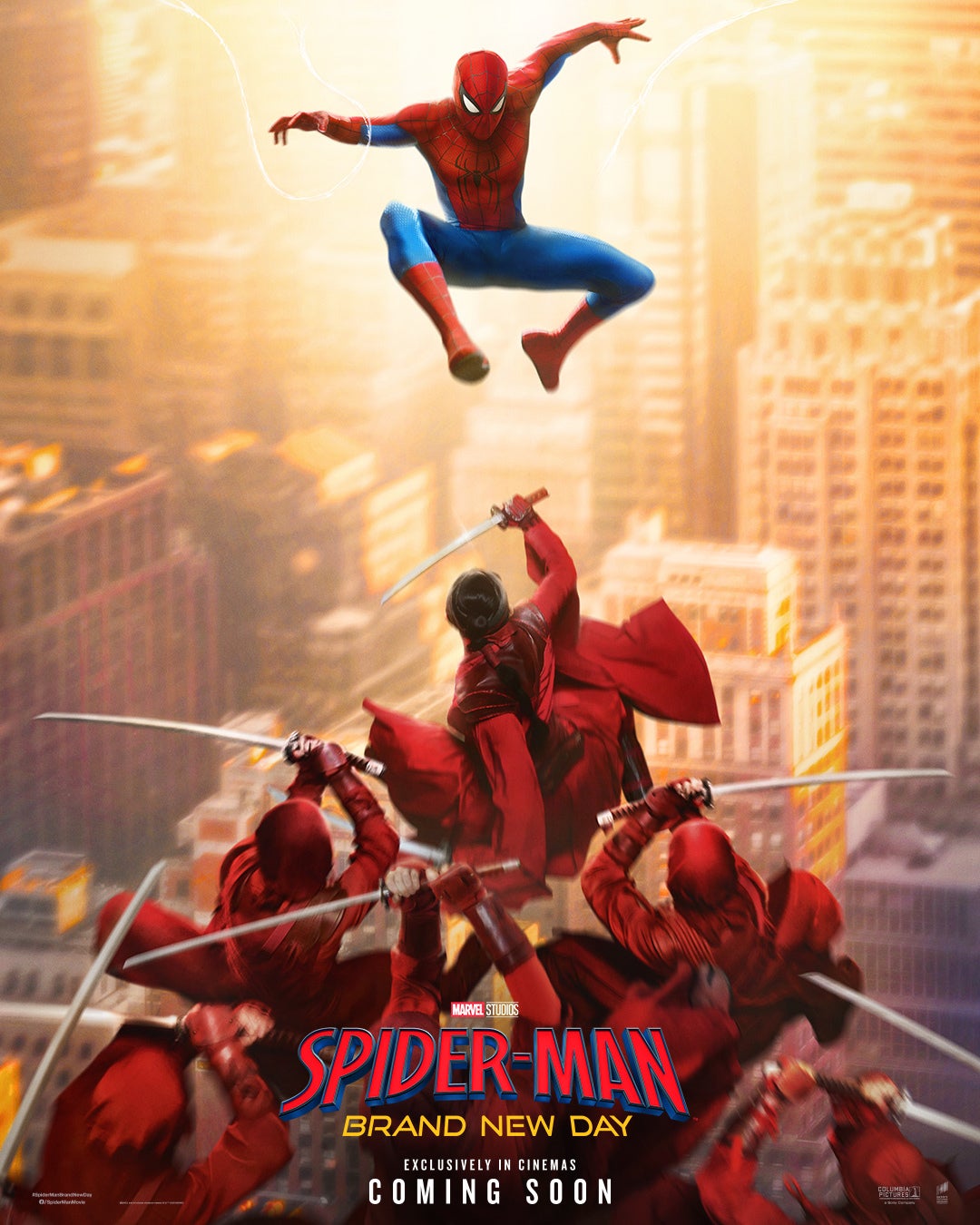
Director Destin Daniel Cretton handles the drama and the action well, especially a great fight with The Hand, evil, red-cloaked ninja assassins.
Spider-Man and Tom Holland have come a long way. Peter Parker was just 14 when we first saw Holland play a small role in “Captain America: Civil War” and 15 as lead in “Spider-Man: Homecoming.” He was gone a few years in the Snap, but came back as a 16-year-old. Both he and Zendaya have gracefully grown with their older but wiser characters and their performances are thoughtful and as grounded in a way that balances the heightened tone of any story that involves a person swinging on spider-webs can be. It is sweet to see chemistry of the real-life newlyweds and impressive to compare their performances (and one other actor’s) to what they did a couple of weeks ago in “The Odyssey.” Clearly, they not only treat both with seriousness and commitment, but they also give each genre and its fans the respect it deserves.
Now, who’s ready for “Avengers: Doomsday!”
Parents should know that this is a comic book movie with extensive peril and action. Characters are badly injured and dealing with two very sad, off-camera deaths. There is also some strong language.
Family discussion: Did you catch the Gandolf reference? How do you know what is a big potato and what is a small potato? Do you agree with Spider-Man’s decision about who to help? Which character’s powers would you most like to have, and how would you balance your superhero (or supervillain) life with your human life?
If you like this, try: ALL of the Spider-Man movies, so you can compare the Tobey Maguire, Andrew Garfield, and Tom Holland versions.
Extenseive war-time peril and violence, monsters, many characters injured and killed, graphic and disturbing images
Diversity Issues:
None
Date Released to Theaters:
July 17, 2026
Copyright 2026 Universal
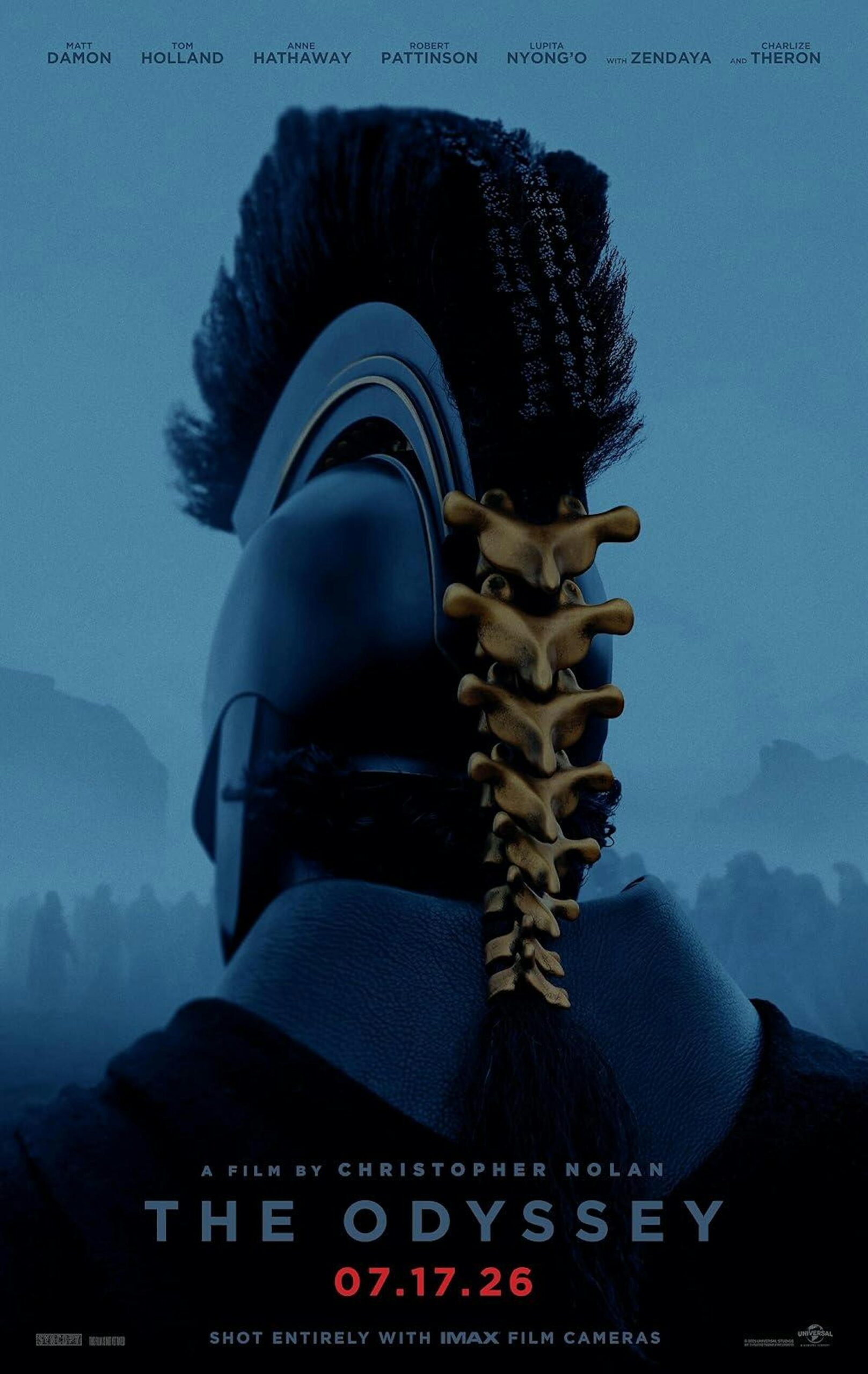
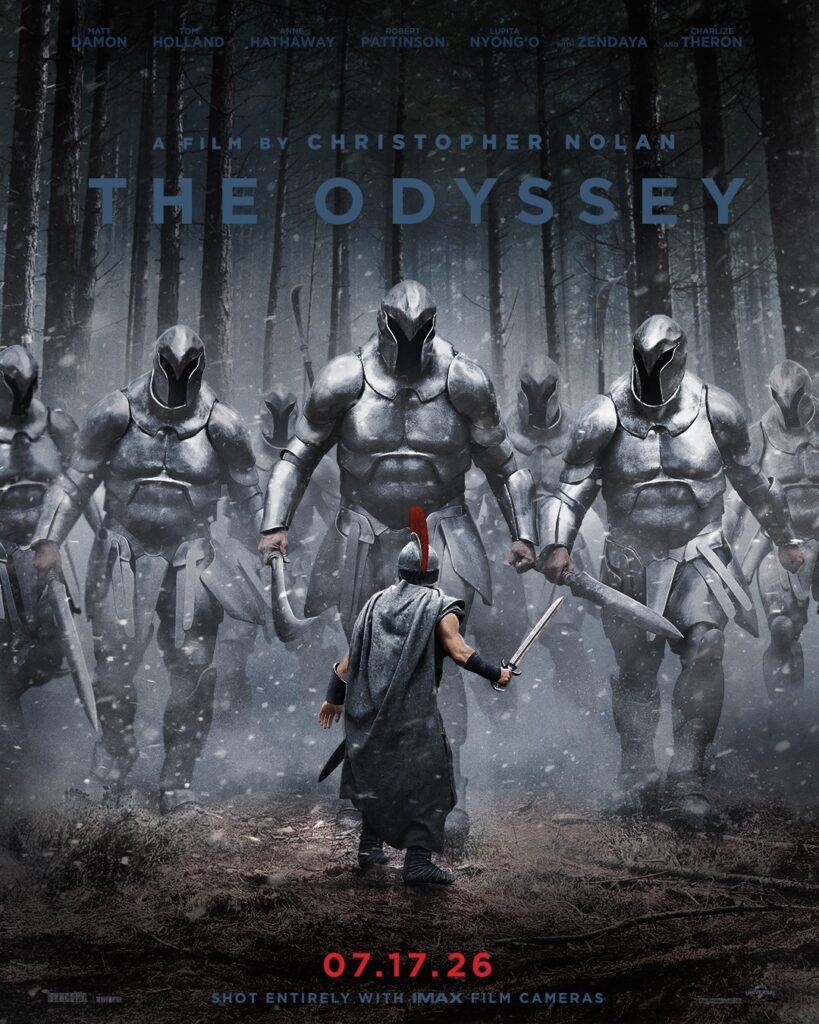
One of the foundational stories of the Western canon has a grand, sweeping, meticulously diligent new version in writer/director Christopher Nolan’s epic film, bristling with Oscar-winning talent and impressive seriousness of purpose. It is, with a few significant exceptions, true to Homer’s story dating back to 700-800 BC. But there are also vestigial reflections of Nolan’s previous film, “Oppenheimer,” both stories of men who must grapple with the consquences of their destructive, even ruthless, acts during wartime.
Matt Damon plays one of history’s most complex heroes, Odysseus, whose name and story still define journeys of adventure thousands of years later. The Odyssey follows Odysseus on his long voyage home after the victory of the Greeks, led by Agamemnon, with Achilles, Ajax, and Odysseus, in the Trojan War. Paris, a Trojan prince, had been asked to decide which of three goddesses was the most beautiful. Aphrodite, the goddess of love, bribed him by saying that if he picked her, she would give him the most beautiful human woman in the world. That woman was Helen (Lupita Nyong’o). She was the wife of the Greek king, Menelaus of Sparta (Jon Bernthal). But she is known throughout history as Helen of Troy, because she was kidnapped (or ran away with) Paris, leading to the war that made her known as “the face that launched a thousand ships.”
That war lasted ten years. It was Odysseus, known for his trickery, who came up with the idea of getting the soliders inside the Trojan’s impenetrable city by hiding in a gigantic statue of a horse, with a soldier named Sinon (Elliot Page) left behind to lie that the Greeks had retreated, leaving the horse as a tribute to the goddess Athena (Zendaya). When the Trojans drag it into the city, the Greek soldiers come out to win a decisive battle and end the war. This story is told in Virgil’s Anead, and in Nolan’s film we see parts of it more than once in flashbacks, part of elliptical, non-linear story-telling that may be confusing to those not familiar with Homer’s tale. (To refresh your memory or just get a quick recap, try this.)
But really, all you need to know is that Odysseus is on his way home, leading his men in (to start with) three boats, hoping to make it back before Agamemnon reaches his home just to be competitive. (Agamemnon will get home first but then be murdered by his wife, Helen’s sister (also Nyong’o).
It will take Odysseus a decade, with many stops along the way as the crew tries to replenish their provisions. The most well-known of their adventures are all brought to screen in unprecedented splendor by Nolan, and his “Oppenheimer” team, editor Jennifer Lame, production designer Ruth De Jong, and Oscar-winning cinematographer Hoyte van Hoytema, filming in Greece, Italy, Iceland, Morocco, and Scotland. This is the first-ever feature movie filmed entirely with IMAX cameras (in tribute, you can even get an IMAX camera popcorn bucket) and shown in 70 mm. The visuals are never less than spectacular. Odysseus and his men are traveling by boat and the sky and “the wine-dark sea” Homer described is filmed with a power and grandeur of a true epic. We get a visceral feeling of just how alone these men are, not just before GPS but before maps and navigation, entrusting to the gods to guide them home but knowing that the gods may be even more devious tricksters than Odysseus himself.
Odysseus tries to follow the “laws of Zeus,” particularly with regard to hospitable treatment of strangers, and killing even animals with honor, plucking his bow string to give them a chance to escape. When lives are at stake, though, he will do what is expedient. On their first stop, he leads his men onto an island where a cave is set up as a home, with a cozy fire. According to his beliefs about what the laws of Zeus require and assuming that the inhabitant of the cave will believe the same, he orders his men to stoke the fire to welcome their host. But the inhabitant is not a man. He is a gigantic cyclops, and in a genuinely terrifying moment, as soon as he enters the cave, he grabs one of the men and bites his head off. It is hard to understand why Nolan chose to omit one of the key elements of the story, Odysseus refusing to give the cyclops his name, instead saying he was called “Noman.” This is a very significant part of the story that is parallel to his not using his own name when he returns home, both relating to his sense of himself and his identity.
After a few more deaths, Odysseus is able to lead his men to an escape. But he violates his obligation to give the murdered men a decent burial. The conflict between his obligations under the law of Zeus and the choices to save as many lives as possible are a theme.
Copyright 2026 Universal
This conflict is presented in the immediate consequences of killing the cyclops. Odysseus learns that the monster was the son of the god Poseiden, who will now express his grief and anger by keeping them from reaching home. As in Homer’s original story, it explores the theme of human agency and the interference of the gods. We often see Odysseus near the goddess Athena.
Other adventures include two enchantresses. Calypso ( Charlize Theron) feeds Odysseus lotus flowers that make him forget the PTSD of his agonizing choices but also the fact that he has a family. Circe (Samatha Morton) turns his famished men into pigs (an extraordinary scene of transformation and body horror), and we see how clever Odysseus is in figuring out what she has done and forcing her to reverse the spell and help him get home. He travels to Hades where he meets the ghost of Sinon. He straps himself to the mast of his ship while his men have their ears blocked with wax to pass through the jagged rocks where the sirens sing men to their deaths.
Meanwhile, his wife, Penelope (Anne Hathaway) and son Telemachus (Tom Holland) are back in Ithaca, with dozens of suitors eating their food, drinking their wine, and trying to get Penelope to marry one of them so he can take over the kingdom. The most odious of the suitors is Antinous (Robert Pattinson), a maniuplative schemer who got Sinon to take his place in the war. Telemachus leaves Ithaca to see if he can find any news of his father from Menelaus.
It will take all of Odysseus’ craftiness and strength to defeat the suitors and reunite with his wife and son. Damon’s performance shows us all of the complexity that makes Odysseus an eternally enthralling hero. Pattinson continues to impress as he subverts his considerable looks and charisma to create a despicable, cowardly character. John Leguizamo is superb as the loyal Eumaeus. Even the three-hour run time cannot find enough time for Theron, Zendaya, and Morton, but each of those encounters could be an entire movie.
Nolan’s screenplay veers into colloquialisms that take us out of the movie now and then. But he has an unsurpassed gift for the language of cinema. The scenes of exploration, combat, and in Penelope’s castle in Ithaca are striking and narratively clear. Penelope fends off the suitors by telling them she cannot move forward until she finishes weaving a burial shroud for her late father-in-law. She weaves during the day and then unravels it at night. She appears modestly behind a screen as the suitors crowd the dining hall.
Nolan’s style is chilly and cerebral, with the female characters thinly sketched and too often just creating problems for or taking power away from men. That may be one reason that draws him to a story where a military hero has encounters with literal enchantresses who impede his progress. His exploration here of the conflicts even successful warriors feel about what they have done and what they have seen is moving. He made very significant changes to Homer’s concluding scenes (admittedly, contested by some scholars as added by others later). But the ending he chose has the same problems as the disputed version and it undermines the weight of what he has presented so compellingly throughout the story.
Parents should know that this film is extremely violence with many characters injured and killed, many with throats slit, monsters, ghosts, and graphic and disturbing images. Odysseus is drugged and characters drink wine. There is some strong language.
Family discussion: Why is this one of the most enduring stories in history? What does Odysseus regret the most? What decisions did he make that you think were wrong?
If you like this, try: the book (Fagles or Wilson translation) and a modern re-imagining from the Coen brothers, “O Brother Where Art Thou.”
Cartoon mayhem, peril, and violence, with some comic but graphic moments including a beheading, plus scary monsters
Diversity Issues:
Deaf character
Date Released to Theaters:
July 1, 2026
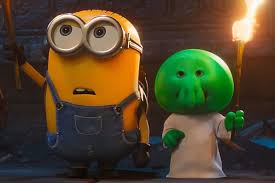
It was about the time that tourists on a history of Hollywood tour walked past an animated George Lucas in a glass case, speaking with the ACTUAL VOICE OF THE ACTUAL GEORGE LUCAS that I said, “Okay, my critical faculties have been officially shut down and I am just a happy fangirl at this point.” “Minions & Monsters” continues the origin story of the little yellow guys in denim overalls and now adds in the origin story of the movies, plus a robot voiced by Jesse Eisenberg and some love for the fanboys. That’s a quintella of irresistableness and I did not even try to resist.
Copyright 2026 Universal
In a present-day prologue, tour guide (Alison Janney) tells a group to take a seat so she can give them the full story of the two minons who changed everything in movies, history, and the world. We go back in time to see them on their quest to find and serve the most evil master in the world. Unfortunately, the minions keep accidentally destroying their “big bosses.” First there is a “scary, burly, and super-mean”gigantic one-eyed ogre, then a wizard with a book of arcane spells, and a despotic king.
Then, they see another promising bad guy, an old West train robber riding a galloping horse. The minions end up taking over the train, which crashes through the city of Los Angeles circa early 1920s (the history dates here are pretty wobbly, but go with it). This gives us a glimpse of iconic silent film characters and settings including Charlie Chaplin in “Modern Times,” Buster Keaton in “Steamboat Bill Jr.,”and Harold Lloyd in “Safety Last.” That train robber? An actor, in a film the minions have just disrupted to the frantic consternation of a dashing monacle-sporting, tweed-knickers-wearing director named Max (Christoph Waltz). But it turns out the brothers who run the movie studio (both voiced by Jeff Bridges) love the chaos of the minions and soon they are big stars, living in an enormous mansion, adored by fans, and selecting what will become their iconic look: denim overalls.
Like many other stars of the silent era and unforgettably depicted in “Singin’ in the Rain,” things change dramatically for the minions when the sound era begins. The minions do not possess the ability to produce intelligable speech. Most of the minions go off in search of another “big boss.” A few, including James, Henry, and Ed, who is Deaf decide that they need to make a monster movie. And so they use the wizard’s book of spells to call up a friendly little green monster (Trey Parker) who promises to bring them to some scary but cooperative monsters.
Meanwhile, a nerdy robot named Dort (Eisenberg) proves unexepectedly adept at fighting bullies at a sci-fi convention and starts seeing a sweet suffragist named Debbie (Zoey Deutch). Dort is a great new character, with a wonderful retro design and a hilarious, slightly unbalanced walk.
It is exciting and very funny and in love with movies. It even begins with the old Universal logos and the Eadweard Muybridge images that led to the very first development of movie technology. Above all, like “Toy Story 5” (and “Toy Story 4”) this film is a tribute to the joy of imagination. The two new minion characters, James and Henry (like the other minions, voiced by director Pierre Coffin) grew up creating stories and characters. The people who made this film did, too, and they want you to see how exciting and fun and important that is.
Parents should know that this film includes a lot of cartoon comic mayhem, peril, and violence including scary monsters and sharks, chases, punching and slapping, a character’s head is cut off, and another dissolves into dust. There is some rude humor including a character who sits on a toy. A new minion is Deaf and his friends quickly adapt to using sign language.
Family discussion: Why do brothers Frank and Ernest have such different responses? Which of the minons are better at adapting to changing circumstances? Which of their “big bosses” is the scariest?
If you like this, try: the classic movies referenced in the film and the other minions and “Despicable Me” movies
Rated PG-13 for for sequences of strong violence, action, language, and smoking
Profanity:
Some strong language
Alcohol/ Drugs:
Drinking and drunkenness, cigar smoking
Violence/ Scariness:
Extended comic book violence, graphic and disturbing images, parents killed, home destroyed
Diversity Issues:
Diverse characters
Date Released to Theaters:
June 26, 2026
Copyright 2026 Warner Discovery
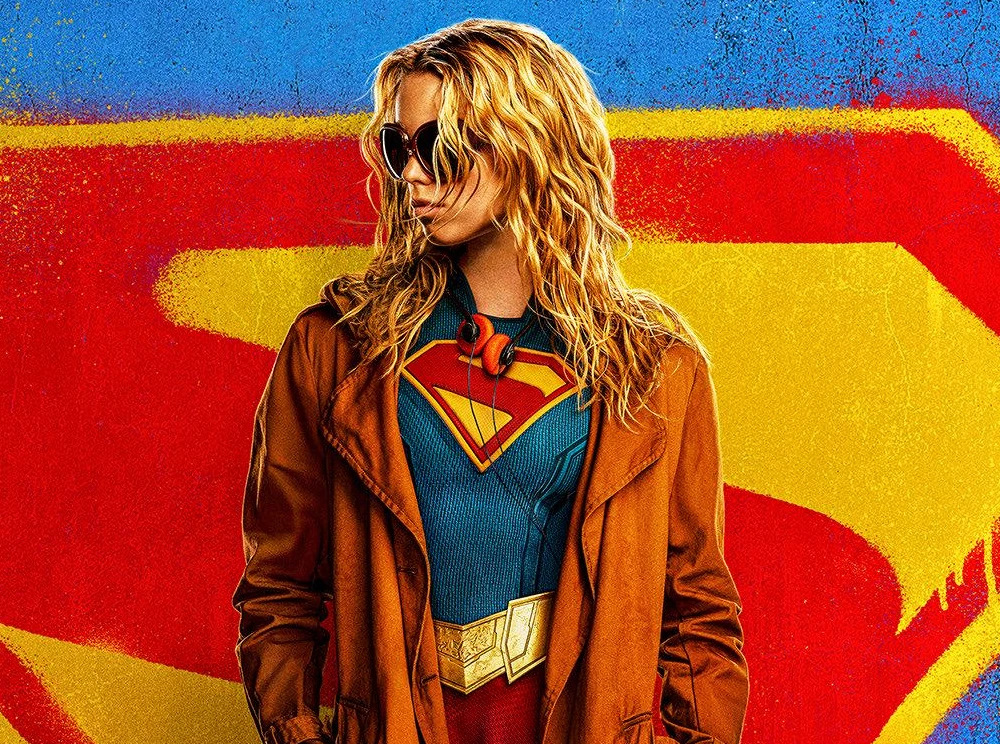
Last year, “Superman” gave us David Corenswet as an optimistic, trusting, honorable Boy Scout of a superhero, one who said that that was the real punk rock. And in a scene in the credits, we saw that his cousin Kara/Supergirl (Milly Alcock) is a complete mess and also very attached to superdog Krypto.
Now, in “Supergirl,” that is where we start, with Kara celebrating her 23rd birthday with an inter-planetary pub crawl. Every night is a different planet and a different bar and every morning is the same hangover. Throughout this film, Superman will try to get in touch with Kara and encourage her to come “home.” But she does not see Earth as home. We will learn more about her grief and the source of her trauma later. Unlike Superman, who was sent from the exploding Krypton as a baby and found a loving home on Earth, Kara was a teenager when she lost her home and parents and has severe PTSD.
Those who know the backstory of the refugees from Krypton will remember that one of the sources of their superpowers on earth is our yellow sun, instead of the red sun on Krypton. So when we see that she is getting drunk on a planet with a red sun we know that she does not have the super-strength, invulnerability, or laser vision she has on Earth or any other yellow sun planet. But, we will learn, she likes to drink on yellow sun planets because without superpowers she is more susceptible to the effects of alcohol.
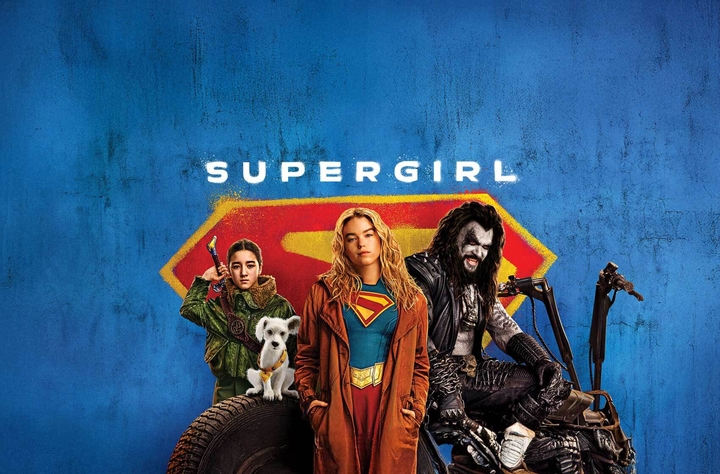
I always say that superhero movies, and really most action movies, depend more on the bad guys than the good guys, and in this case our bad guy is the genuinely terrifying Krem of the Yellow Hills (Matthias Schoenaerts) an inter-planetary brigand with a face covered with studs who specializes in senseless violence, not so much because he enjoys it but because it is meaningless. We see him kill a modest man who is a legendary crafter of swords, along with his wife and son, even though they made no effort to keep him from stealing their cache of weapons. The young daughter, Ruthye (Eve Ridley) hides and sees it all. She is determined to kill Krem, so “True Grit”-style she goes to a bar full of rowdy, cut-throat outlaws to find someone to help her. This is not “Planet Hail Mary” so no one cares about details like whether the gravity and oxygen and language/communication and technology on other planets are all as easy to reach as the next stop on the subway and pretty much the same, aside from some “Star Wars” cantina-style creatures in the bar scenes.) Also, like Mattie in “True Grit,” she has an oddly formal, old-fashioned way of speaking, plus, for some reason, a British accent.
One of the bar creatures steals Ruthye’s sword, and Kara, drunk, without her powers, but perhaps identifying a little with the girl goes after the thief. It’s always good to see a fight scene that has a little extra zhuzh to it, and seeing Kara fight a gigantic, scary-looking guy without her powers and with impaired judgment adds interest. There’s nice zhuzh in some of the the other fights, another one with Kara impaired and especially when Kara fights three maurading women who have technology that enables them to disappear briefly and re-appear in another nearby location.
Even though Kara keeps telling Ruthye she will not help her, circumstances keep pushing them together. Krem takes Kara’s ship and shoots Krypto with a poison that takes three days to kill. This gives her a mission and a deadline. They also meet up with cigar-chompin’, motorcycle-ridin’, now it’s a party all-purpose ruffian Lobo (Jason Momoa) who shows up now and then, not to rescue Kara or Ruthye, just to join in.
It’s a little messy. But so is Kara, and her path to being a bit less messy by the end is worth watching.
NOTE: You do NOT need to stay to the end of the credits. No exta scenes.
Parents should know that this is a superhero film with constant comic-book-style action, peril and violence with many characters injured and killed and some graphic and disturbing images. Two young women lose their families. Young women are kidnapped with the intent to rape and impregnate them. Characters use strong language and Supergirl/Kara drinks to get drunk and numb her pain.
Family discussion: How did Ruthie change Kara’s ideas about herself? What is the difference between being nice and being good. What is the meaning of the moment when Kara decides to wear the uniform Superman gave her? Why is it SuperMAN and SuperGIRL?
If you like this try: “Superman” and the “Supergirl” television series.
Rated R for violence, some grisly images, and language
Profanity:
Some strong language
Alcohol/ Drugs:
Alcohol
Violence/ Scariness:
Intense and graphic war violence, many characters injured and killed, disturbing images
Diversity Issues:
Depicts the era's segregated military
Date Released to Theaters:
June 26, 2026
Copyright 2026 Roadside Attractions
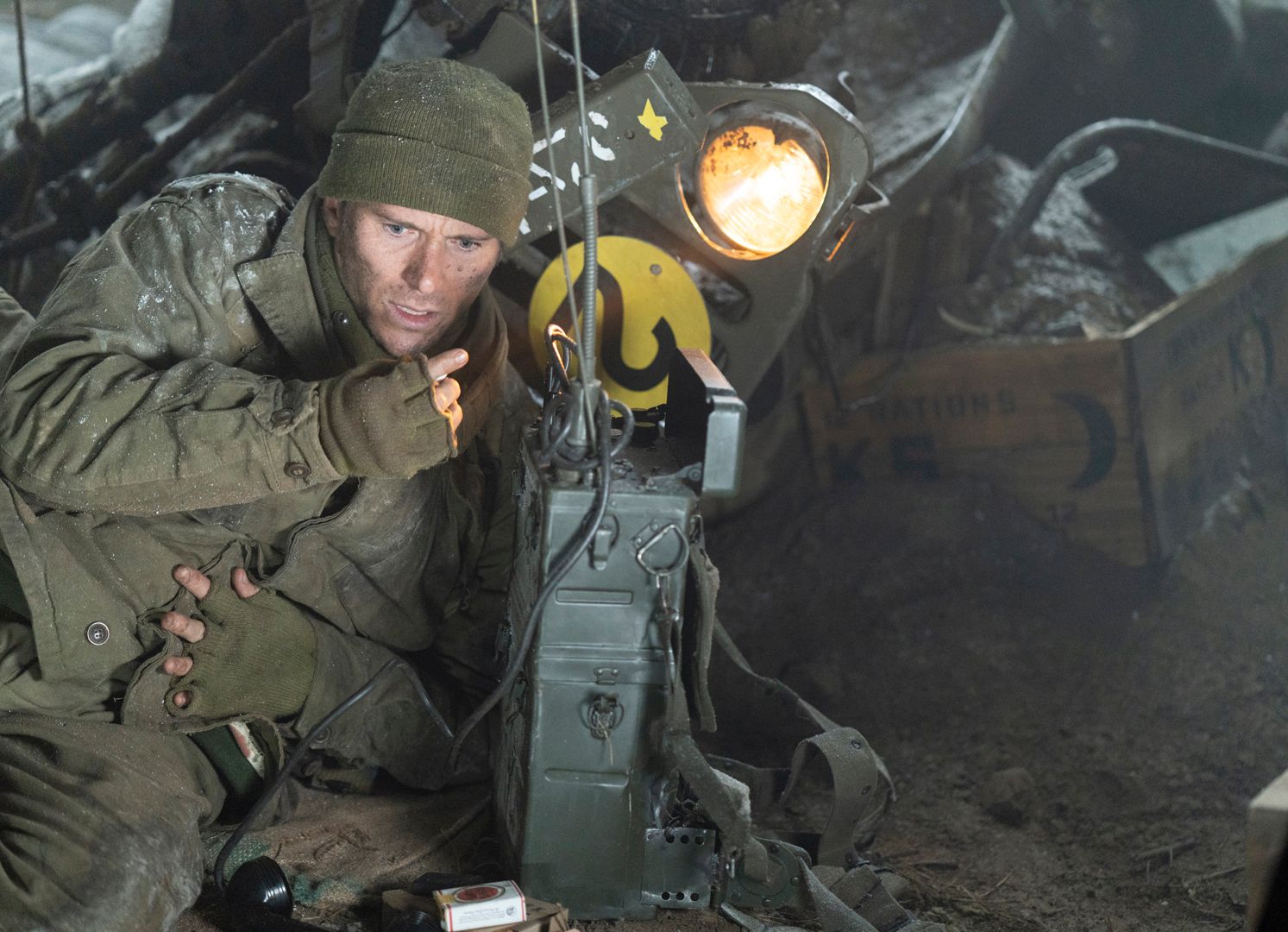
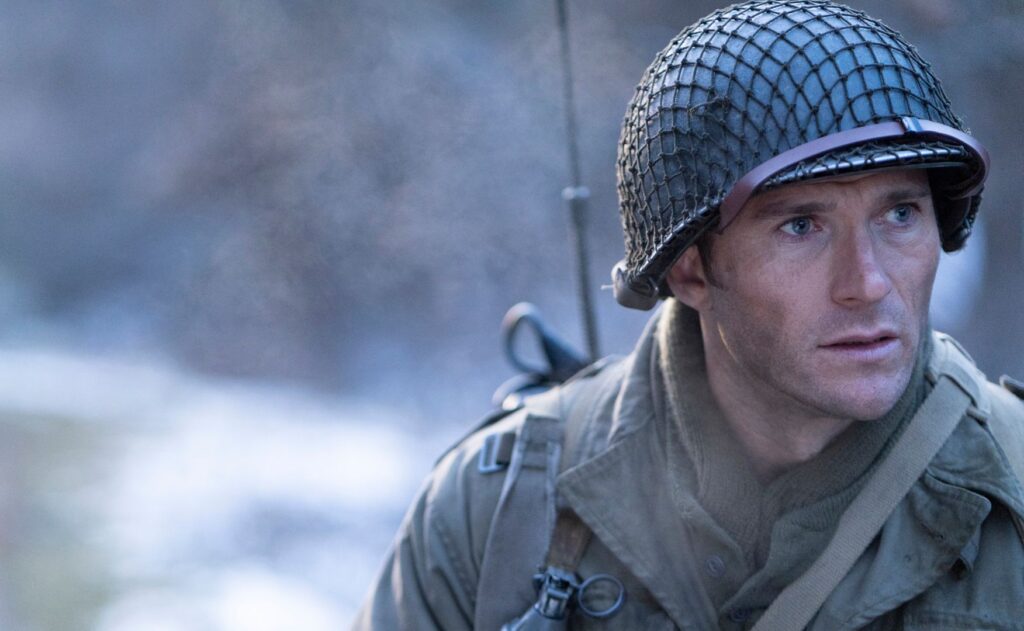
In snowy December of 1944, Hitler launched his last big attack in the Ardennes Forest that runs through Belgium, France, and Luxembourg, in what became known as the Battle of the Bulge. It was a major turning point in the war in Europe that would end with Hitlere’s death and Germany’s surrender six months later. “Lucky Strike,” inspired by a true story, is about an injured US soldier who was caught behind enemy lines early in the battle and had to find his way back to his unit with the help of then-brand-new technology that allowed him to communicate his position.
Scott Eastwood plays Colonel John Castle, a man who chose to enlist even though he was exempt from the draft because he was an engineer who could contribute to the war effort on the home front. He is part of a dedicated but exhausted unit in Charlie Company, 324th Infantry Regiment, part of the U.S. 44th Infantry Division.
Castle is assigned to oversee a small group directed to cut off the road the Germans are approaching, setting and firing off explosives to block them. They are warned that this Nazi division is ruthless, killing everying instead of taking prisoners. They are ambushed by the Nazi forces and everyone but Castle is killed.
With the new communications device, the size of a backpack and nicknamed “Lassie,” Castle learns that he is 30.5 km (about 19 miles) from a rendezvous spot and the overwhelmed soldiers do not have the resources to rescue him. Much of the film is about his near-escapes along the way and the way that Lassie keeps him connected. And we also see how he repaid the person who made sure that Lassie would survive the direst conditions, played by the always-magnificent Aunjanue Ellis-Taylor in a performance of endless dignity and grace.
The screenplay is co-written by “The Outpost’s” Rod Lurie, a West Point graduate with a deep understanding of the military and a superb eye for pacing and detail. Everything in the film is from Castle’s point of view. If people speak French or German, he does not understand them and so we do not get subtitles. There are some breathtaking “oners,” scenes that are all in one long take, which make Castle’s experiences extremely tense and intense. He has an eye for telling details. Castle removes the dog tags from his dead crew, and we glimpse the Star of David on one and the cross on another, connecting us to the soldiers who have just made the ultimate sacrifice and to the diversity of the country they were fighting for.
The cinematography by Lorenzo Senatore is stunning, with three different color palettes for different settings. It opens in black-and-white, emphasizing the fog and snow, with another scene of an American group being wiped out by Nazis. The scenes set in the US are warm and vibrant. In contrast, Castle’s mission and his long way back are more muted.
Lurie’s co-screenwriter is Marc Frydman, who went to school in France, where American veterans were honored by being invited to tell their stories. He was so struck by the one who sought out the person responsible for Lassie that he wanted to tell the story. The different dangers Castle faces along the way are well-crafted — a fight in the very close quarters of the front seat of a truck is especially exciting — and the scenes at the end (with a child who shares his name with Lurie’s late son), are meaningful.
Parents should know that this is a war story with many characters injured and killed, including civilians. There are guns and explosions. Character drink, smoke (see the movie’s title) and use some strong and crude language.
Family discussion: Why did Castle refuse the exemption and enlist? How did he decide who to trust? What technology is important to you and how could you thank the people responsible for it? What technology do you wish would be invented or would you like to invent?
If you like this, try: “To Hell and Back,” “Pressure,” “The Longest Day,” and “Dunkirk’