Wonder Wheel

Wonder Wheel

Posted on November 30, 2017 at 5:36 pm

C
Lowest Recommended Age: Mature High Schooler
MPAA Rating: Rated PG-13 for thematic content including some sexuality, language and smoking
Profanity: Strong language
Alcohol/ Drugs: Smoking, drinking, references to alcoholism
Violence/ Scariness: Peril and off-screen violence, references to mob killings
Diversity Issues: None
Date Released to Theaters: December 1, 2017
Date Released to DVD: March 3, 2018

Copyright Amazon 2017
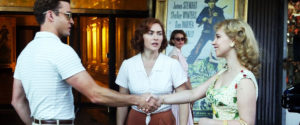
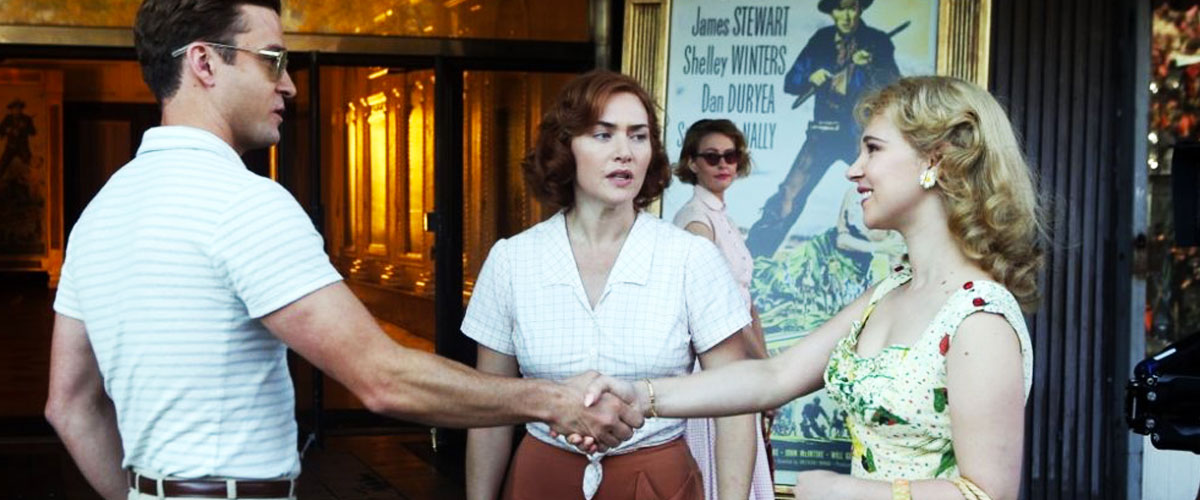
Writer/director Woody Allen continues to explore questions of fate, chance, and choice he has addressed with much more art and understanding before in “Wonder Wheel,” a dreary, dull story set in 1950’s Coney Island. Unlike the character who talks about responsibility, Allen tries to duck his own failures by having his stand-in narrator tell us that the story is filled with metaphor and symbolism. That stand-in is Justin Timberlake as a lifeguard named Mickey who wants to write big, dramatic plays like Eugene O’Neill, and he addresses us directly in an unsuccessful attempt to make the story appear more meaningful.

Mickey, who is going to school on the GI bill after his service in the navy during WWII, is having an affair with a married older woman, Ginny (Kate Winslet). She is a waitress at a clam joint on the boardwalk, but she tells him she is a former actress who is just playing the part of a waitress. Her husband, Humpty (a blustery Jim Belushi) runs the carousel. She has a young son from her first marriage who lies, steals, and sets fires everywhere. And Humpty has a daughter named Carolina (Juno Temple), estranged since she married a mobster five years earlier, who shows up because she is on the run. She has left her husband and shared some information with law enforcement, and now goons want to kill her.

All of this could be set up in a few brief scenes, but this is a movie where everything has to be said at least twice, just to drag it all out. Slate’s Sam Adams writes that Allen is trying to justify some of the highly-controversial choices of his personal life and attack his former partner (and mother of his current wife) in this film. It is equally possible to read it as a mea culpa, with Ginny’s confession that she destroyed her one chance at personal and professional happiness when she betrayed her first husband, belatedly realizing he was the love of her life, but just could not help herself. Is this fate? A recurring character flaw? Allen does not seem interested enough to follow through.

The production design gorgeously brings to life the look of 1950’s Coney Island, the beach, the boardwalk, and the rides. Ginny and Humpty literally live under the ferris wheel that gives the film its title, reminiscent of Alvy Singer’s family living under the roller coaster in “Annie Hall.” Cinematographer Vittorio Storaro gives a romantic glow to many of the scenes, perhaps making a link between Ginny’s red hair and the fires set by her son. The actors do their best to bring the characters to life, but with a repetitive, underwritten script and sour, dreary tone, it is as though instead of putting his characters in a story he tossed them like pennies in search of an I Ching fortune. In life, we can debate the role of destiny, fatal flaws, and choice. But a writer is in control of all three for his characters, and no amount of visual flair or acting talent can obscure the failure to make those choices meaningful.

Parents should know that this film includes sexual references and situations, adultery, strong language, drinking and alcoholism, references to domestic abuse and child abuse, smoking, and references to mob violence.

Family discussion: What symbols can you identify in this story? What does the ferris wheel mean? What about the fires?

If you like this, try: “Crimes and Misdemeanors”

Related Tags:


Drama DVD/Blu-Ray movie review Movies -- format Movies -- Reviews
The Disaster Artist

The Disaster Artist

Posted on November 30, 2017 at 5:13 pm

B +
Lowest Recommended Age: Mature High Schooler
MPAA Rating: Not rated
Profanity: Very strong language
Alcohol/ Drugs: Alcohol
Violence/ Scariness: Fictional depiction of suicide and violence, some scuffles
Diversity Issues: None
Date Released to Theaters: December 1, 2017

Copyright A24 2017Let’s face it. Failure is more fascinating than success. There are innumerable movies based on true stories about real people who overcame seemingly insurmountable obstacles with determination, vision, and talent to accomplish extraordinary achievements in sports, the arts, and shaping public policy. Movies like “Schindler’s List” and “The Big Short” help us to understand huge, complicated tragic failures through the prism of small victories. But there are also movies like “Florence Foster Jenkins,” with Meryl Streep as the legendarily awful singer and “Ed Wood,” with Johnny Depp as the legendarily awful movie director, that explore with some affection the stories of terrible failures, and they do it with vastly more skill than the people they depict could have imagined.


In fact, that is part of what led to the failures in the first place — Florence Foster Jenkins and Ed Wood were exemplars of the Dunning-Kruger effect, which shows that the less competent people are, the more likely they are to be unable to evaluate their own competence. It isn’t the terrible end product that enthralls us as much as the buoyant optimism and imperishable self-regard that keeps these people going while the rest of us are consumed with doubt and insecurity.

The Room,” from writer-director-star Tommy Wiseau, has been called “the ‘Citizen Kane’ of bad movies.” It is in that rare category of films that transcend “so bad it’s good” and “suitable for Mystery Science Theater commentary” into genuine hit, with well-attended midnight showings filled with fans who come to see it again and again. Like the midnight “Rocky Horror Show” screenings, fans come in costume and with props. An arty picture of a spoon in a frame that appears in many shots provokes a flurry of plastic spoons thrown at the screen. The crowd yells “focus” whenever someone should have reminded the cinematographer that the camera needed to produce a sharper image. And some people get happily tipsy taking a drink whenever any of the movie’s characters say “Hi.”

The film is based on a book co-written by Greg Sestero, who co-starred in “The Room.” For multi-degreed master of literary analysis James Franco, who directed and stars in the film, “Disaster Artist” is not an oxymoron. In his mind, Tommy Wiseau is an artist because he has a singular vision so urgent that he will realize it, no matter the cost, in the most literal terms. Wiseau is said to have spent six million dollars in making “The Room,” much of it as poorly decided as every other choice that went into making the film.

“The Room” tells the story (I use the term loosely, as the script is a mishmash of many unexplained developments and characters, with a plot even more out of focus than the camera) of Johnny (played by Wiseau, and Franco as Wiseau in this version), a successful banker who has a fiancee named Lisa (portrayed by Ari Graynor), a best friend named Mark (played by Dave Franco as Greg Sestero), and a teenage protegee of some kind named Danny (played by Josh Hutcherson). Lisa is bored with Johnny and begins an affair with Mark, though her mother pushes her to stay with Johnny because he is rich and treats her well. The film has extended soft-core-style sex scenes, a weird, inexplicable confrontation between Danny and a drug dealer, and another odd scene with guys in tuxedos tossing a football.

“The Disaster Artist” begins with Greg and Tommy meeting in acting class in Northern California, becoming friends in part because of their shared love for James Dean (coincidentally once played by Franco himself in a breakthrough performance) and dreams of being stars. They move to LA together, with Greg staying in Tommy’s apartment. Tommy is quite mysterious about his background (he has a strange eastern European accent), his age, and his source of income. He is supportive of Greg but also possessive. The decision to cast his own brother as Greg is Franco’s exploration of a mirrored duality in their relationship and there is more than a hint of some boundary issues that may reflect homoerotic feelings.

Frustrated by his lack of success in Hollywood and jealous that Greg is getting some work, Tommy decides to write and produce his own movie. And so we see how many bad decisions go into creating the “Citizen Kane” of terrible cinema. But we also see a very rare example of a film, usually the ultimate artistic reflection of teamwork, that is a genuinely singular vision. As muddled and incoherent as it is, it is exactly the movie he had in his head and exactly the movie he wanted to make. Franco clearly respects that, as Tim Burton did with “Ed Wood” (with Vincent D’Onofrio’s Orson Welles as his stand-in showing one director saluting another). The audiences in the midnight shows are there to jeer and feel superior. Franco, in his performance and direction, is sympathetic, giving Wiseau and his story the film he was not able to give himself.

NOTE: Be sure to stay through the credits for some uncanny side-by-side re-creations of scenes from “The Room” with the cast of this film.

Parents should know that this film includes nudity, sexual references and situations, depiction of suicide and violence, alcohol, and very strong language.

Family discussion: What does it mean that something is “so bad it’s good?” What does this movie tell us about the decisions that go into making a work of art?

If you like this, try: “The Room,” of course, and the book by Sestero, and the bonkers “Beaver Trilogy” documentary

Related Tags:


Based on a book Based on a true story Behind the Scenes DVD/Blu-Ray movie review Movies -- format Movies -- Reviews Scene After the Credits Understanding Media and Pop Culture
Lady Bird

Lady Bird

Posted on November 28, 2017 at 10:04 pm

A-
Lowest Recommended Age: Mature High Schooler
MPAA Rating: Rated R for language, sexual content, brief graphic nudity and teen partying
Profanity: Very strong language
Alcohol/ Drugs: Drinking and drunkenness
Violence/ Scariness: Mild peril
Diversity Issues: None
Date Released to Theaters: November 3, 2017
Date Released to DVD: March 5, 2018
Copyright 2017 A24

“Lady Bird? Is that your given name?” the patient priest who is directing the high school play asks at an audition. “Yes.” “Why is it in quotes?” The sign-up sheet reads: Christine “Lady Bird” McPherson (Saoirse Ronan). “I gave it to myself,” she says. “It’s given to me by me.” Perhaps she selected the name because she is getting ready to fly away and the thought thrills and terrifies her.

Christine “Lady Bird” McPherson is a senior in high school, on the brink of that moment when we are heady at the notion of inventing ourselves. We meet her coming home from a trip with her mother (Laurie Metcalf) to visit colleges near their home in Sacramento. They weep silently together at the end of an audiobook and bicker about the things that mothers and teenage daughters bicker about. Lady Bird (as we will call her) wants to go to college in the East, “where writers live in the woods.” Her mother, a nurse, is trying hard to balance the need to be practical about finances — Lady Bird’s father is about to lose his job — with the parental instinct to protect her daughter from the most unpleasant realities of life, including her parents’ inability to make everything work out. Fortunately, if frustratingly, Lady Bird has retained the solipsistic luxury of tuning out most of what her parents tell her.

Writer/director Greta Gerwig captures with breathtaking precision that liminal moment when teenagers manage to mash-up grandiosity that stretches to infinity and soul-crushing insecurity. “Math isn’t something you’re terribly strong in,” a nun (Lois Smith) tells her diplomatically. “That we know of. Yet,” Lady Bird replies. “I just want you to be the best version of yourself,” her mother tells her. “What if this is the best version of myself?” she asks. Metcalf’s expression on hearing this question contains multitudes of sympathy and maybe a touch of envy at the endless possibilities spreading out in front of her daughter.

This is one of the best ensemble casts of the year. Metcalf and Tracy Letts, as Lady Bird’s parents, Smith and Stephen McKinley Henderson as her teachers, “Manchester by the Sea” Lucas Hedges and “Call Me By Your Name” Timothée Chalamet as boys she likes, and Beanie Feldstein and Odeya Rush as her friends are all superb. Gerwig never lets even the smallest roles be anything but specific and complex. The episodic storyline brims with telling, meticulously observed moments. Lady Bird and her mother stop bickering for a moment in the thrift store when they suddenly unite in the ecstasy of finding the perfect prom dress (inspired, Gerwig told me, by “Pretty in Pink”). Her father finds himself competing for a job with his own son, pride and support edging just slightly ahead of desperation. Lady Bird makes some bad mistakes in judgment but there are no bad guys here, just people trying to figure out who they are and connect without hurting or being hurt, still young enough to assume that it’s only a matter of time.

Parents should know that this film includes very strong language, sexual references and situations, teen drinking, and mild peril.

Family discussion: What name would you pick for yourself? Is Lady Bird more like her mother or father?

If you like this, try: “Frances Ha” and “Edge of Seventeen”

Related Tags:


Drama DVD/Blu-Ray movie review Movies -- format School Stories about Teens
Three Billboards Outside Ebbing, Missouri

Three Billboards Outside Ebbing, Missouri

Posted on November 27, 2017 at 6:37 pm

A-
Lowest Recommended Age: Mature High Schooler
MPAA Rating: Rated R for violence, language throughout, and some sexual references
Profanity: Very strong, explicit, and crude language
Alcohol/ Drugs: Drinking, smoking
Violence/ Scariness: Graphic violence, characters injured and killed, suicide
Diversity Issues: None
Date Released to Theaters: December 1, 2017
Date Released to DVD: February 27, 2018
Copyright Fox Searchlight 2017

I sing the rage of Frances McDormand, who plays Mildred Hayes, a grieving mother who is not so much consumed by righteous fury as filled with a desperate need for it to consume everyone else around her. There is no better actor to convey fury than McDormand. When she is good, she is very, very good, but when she is mad she is better.

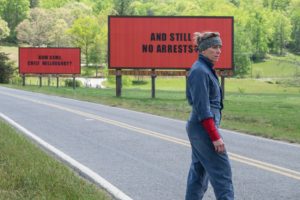
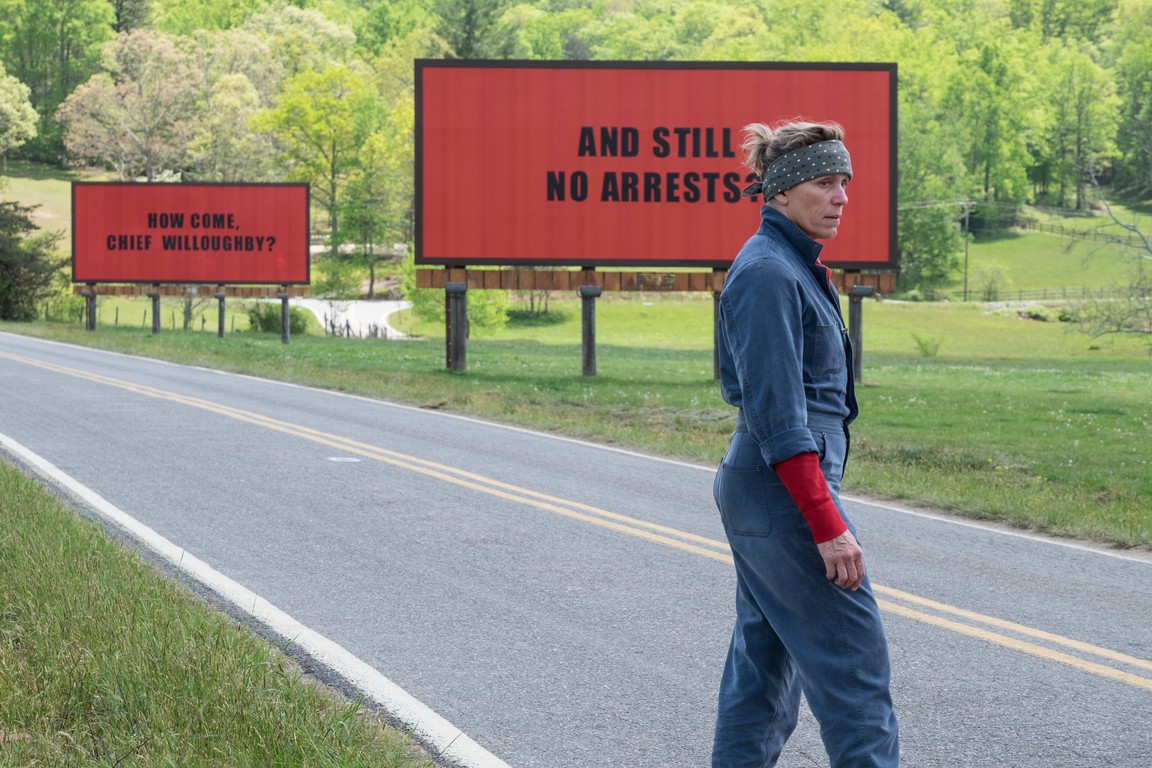
It is seven months after Hayes’ daughter was raped and burned to death and there have been no arrests. There are three billboards near her home in Ebbing, Missouri that are crazy quilts of tattered leftover, shredded images from layers of advertisements brightly urging drivers to buy Huggies or visit the Ozarks. She visits Red (Caleb Landry Jones), who is responsible for renting out the billboards and gives him $5000 for one month. On oxblood-red backgrounds, the stark white letters now say, “Raped while dying,” “And still no arrests,” and “How come, Chief Willoughby?”

That provokes a visit from the police chief (Woody Harrelson) who is compassionate and frank. There were no witnesses. The DNA does not match anyone in the system nationwide. He wants to find out who did it, but there is not much he can do.

The billboards are unsettling to the town, especially Officer Dixon (Sam Rockwell), who is the kind of dim, resentful guy who expresses his insecurities by abusing others, especially African Americans. Only Willoughby sees that Dixon could be a better man. His angry, racist mother spurs him on to worse behavior.

Writer/director Martin McDonagh (“In Bruges,” “Seven Psychopaths”) has a savage humor and an ear for the poetry in the way real people speak. In this film, he shows a warmth and humanity we have not seen before. In one scene, Hayes’ fury is instantly defused when a character shows unexpected vulnerability. In another, she has a conversation with a deer who wanders over to one of the billboards as Hayes is planting flowers. McDormand has always been one of our finest actors and here she gets a chance to inhabit one of her most complex characters and does it beautifully. Whether she is striding around like a warrior in a denim jumpsuit and a bandana wound around her head or unable to conceal a small smile at the ruckus she is creating, she is a force of a nature and a wonder to watch. Everyone in the cast is outstanding, with special mention of Harrelson and Rockwell and of newcomer Jones, a breakout this year in films including “American Made” and “Get Out.” Hayes’ fury is like a firework lighting up the sky, but it is only when it is out that we can see the stars in these deeply compassionate portrayals.

Parents should know that this film includes references to a horrific rape and murder of a teenager and it shows serious violence with severe injuries, as well as very strong and crude language, drinking, and smoking.

Family discussion: Did the billboards help? What else could she have done? What will happen next?

If you like this, try: “In Bruges,” “Fargo,” and “Olive Kitterige”

Related Tags:


Drama DVD/Blu-Ray movie review Movies -- Reviews
Coco

Coco

Posted on November 21, 2017 at 8:42 pm

A-
Lowest Recommended Age: Kindergarten - 3rd Grade
MPAA Rating: Rated PG for thematic elements
Profanity: Mild language
Alcohol/ Drugs: None
Violence/ Scariness: Themes of death and loss, some peril
Diversity Issues: None
Date Released to Theaters: November 22, 2017
Date Released to DVD: February 27, 2018
Copyright Disney-Pixar 2017

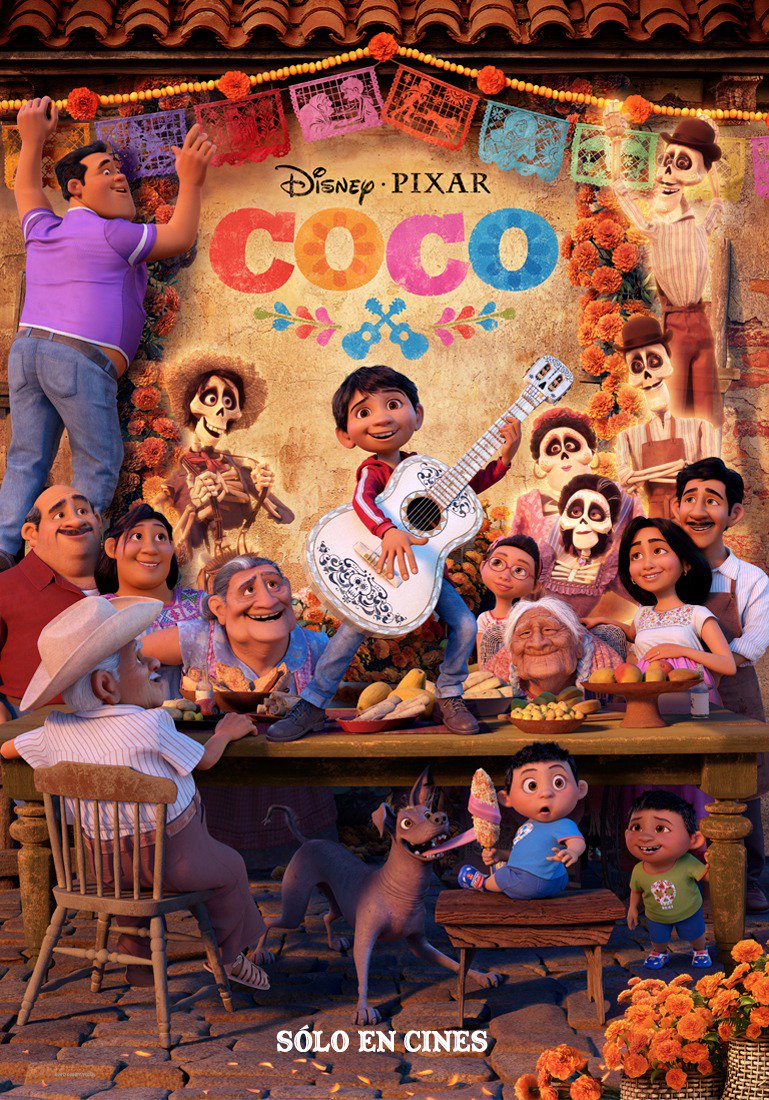
Those of us who remember the 1995 release of Pixar’s first feature film, “Toy Story,” feel that we’ve all grown up together. It isn’t just the astonishing progress in the technology (the reason the first film’s characters were toys was that all they could animate were shiny smooth surfaces). It is the progression of the themes of the films, the first one literally about a child’s playthings, through stories that deal with increasingly adult concerns about aging, loss, and meaning. “Coco” is the story of a Mexican 12-year-old named Miguel, but the title reminds us that the central character is his great-grandmother Coco, struggling with dementia but beloved by her family. It has the dazzling visuals, expert tone and pacing, and the smiling-through-tears moments we have come to rely on from Pixar.

Miguel (Anthony Gonzalez) is the youngest in a big, close family that lives together and works together in the family shoemaking business. He tells us the story of the family through beautifully animated papel picado, the lacy paper cutouts that are a Mexican tradition. His great-great grandfather abandoned his wife and daughter, the then toddler Coco, to pursue a musical career and since then the family has banned any member from playing or even listening to music. But Miguel loves music and has a secret room where he watches old clips of the community’s biggest music and movie star, Ernesto de la Cruz (Benjamin Bratt) and plays his homemade guitar, painted to look like de la Cruz’s.

Miguel hopes to play in a talent show but his grandmother, Coco’s daughter, finds out and smashes his guitar. When Miguel tries to borrow de la Cruz’s guitar from his crypt, he is somehow transported to the Land of the Dead, just as the residents are making their annual pilgrimage over the marigold-strewn bridge to visit the families who have invited them with photographs and memories. There he recognizes his ancestors from the family ofrenda (shrine with photos, candles, food, and mementos). Like Dorothy in Oz and Alice in Wonderland, he has many adventures on a journey in an enchantingly imaginative world but wants to go home. If he does not return by sunrise, he will have to stay there forever.

The Land of the Dead is gorgeously imagined, filled with thousands of lights and the kind of fascinating details that are made for the pause button. The — I’m going to call them people, but they look like skeletons with eyeballs — live in a stratified world, where those who have extended families and are best and most lovingly remembered have beautiful clothes and homes while those who are alone and nearly forgotten live in a (still-picturesque) slum and call each other “cousin” and “uncle” to pretend that they are still connected to someone. Once they are no longer remembered, they just dissolve into dust. Miguel meets Hector (Gael Garcia Bernal), a loose-limbed, poorly dressed skeleton who is close to dissolving as he is being forgotten in the land of the living. Hector agrees to take Miguel to Ernesto de la Cruz, for help in going home, if Miguel will bring back Hector’s photo, so he can be remembered.

It is good to see Mexican culture portrayed in such a straightforward manner, not exotica-sized or othered. There are some exciting adventures and some very funny moments along the way, involving Miguel’s sidekick, a Xolo street dog named Dante, a wild talent show/concert, a still-pushing-the-edge-of-the-artistic-envelope Frida Kahlo, and a psychedelic-colored flying lion-headed creature, one of the alebrije who guide the dead to where they are supposed to be. The skeletons are brilliantly animated, each with a very individual personality and a lot of fun with bones that, without tissue, do not always hold together. Moments of warm humor keep the story from getting maudlin, and moments of true-heartedness make us feel as connected to the Land of the Dead as Miguel is.

Parents should know that much of the film takes place in the Land of the Dead (heaven) filled with skeletons, and it has themes of loss including memory loss, and murder and alcohol.

Family discussion: When is the right time to seize the moment? Ask your family for some stories of your ancestors. What stories do you want people to remember about you?

If you like this, try: “Finding Nemo,” “Inside Out,” and “The Book of Life” — and learn about Frida Kahlo and about the real-life Day of the Dead celebrations

Related Tags:


3D Animation DVD/Blu-Ray Pick of the Week movie review Movies -- format Stories About Kids
THE MOVIE MOM® is a registered trademark of Nell Minow. Use of the mark without express consent from Nell Minow constitutes trademark infringement and unfair competition in violation of federal and state laws. All material © Nell Minow 1995-2026, all rights reserved, and no use or republication is permitted without explicit permission. This site hosts Nell Minow’s Movie Mom® archive, with material that originally appeared on Yahoo! Movies, Beliefnet, and other sources. Much of her new material can be found at Rogerebert.com, Huffington Post, and WheretoWatch. Her books include The Movie Mom’s Guide to Family Movies and 101 Must-See Movie Moments, and she can be heard each week on radio stations across the country.

Website Designed by Max LaZebnik