Song Sung Blue

Song Sung Blue

Posted on December 24, 2025 at 9:27 am

A-
Lowest Recommended Age: Middle School
MPAA Rating: Rated PG-13 for Rated PG-13 for thematic material, some strong language, some sexual material and brief drug use
Profanity: Strong language
Alcohol/ Drugs: Pharmaseutical abuse, character is a recovering alcoholic
Violence/ Scariness: Offscreen serious injury and recovery
Diversity Issues: None
Date Released to Theaters: December 24, 2025
Copyright Focus 2025

First there was Neil Diamond, one of the foremost singer-songwriters of the 1970s-90s. And then there was a Milwaukee couple billed as Lightning and Thunder who described their act not as a Neil Diamond tribute act, but a Neil Diamond experience. (“Experience” in this case meaning a fog machine and a leaf blower to blow back their hair.) Then there was a documentary named “Song Sung Blue” about Lightning and Thunder (real names, Mike and Claire Sardina, about the success of their act but also about their setbacks and challenges, about the music and about their love story. And now, like the infinite regression of the girl on the ketchup bottle we have two huge Hollywood stars, very slightly dimming their imperishable glamour to star in a feature film of the same name, and it is one of the most purely enjoyable films of the year, with heartfelt performances and joyous music.

Jackman plays Mike, a divorced Vietnam veteran in recovery from alcoholism who has a teenage daughter. He is passionate about performing (a character astutely observes that a recovering alcoholic will find something else to be addicted to and his is music), and he is very specific about what he wants to do. His stage name is Lightning.

He first sees Claire (Hudson), a divorced mother of a teenage daughter and a younger son, when she is performing in a curly black wig as Patsy Cline. Back at her house, they start singing together and it is instant magic. Their chemistry as performers and as a romantic couple shines from the screen. Soon they get married (at the Wisconsin State Fair) and blend their families. One particularly nice scene is when the two teenage girls get together and form their own instant connection over their family upheavals and some weed.

There are some setbacks along the way, including a mistake in booking that has them performing their first gig not, as they thought, for a motor home convention but for a motorcycle club gathering. But soon, with the help of friends, their crowd-pleasing appearances lead to an enthusiastic local following. Those friends include characters played by Jim Belushi, as the gentle, very sincere tour bus driver who signs on to book their gigs, Michael Imperioli as a devoted friend and Buddy Holly impersonator who is thirty years older than Holly ever got to be, and Fisher Stevens as a dentist so on board he gets Lightning a replacement tooth with a bolt of lightning on it. All three give endearingly open-hearted performances. Lightning and Thunder sing the Neil Diamond songs like they are brand new, with superb musicality. We can see that they are most alive when they are on stage.

“I just want to sing and be happy and feel loved!” Claire tells her daughter. “I will be Neil Diamond, but I’ll also be me,” Mike promises. “He’s…artistic,” says Mike’s daughter to Claire’s daughter, meaningfully. “Most alcoholics trade one addiction for another. Music is that for Dad.” Those comments, along with impeccable work by production designer Clay A. Griffith and costume designer Ernesto Martinez tell us what we need to know about Mike and Claire. But writer/director Craig Brewer is also telling us a deeper story about the healing power of performing music to lift the spirits, bring people together, create a sense of meaning and purpose, and just make us feel good.

Claire is badly injured in a freak accident. Mike has heart problems. But they love each other and the audiences love them. And then they get a call from Eddie Vedder, who wants them to open for Pearl Jam when they play at a huge music festival in Wisconsin. (A terrific performance by John Beckwith as a slightly laconic but enormously decent Vedder and be sure to check out the footage of that real-life performance.)

Thanks to Brewer, the movie never condescends to Mike, Claire, or their friends. It takes the same joy in their performances that their fans do. Jackson is excellent as Mike and Hudson is a revelation here, never better, with a perfect Wisconsin broad A, exquisite harmonies, and so much joy on stage we cannot help but bask in it. As Claire recovering from her injury, depressed and knocked out on painkillers, she is raw and heartbreakingly vulnerable. We know she cannot give up the music, and seeing her back on stage, reconnecting with the pure joy of the music and the audience, connects us with all of that and with the love story, too.

Parents should know that this film has strong language, a recovering alcoholic, a serious injury and painkillers, and a teen pregnancy.

Family discussion: What’s the best Neil Diamond song? Were you surprised that Eddie Vedder invited Mike and Claire to open for Pearl Jam? If you were in the audience, how would you have responded?

If you like this, try: The documentary of the same name and of course the music of Neil Diamond
Related Tags:


Based on a true story Biography Drama movie review Movies -- format Movies -- Reviews Musical
Glass Onion: A Knives Out Mystery

Glass Onion: A Knives Out Mystery

Posted on December 23, 2022 at 5:41 pm

A-
Lowest Recommended Age: Preschool
MPAA Rating: Rated PG-13 for some disturbing images, strong language, and thematic content
Profanity: Some strong language
Alcohol/ Drugs: Drinking and drunkeness
Violence/ Scariness: A murder mystery with peril, homicide, and fighting, some disturbing images
Diversity Issues: Diverse characters
Date Released to Theaters: December 23, 2022

Copyright Netflix 2022
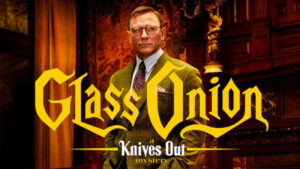
I have very conflicting ideas about this review. Part of me wants to tell you all about “Glass Onion: A Knives Out Mystery” but a bigger part of me wants you to find out all of its secrets and surprises on your own. So bear with me if I lean too far in that direction. I’m doing it for your own good. “Glass Onion” is an enormously entertaining delight and I want you to enjoy it fully. In fact, go ahead and watch it and then come back here if you want to see what I think about it.

Like its predecessor, “Knives Out,” it is a deliciously twisty remix of the classic British-style murder mystery, with a fabulous location and a group of suspects who all have motive and opportunity. Also like its predecessor, it has an all-star cast clearly enjoying themselves enormously.

The very large cast is efficiently and wittily introduced as each of them receives an elaborate invitation to a party at a fabulous glass mansion on a remote island, the home of a billionaire named Miles Bron (Edward Norton). In a brilliantly edited sequence, we see each of the characters trying to open the box, telling us a lot about who they are and how they think. Jackie Hoffman, as one character’s mother, is hilariously bored and sharp at the same time.

Receiving the astonishingly crafted puzzle box with the invitation:

Kate Hudson as Birdie Jay, a flamboyant, selfish, famous-for-being-famous celebrity whose outspoken remarks are often offensive.

Kathryn Hahn as Claire Debella, the governor of Connecticut.

Dave Bautista as Duke, an obnoxious, gun-toting social media star. He brings his girlfriend, Whiskey (Madeline Cline).

Leslie Odem as Lionel, a scientist working with Miles on a secret project.

Janelle Monae as Andi, formerly Miles’ girlfriend and partner.

These people were all friends before Miles became wealthy and they get together once a year. This year, Miles has something special planned, a murder mystery game.

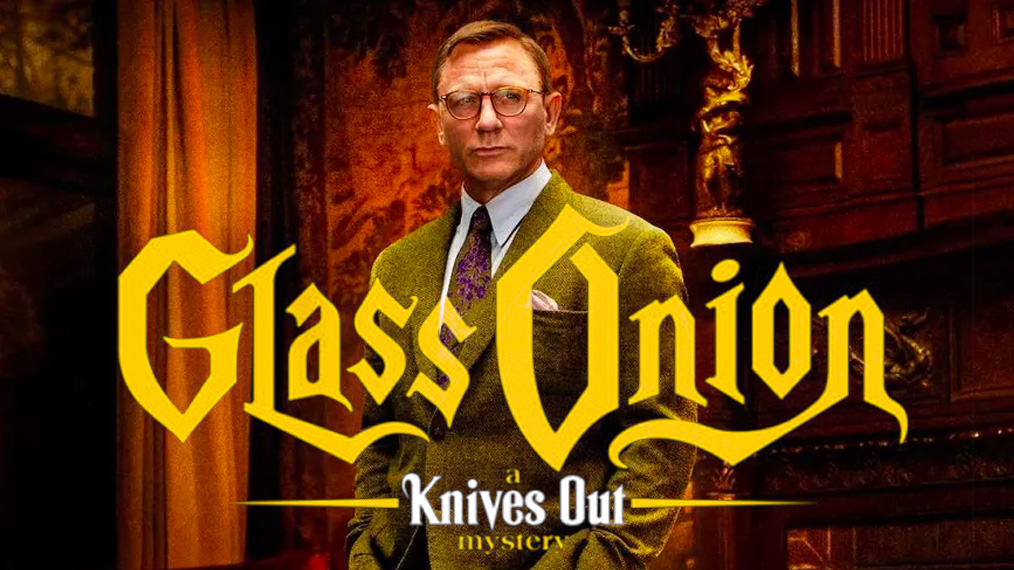
Also arriving on the island — the one carry-over character from the earlier film, the brilliant detective Benoit Blanc (Daniel Craig).

We learn about the connections that tie this group together, with some hilarious cameo appearances (two very touching from huge stars we recently lost) and celebrity references. Miles’ glass palace is filled with the kind of gauche art displays you would see in the home of an ultra-rich guy who wants bragging rights. (Genuine art lovers will notice that the “Rothko” is hanging upside down.) Amidst the twists and turns of the story are some clever digs at those we consider “influencers” and “disrupters.”

The performances are all spectacular. Hudson nails the selfish, superficial fading star desperate for attention, pretending that she does not know the difference between being outspoken and having something to say. Norton is just right with the false geniality of of a man who has given up everything to think of himself as a winner. Craig is a hoot (one of the movie’s best surprises is the reveal of his romantic partner). Monae masters a role that requires a lot of subtlety as the estranged member of the group and looks like a billion bucks as she does so.

What song will Johnson pick for the next one? Which superstars will appear? I can’t wait to find out.

Parents should know that this is a murder mystery with homicides and betrayal. There are some graphic images, characters use strong language and drink and get drunk. The movie also includes sexual references and a sexual situation.

Family discussion: What was the biggest surprise in the movie? How does the Beatles song “Glass Onion” relate to the film? Who should star in the next chapter?

If you like this, try: “Knives Out” and “See How They Run” as well as some of the stories that inspired them: “And Then There Were None,” “The Thin Man,” and the original “Murder on the Orient Express”

Related Tags:


movie review Movies -- format Movies -- Reviews Mystery Satire Series/Sequel Thriller
Marshall

Marshall

Posted on October 12, 2017 at 5:25 pm

B +
Lowest Recommended Age: Mature High Schooler
Profanity: Some strong language
Alcohol/ Drugs: Alcohol, smoking
Violence/ Scariness: Allegations of rape and attempted murder, fights and beatings, gun
Diversity Issues: A theme of the movie
Date Released to Theaters: October 13, 2017
Date Released to DVD: January 8, 2018

Copyright 2017 Open Road

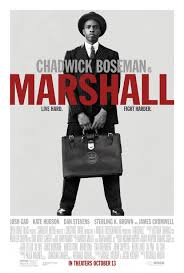
“It’s a real life Bigger Thomas,” says a character describing the new case assigned to a young lawyer named Thurgood Marshall (Chadwick Boseman). Bigger Thomas was the young black protagonist who could not escape the fundamental racism of American society in Richard Wright’s novel, Native Son, accused of rape and murder. In this real-life case, a black chauffeur named Joseph Spell (Sterling K. Brown of “This is Us”) was accused of rape and attempted murder of his employer, Eleanor Strubing (Kate Hudson), a wealthy Connecticut socialite. Marshall, then the entire legal staff of the NAACP, was going from town to town representing black defendants, many whom “confessed” after being beaten and starved, but, Marshall insists, only those who are innocent. They do not have time or resources to devote to those who did what they are accused of.

This case is unusual because it is in the North and because it is so high-profile. It has been a front page story in the newspapers and many white families are firing their domestic employees because they are so terrified.

Connecticut may not have the overt, explicit racism of the Jim Crow laws, but in some ways that makes fighting its version of bigotry more difficult. The judge (James Cromwell) refuses Marshall the normally automatic courtesy of allowing him to represent Spell in court without being a member of the state bar association. Instead, a local lawyer named Sam Friedman (Josh Gad) must argue the case, even though he has no experience in criminal trials and is very reluctant to get involved. “That must be difficult,” Marshall tells him wryly. “To have a reputation to think of.” Marshall may sit at the counsel’s table but may not address the judge or examine witnesses. He says that not being allowed to speak is the worst blow he has had as a lawyer, worse than having to enter the courthouse by the back door.

This is an absorbing drama on many levels, working purely as an “Anatomy of a Murder”-style courtroom mystery, as a historical depiction of the roots and mechanics of social change, and as the personal story of the two young lawyers facing enormous professional and personal challenges, developing a friendship, and becoming better at what they do.

The screenplay by father and son Michael and Joseph Koskoff is forthright in addressing the complicated ethics of preparing a defense for an individual client that many not always be consistent with the larger political imperatives. It also delicately if not always sucessfully skirts the complicated problem faced by contemporary films based on real-life events: if the white character teaches the black character, it’s condescending, but if the black character teaches the white character it’s “magical Negro.” In real life, Samuel Friedman was already active in civil rights cases before the Spell case, and he was slender and athletic. But for dramatic purposes, here he is played by Josh Gad and his character only takes insurance cases. We first see him winning for an insurance company on a technicality that leaves the disabled plaintiff without any damage payment. And Marshall’s character changes very little over the course of the film. He is sophisticated, tough, smart, and confident all the way through which is great as a tribute to one of the towering figures of the 20th century, but without some kind of character arc like the one given to Friedman, the risk is that he becomes a supporting character in the movie that has his name in the title. Fortunately Boseman is intensely charismatic and a gifted actor who is able to bring a great deal to the role, and he and Gad have a strong chemistry that benefits and is benefited by director Reginald Hudlin’s gift for understanding when comedy is needed to lessen the tension. Brown is also excellent in a role far removed from the high educated and successful characters on “This is Us” and “People v. O.J.” Indeed, the entire cast is outstanding, especially Hudson, Ahna O’Reilly as a juror, and Barrett Doss as Marshall’s host and friend.

The film balances the personal, the political, and the professional lives of its heroes and is frank about the opportunism — and the opportunity — of their choices. It places it in the context of its time, as Friedman’s family in Eastern Europe is captured by the Nazis and white thugs attack both lawyers. It makes its case as effectively as Friedman and Marshall make theirs — that courage and persistence bring change and that there are good people out there who will work, with all of our help, to make it happen.

Parent should know that this story concerns a real-life trial for rape and attempted murder with sexual references and situations, themes of racism including beatings and police brutality, some strong language, domestic violence, and some strong and racist language.

Family discussion: Why did Marshall represent only innocent clients? Did Spell have a fair trial? What has improved since that time? What has not?

If you like this, try: “Separate But Equal” and “Mr. Civil Rights: Thurgood Marshall and the NAACP”

NOTE: Read my interview with Boseman and director Reginald Hudlin at rogerebert.com

Related Tags:


Based on a true story Courtroom Drama DVD/Blu-Ray Pick of the Week movie review Movies -- format Race and Diversity Race and Diversity
Mother’s Day

Mother’s Day

Posted on April 28, 2016 at 5:20 pm

Copyright 2016 Open Road Films
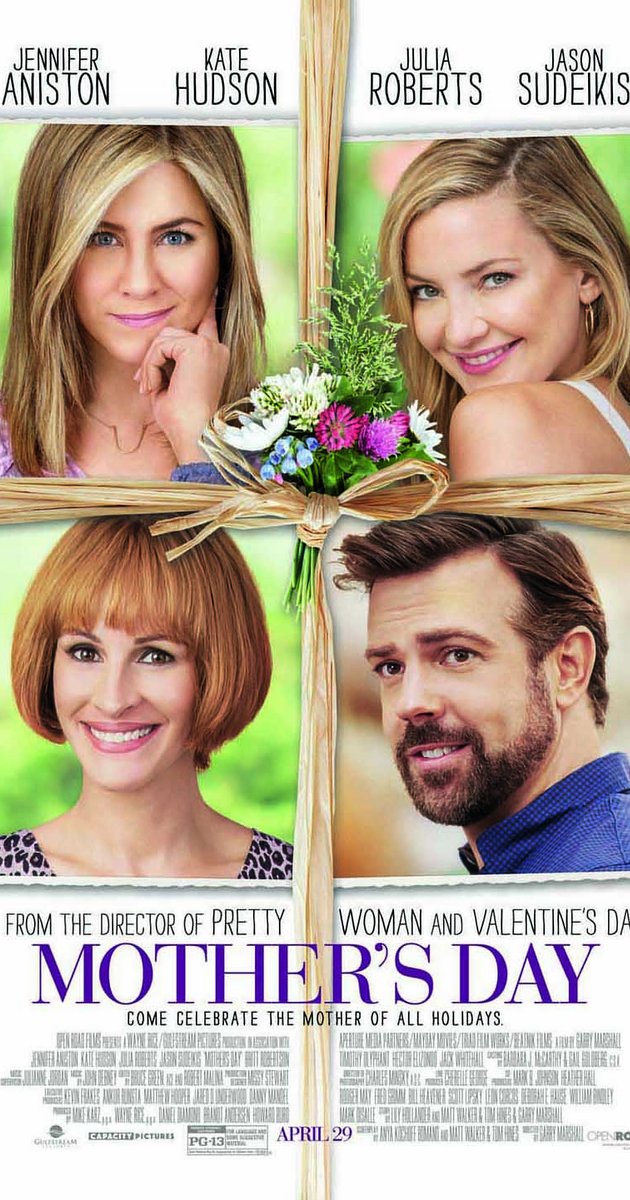
I tried, Garry Marshall, I really did, but you finally broke me. I did my best to enjoy Valentine’s Day (I called it a tweet of a movie but gave it a B for being mildly entertaining) and New Year’s Eve (I called it a big budget version of the old television series “The Love Boat” and gave it a C, but managed to find some genuinely touching moments). I was fully expecting to find some light entertainment with a galaxy of big stars showing that they can make lackluster material shine a little bit.

So, if “Mother’s Day,” the third in Marshall’s big star/tiny script mash-ups keyed to a holiday, was no worse than the first two, I was determined to give it the benefit of the doubt. I have a mom; I am a mom, I wrote a book about the best movie mothers, and so I’m the prime audience for a bunch of stories about the tenderest and often the most fraught of relationships, mother and child. If it managed to be inoffensive, I would have recommended it. But with this film, Marshall and his inexperienced co-screenwriters cross the tipping point from merely synthetic to downright vile, with apparently no notion of the difference between humor that points out the virulence of bigotry and “jokes” that treat racism and homophobia like just another cutesy personality quirk.

As with the earlier films, there are a lot of characters presenting variations on the theme. But the characters do not even rise to the level of stereotypes and the storylines couldn’t fill a fortune cookie. There is a chasm-sized disconnect between the film’s assumptions about our belief in any of them and its ability to deliver that level of interest. Not one thing is believable even in heightened, glossed-over movie terms. Everyone lives in gorgeous homes and there are no concerns about money. Intrusive product placement gives the film a sleasy infomercial vibe even as it pretends to make fun of home shopping channels hawking cheesy merchandise. Some odd random shots of individuals who have nothing to do with the story are either friends of the filmmaker or evidence that at one time the movie was even worse and got recut. It’s creepy that it takes place in the very diverse city of Atlanta but everyone is white except for the characters whose primary job is to serve as a racial stereotype. Pretty much everyone in the film is a stereotype, but the white ones are not offensive, just dull. The non-white ones are both.

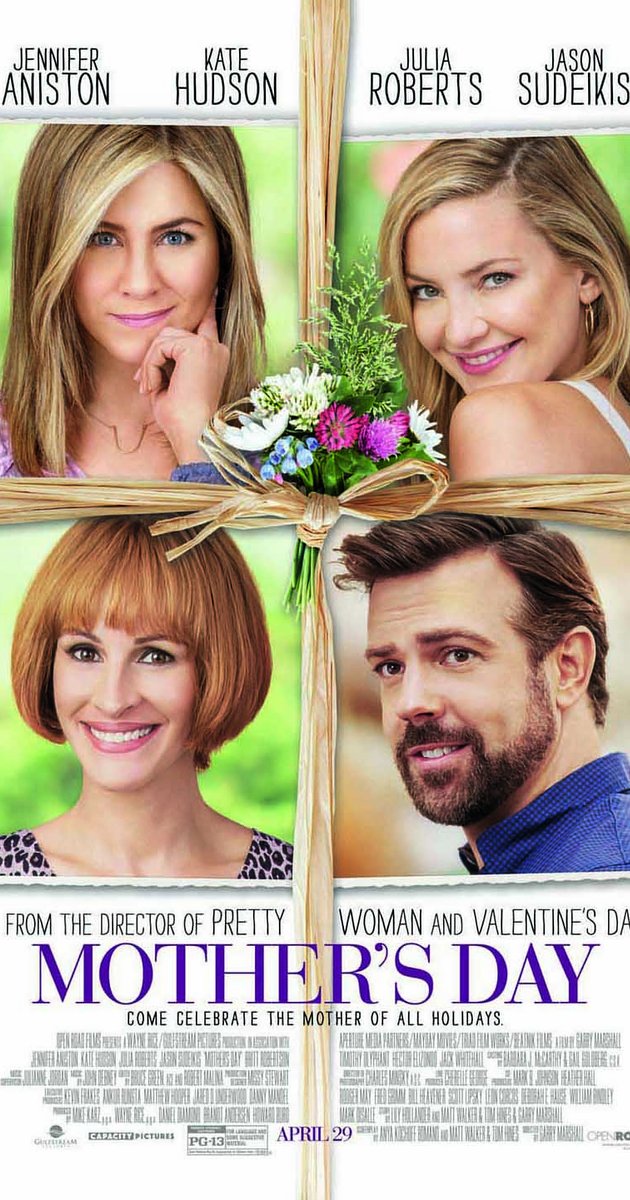
A quick recap of the set-ups — very quick so neither one of us will nod off in stunned boredom. Sandy (Jennifer Aniston) is a single mom with two sons who is upset because her ex (Timothy Olyphant) has married a beautiful young woman. Kristin (Britt Robertson of “Tomorrowland”) loves the father of her baby, an aspiring stand-up comic, but she won’t accept his marriage proposal because she was adopted and thus thinks she does not know who she is. Sisters Jesse (Kate Hudson) and Gabi (Sarah Chalke), who live next door to each other, have not told their bigoted, RV-driving, redneck parents about their spouses — Jesse is married to an Indian-American (Aasif Mandvi) and Gabi is married to a woman (Cameron Esposito). And sad widower Bradley (Jason Sudeikis) has to cope with being a single dad of two daughters. Julia Roberts, in a disastrous orange traffic cone of a hairdo (it’s actually a wig leftover from “Notting Hill”), is also on board as a shopping channel mogul presumably because Garry Marshall gave her her big break in “Pretty Woman” and she will do anything for him.

A series of exposition-heavy introductory scenes (Bradley and his daughters standing at the gravesite: “I can’t believe it’s been a year,” another character explaining, “I have abandonment issues,” Sandy, Jesse, and Gabi helpfully recapping everything that is going on in their lives to each other like the crawl at the bottom of the CNN screen) is followed by a series of micro-complications that fall somewhere between a 6th grade skit and a one-season basic cable sit-com, following by a series of contrived and cloying “resolutions.” The only clunky device left out is words of wisdom from a clown. Oops, no such luck. It’s there. And it’s not over! There are the most lifeless bloopers in the credits in the history of bloopers in the credits.

This is all larded with cornball slapstick wildly outdated “hilarity” that includes a man wearing a woman’s pink silk bathrobe, a man falling off a balcony, a man embarrassed at having to buy tampons for his daughter, a woman with her shirt ripped open holding supposedly professional design presentation model that looks like a third grade diorama, and the same woman getting her arm stuck in a vending machine.

It gets worse. Cops run down a speeding vehicle and make the only non-white character lie down on the ground. It gets resolved when one of the officers recognizes him; the issue of racial profiling is portrayed as a joke. So is a crack about a little person named “Shorty.” The stand-up comic ends up holding his baby and not delivering any jokes during his crucial make-it-or-break-it set, jokes which were not only funny but which might have made it funny and meaningful. Same for this wilted bouquet of a movie. Give Mom breakfast in bed instead.

Parents should know that this film includes discussions of bigotry but also insensitive portrayals of racism and homophobia, brief strong language, sad off-screen death of a parent, family issues about divorce and remarriage, some strong language, and alcohol, including scenes with a baby in a bar.

Family discussion: How did meeting Miranda make Kristen think differently about marriage? What should Jesse have told her parents about her husband?

If you like this, try: “Valentine’s Day” and “New Year’s Eve”

Related Tags:


Comedy Family Issues Series/Sequel
Kung Fu Panda 3

Kung Fu Panda 3

Posted on January 28, 2016 at 5:24 pm

Copyright Dreamworks Animation 2016

The only panda more “aw-worthy” than Po (Jack Black), is the National Zoo’s Tian Tian rolling in the snow.  In this third outing, the roly poly martial arts hero is still kind, humble, brave, and wiser than he knows. And, once again, the film’s gorgeous visuals lend a touch of epic grandeur to the story that provides a nice balance, as the Furious Five do for Po.

Two important characters join the story. The first is a more powerful foe than any we have seen before. His name is Kai and he has the deep growl of J.K. Simmons and the deep animosity of someone who has been waiting centuries in the Spirit Realm for revenge. He has supernatural powers and it is genuinely shocking to see him quickly overcome a character we thought was the most powerful of all dragon warriors. Kai has the ability to steal the “chi” (life force) of his opponents. And he is determined to defeat the Furious Five, their teacher, Shifu (Dustin Hoffman), and Po as well.

The second new character is Li (warmly voiced by Bryan Cranston), Po’s long-lost biological father. Po loves his adoptive father Mr. Ping (James Hong), proprietor of a small noodle restaurant. But he is very different from everyone around him. That is one reason for his compassion and ability to appreciate the difference in others. He longs to learn more about where he comes from.

As Kai comes closer, Li brings Po to the Panda community, where he is delighted to find out how quickly he feels at home. Mr. Ping has come along, and does his best to hide his jealousy, but he is worried about losing Po.

Fathers are the theme of the film, as Po in a sense loses his spiritual fathers Shifu (who tells Po he must now take over as teacher) and Oogway (Randall Duk Kim) and has to figure out what his new relationship with Li will be and how that will affect Mr. Ping. Po also loses the support of some of the characters he has always depended on when their chi is stolen by Kai. At the same time he is gaining new friends and a community he has always somehow missed, he realizes how much of a family his old friends have been for him.

Kai is coming for the pandas, and so Po must train them to protect themselves. The ultimate battle, though, will be left to the dragon warrior, and even though Po is now a teacher, he still has to discover some new techniques to fight a foe who holds the chi of so many valiant warriors. “There is always something more to learn, even for a master.”

Jennifer Yuh, whose last film in this series is the highest-grossing ever by a woman director, returns with co-director Alessandro Carloni, who worked as as artist on both the previous films. Yuh also began as an artist and the visuals are imaginative and gorgeous, inspired by Chinese paintings and landscapes. Po’s early encounters with his new extended family are endearing. While some families, especially adoptive families, may be uncomfortable with Po’s eagerness to rejoin a group he can barely remember, the issues of abandonment and strain between the biological and adoptive fathers are handled with sensitivity.

Like the martial arts masters themselves, the film achieves a seemingly effortless balance, with a light, graceful touch. It that encompasses silly comedy (mostly delightfully so, though making fun of a character with bad teeth is questionable). And it has some sophisticated, self-aware humor (beginning with a joke on the studio logo and continuing with commentary on “the power of a dramatic entrance”), along with warm-hearted lessons learned, and skillfully-orchestrated action.

Parents should know that this film includes action-style violence, some characters (temporarily) transformed and turned into enemy operatives, themes of adoption and identity with jealousy between adoptive and biological parents, and some potty humor.

Family discussion: How does Po feel differently about PIng and Li? Why did Shifu want Po to teach the others? What is the wrong thing for the right reasons?

If you like this, try: the first two “Kung Fu Panda” movies

Related Tags:


3D Animation Family Issues Fantasy Series/Sequel Talking animals
THE MOVIE MOM® is a registered trademark of Nell Minow. Use of the mark without express consent from Nell Minow constitutes trademark infringement and unfair competition in violation of federal and state laws. All material © Nell Minow 1995-2026, all rights reserved, and no use or republication is permitted without explicit permission. This site hosts Nell Minow’s Movie Mom® archive, with material that originally appeared on Yahoo! Movies, Beliefnet, and other sources. Much of her new material can be found at Rogerebert.com, Huffington Post, and WheretoWatch. Her books include The Movie Mom’s Guide to Family Movies and 101 Must-See Movie Moments, and she can be heard each week on radio stations across the country.

Website Designed by Max LaZebnik