Behind the Scenes of Elf and Nightmare Before Christmas
Posted on December 6, 2020 at 10:45 am
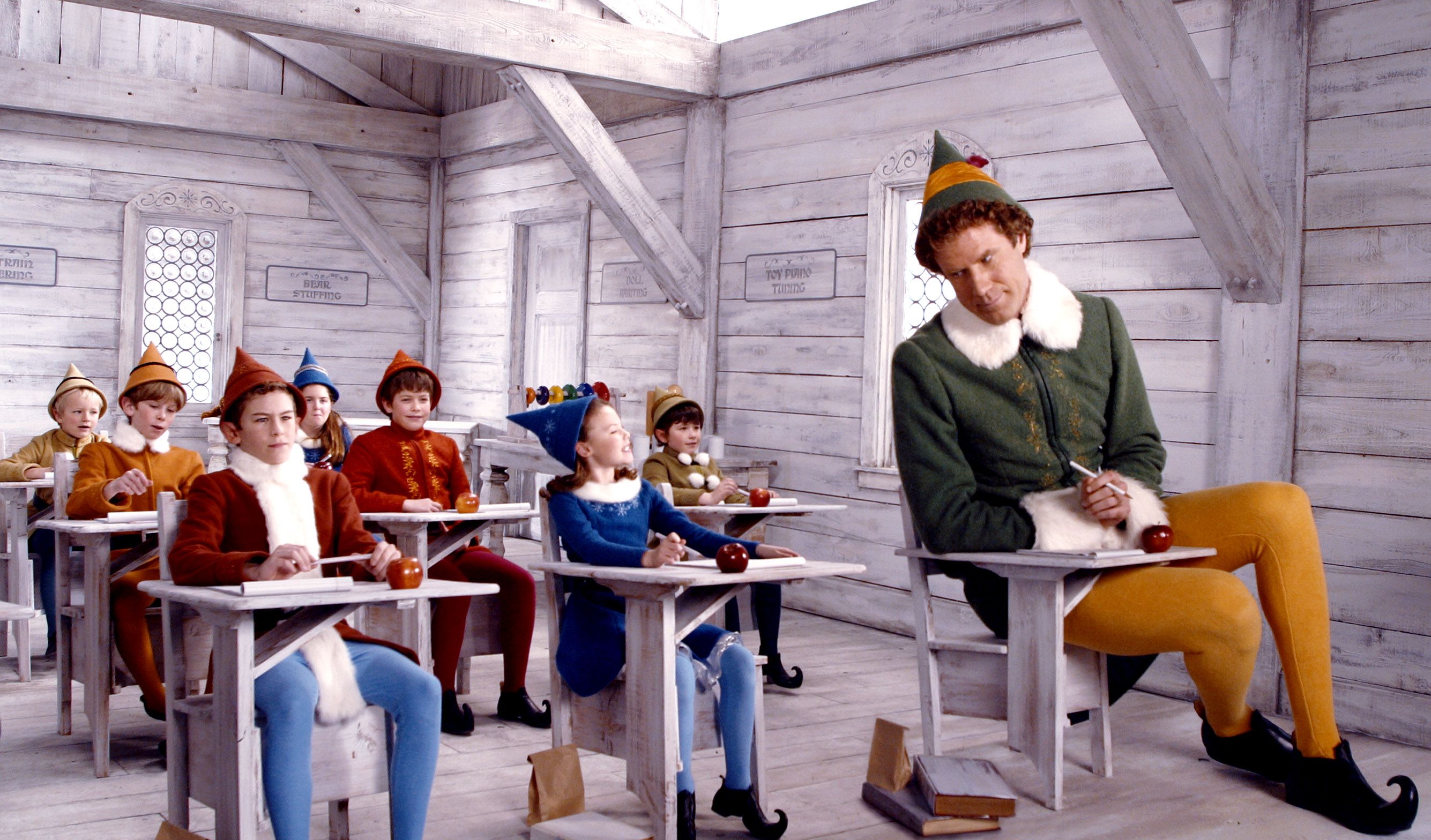
Netflix’s entertaining “The Movies that Made Us” series has a new holiday edition called, you guessed it, “The Holiday Movies that Made Us,” with behind-the-scenes episodes about two beloved classics, Elf and The Nightmare Before Christmas. Both movies had the most improbable, even daunting production histories, with inexperienced filmmakers and skeptical studios. Indeed, the stories behind the movies are as magical as the movies themselves.
Rated R for some crude material and strong language
Profanity:
Some crude language
Alcohol/ Drugs:
Social drinking
Violence/ Scariness:
Comic peril and violence, references to mob killings
Diversity Issues:
Insensitive portrayal of disability and gender non-conformity
Date Released to Theaters:
December 4, 2020
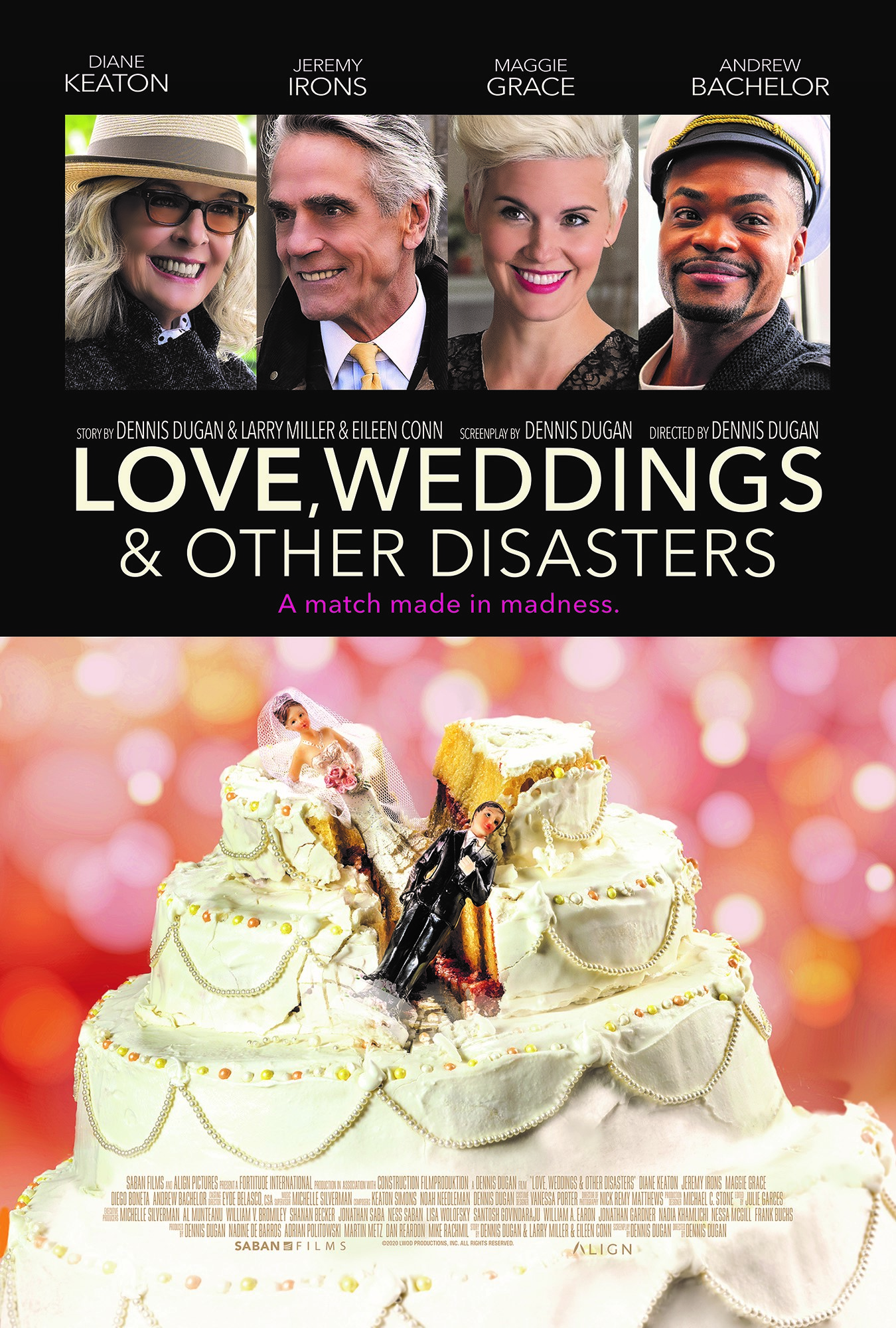
Copyright 2020 SabanFifty years ago a movie named “Lovers and Other Strangers” was released. Now best remembered, if at all, for the Carpenters song “For all We Know,” it was a collection of funny, poignant, romantic, hopeless, and hopeful love stories centered around the wedding of a young couple. While it is dated (one storyline is about the couple’s hiding from their parents that they are already living together, pretty racy for that era), it holds up very well, especially the performance by a young Diane Keaton as an unhappy wife contemplating divorce. The scene where her mother-in-law explains her concept of true love with “The Bells of St. Mary’s” as an example is a classic.
And here we are, half a century later, with Keaton in a very similar but not nearly as good movie, “Love, Weddings & Other Disasters.” It’s not just not up to the standards of “Lovers and Other Strangers” or other multi-storyline romances like “Love, Actually.” It is not up the standards of “The Love Boat.” The script sounds like it was written by 11-year-olds, lots of pratfalls and “jokes” about genitalia. None of the characters behave in a manner that is rational, believable, relatable, or appealing. Oddly, it manages to be more dated than the 1970 movie, with insensitive and juvenile jokes about disability and gender presentation.
The ever-young Keaton plays the most ancient of rom-com characters, a manic pixie dream girl, all whimsy and cheer. Her counterpart is played by fellow-slumming Oscar winner Jeremy Irons as a caterer, the kind of rigid perfectionist who uses a ruler to make sure that the wineglasses are not half-an-inch out of alignment and says things like “We start with perfection and ascend from there.” Their meet-cute is a “blind” date. She’s actually blind, get it? And she knocks over his pyramid of champagne glasses because she’s blind, get it? Because of course a lovable wacky girl would have an incompetent guide dog, of course.
The other characters include a would-be wedding planner who literally dumps her fiance as they are sky-diving after he breaks up with her mid-air, a candidate for mayor who is getting married in eight days and his fiancee, a amphibious vehicle tour guide (unlike the movie I highly recommend the Ducks tours, by the way) trying to find the girl of his dreams even though they only spoke for a moment, he doesn’t know her name, and his only description of her is that she has a tattoo of Cinderella’s glass slipper), and, I am not making this up, some game show contestants competing for a million dollars by being literally chained to one another. Note that the female of this chained couple is not a lawyer, as she told the game show; she is a stripper and there are members of the mob (they say Mafia but they have Eastern European accents) who want whatever she wins. By the way, the game show host is smarmily played by the movie’s director, Dennis Dugan, taking a break from Adam Sandler vehicles.
This movie exists in a world where politicians are elected on the basis of their Instagram posts, a family member’s destructive addiction gets shrugged off as if it’s a lovable quirk, people take tours of historical sites to hear made up commentary, and dozens of women get tattoos to try to get a boyfriend they saw on TV. “My jokes are older than these buildings,” says the tour guide (Andrew Bachelor, whose charm and screen chemistry almost triumph over the material). Yeah, that goes for the whole movie.
Parents should know that this movie has crude humor, sexual references, strippers, and comic peril including mobsters who talk about killing people.
Family discussion: Which couple were you rooting for the most? Are you more of a perfectionist or a go with the flow type?
If you like this, try: “Lovers and Other Strangers” and “Valentines Day”
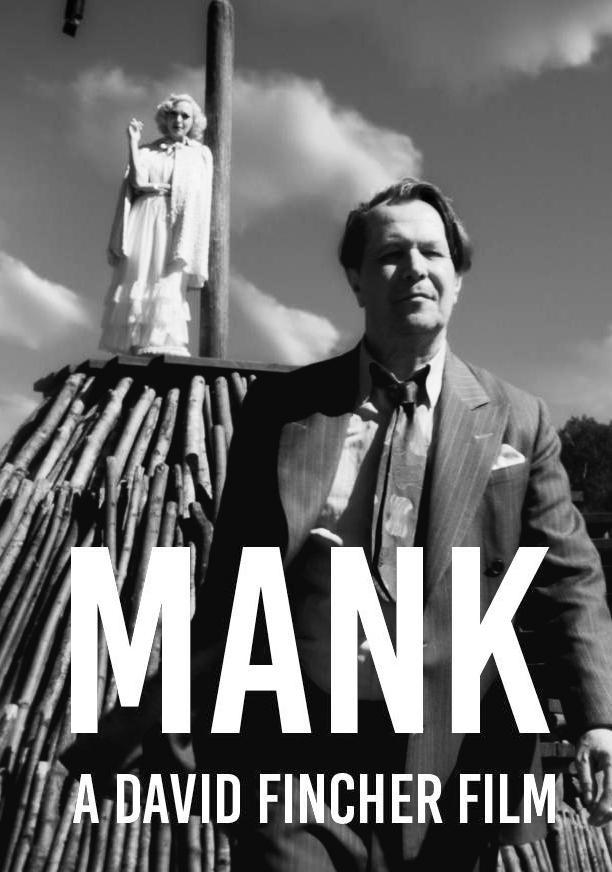
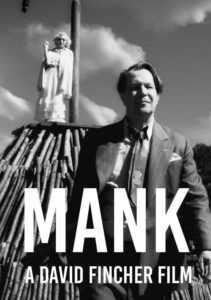
Copyright Netflix 2020“Mank” is a big, breathtakingly ambitious, multii-layered story of Herman Mankiewicz, the man who wrote the original screenplay for what many people consider the greatest film ever made, “Citizen Kane.” This was a passion project for one of the most passionate and meticulous, film-loving directors in Hollywood, David Fincher, partly because the original script for this film was written by his late father, Jack, the sole credited screenwriter.
“Mank” is firmly rooted in its period, down to the black and white film with high ceilings and shadowy images, paying tribute to “Citizen Kane” and other films of that era, it is, like most films set in a different time, very much in conversation with and commentary on where we are today. So. the settings are re-created with exquisite precision and any old Hollywood cinephiles will be overjoyed to be able to visit the office of legendary producer Irving Thalberg (Ferdinand Kingsley) or sit in on a writers’ conference featuring the men who wrote films like Charles Lederer (the original “Oceans 11,” “His Girl Friday,” “Gentlemen Prefer Blondes,” played by Joseph Cross) and Ben Hecht (“Scarface,” “Gunga Din,” played by Jeff Harms. They will also get a kick out of the faux “cue marks,” the circles in the upper right-hand corners of the frame to let the theater projectionist know when it was time to get ready to change reels, long disappeared from movies in the digital era.
And then there is San Simeon, the unimaginably lavish Hearst castle built by the unimaginably wealthy William Randolph Hearst (Charles Dance). He was the heir to a gold mining fortune and a political dynasty. He became the owner of the country’s largest media empire, which he used to push his political priorities. Is the commentary on today coming into focus?
Herman Mankiewicz was brilliant, sardonic, cynical, and a raging alcoholic and gambler. He ruefully notes that his wife is always referred to as ‘poor Sarah” (“Downton Abbey’s” Tuppence Middleton). He was a real-life version of those journalists in the wild wild West days of newspapers, as often portrayed by Clark Gable. He famously sent a telegram to Ben Hecht (in the movie version to Charles Lederer encouraging him to come to Hollywood: “Millions are to be grabbed out here and your only competition is idiots. Don’t let this get around.”
A brilliant trouble-maker of an enfant terrible from radio and theater named Orson Welles (Tom Burke) has been given free rein to make a movie, what he would later call “the The biggest electric train set any boy ever had.” He asks Mankiewicz, recovering from a leg injury, to write the script and puts him in a remote cabin with a secretary (Lily Collins as Rita Alexander) to keep him away from “distractions,” meaning booze and gambling.
Like “Citizen Kane,” the movie goes back and forth in time, the flashbacks illuminating the movie’s present, especially the inspiration for the title character, who would be played by the 25-year-old director himself. We see moments and characters and ideas sparking the ideas in the screenplay. And we see the painful and often self-destructive force of an intellect that is so deeply cynical only because at heart he is so deeply idealistic.
Mank’s warm friendship with Marion Davies (Amanda Seyfried) is at the heart of the movie. He can be honest with her because she is honest with him and because, unlike “poor Sarah,” he does not feel, at least in the earlier days of their relationship, that he is letting her down. Davies was the long-time romantic partner of Hearst, who was married to someone else. He ordered his newspapers to write about her frequently, leading to the joke that every story about a Hollywood event had the line “And Marion Davies looked lovely.” (Because of the Susan Alexander character in “Citizen Kane,” the second wife Kane insisted on promoting as an opera singer with disastrous results, people often think Davies was untalented, but she was a lovely light comedienne with a charming presence on screen.)
Because of Davies, Mankiewicz is often a guest at San Simeon and has a cordial relationship with Hearst, until Hearst’s opposition to the progressive California gubernatorial candidate Upton Sinclair (cannily played by Science Guy Bill Nye) and the movie studios’ anti-Sinclair propaganda “news” films lead to intolerable behavior in social gatherings — and to the corrupt, lonely former idealist Charles Foster Kane.
It is pure pleasure to see a film that respects the audience enough to take on big issues with complexity, humanity, and wit, every careful detail and layered performance providing much to think about and many questions about our own time and how it will be seen eighty years from now, if we are lucky enough to have filmmakers of this quality.
Parents should know that this movie includes strong language, alcoholism and other addictive behavior, some sexual references, and references to the Holocaust.
Family discussion: Who is most like William Randolph Hearst today? Most like Upton Sinclair? Why did Mank change his mind about wanting credit for the movie? Was he fair to Marion Davies?
Animal abuse, sad deaths of humans and animals, fire
Diversity Issues:
Class issues
Date Released to Theaters:
November 27, 2020
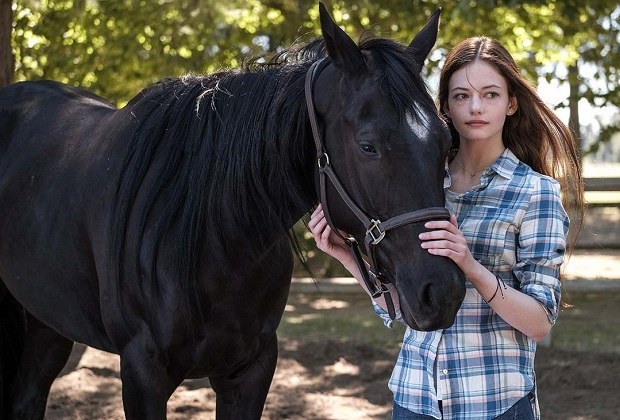
Copyright 2020 DisneyThe latest “Black Beauty” is the sixth film adaptation of the classic Victorian novel by Anna Sewell, told by a horse who goes from owner to owner, some kind, some cruel. This latest version, streaming on Disney+, updates and relocates the story, set in contemporary United States (but filmed in South Africa). And this time, the two main characters are female.
Kate Winslet provides the narration, and we first meet the black horse with a white star on her forehead living wild in “an endless golden meadow,” taught by her mother that “a mustang’s spirit can never be broken.” She promises to tell us the secret to this inner strength by the end of the story. It will be tested, though, as she is caught by cowboys, who sell the horses they capture to riders if they can be tamed and to be killed if they cannot. The black horse is about to be relegated to that second category as untamable. But a kind-hearted trainer says that she is just frightened and angry. “Wouldn’t you be if a UFO came down and stole you from your family?”
He is John Manly (“Game of Thrones'” Iain Glen), something of a horse whisperer, and a scout and trainer for a rescue ranch in New York. He buys the horse, but even his patience and gentleness do not make much progress and the owner of the ranch says the horse will have to go. But then John learns that his sister and brother-in-law have been killed in a car accident and he is now guardian for their teenaged daughter Jo (Makenzie Foy of “Intersteller”). She, too, is frightened and angry. “Now I have two girls who want nothing to do with me,” he sighs.
Those two girls, Jo and the horse, are too sad to develop a relationship with anyone. But they immediately recognize the sadness in each other. Jo, who has had no experience with horses, is able to calm the horse she names Beauty. And Beauty calms her, too.
Jo tries to keep Beauty, but when that is impossible she promises to find her and get her back. Beauty is sold to one owner after another, some kind, some cruel.
The theme of the film is empathy, and as Beauty tells her story is is clear she knows the difference between those who do not intend to inflict damage and those who do not care. Her travels take her from a wealthy family with a snobbish mother whose daughter is incapable of understanding the Robert Smith quote John shares with Jo: “There is no secret so close as that between a rider and his horse,” to a mountain rescuer and a New York horse-drawn carriage driver. And the end will make you cry.
The biggest problem is that the screenplay tells us what it has already shown us and then tells us again. We get the message from the performances and from David Procter’s beautiful cinematography, which surrounds the story in golden light and makes us feel the danger of treacherous mountain rapids. The love story between Jo and Beauty is told with sincerity and affection. There is not much new here, but the message of courage, kindness, and loyalty is always worthwhile.
Parents should know that while the bad behavior and cruel treatment is mostly off-camera, described rather than shown, both humans and horses are injured and there are sad deaths.
Family discussion: Why did Jo and Beauty understand each other so well? Why does Jo want to use the word “partner” instead of “break?”
If you like this, try: “The Black Stallion,” “National Velvet,” and “Emma’s Chance” as well as “A Dog’s Journey” and “A Dog’s Way Home”
The Croods: A New Age is the sequel to the animated film about the prehistoric family is sharply funny, exciting, warm-hearted, and a great watch for the whole family.
We left the Croods at the end of the first film with Grug (Nicolas Cage) finally welcoming in a new family member, Guy (Ryan Reynolds). The family, which sleeps in a pile every night and can form a kill circle in an instant is, Grug thinks, situated as well as possible to find food and to avoid becoming food. But then the climate changes and they have to find another place to live. On the other side of a wall, they discover a kind of paradise, with plenty of food conveniently growing in rows. It is the home of the Betterman family (“emphasis on the Better“), Hope (Leslie Mann), Phil (Peter Dinklage), and their daughter Dawn (Kelly Marie Tran).
The Bettermans, who have discovered tools and simple machines, have an elaborate tree-house, cultivated crops, and the wall, which keeps them safe. They have the concept of “privacy,” sleeping in separate rooms. They also have the concept of “rooms.” Also “windows,” and an amusing running joke is the way Grug’s son Thunk (Clark Duke) is mesmerized by the “screen” that’s just a hole in the wall.
The Bettermans are aghast at the lack of refinement of the primitive Croods and gently try to urge them to move on. Except for Guy, who they knew when he was a child. Guy is happy to be reunited with them, especially his childhood friend Dawn. He starts dressing like Phil Betterman.
We might expect Grug’s daughter Eep (Emma Stone) to be jealous of Dawn. But this movie wisely makes Eep and Dawn instant best friends in a funny and sweet scene where they discover what it means to know another girl. It also wisely does not make the Bettermans or the Croods all right or all wrong. Balancing the wish to protect your children from any possible harm with the importance of their learning to be independent and developing a sense of curiosity and adventure.
Basically, there are just two jokes here, but they are funny every time. It is funny when we see that the Croods are just like us (parents want to take care of children and children want to try new things, teenagers have a lot to say to each other but do not always have the words, girlfriends’ voices sometimes get a little screechy when they’re excited), and it is funny to see them discover for the first time in human history what we take for granted (privacy, screens). But what makes this movie worth a rewatch is the constant invention of its visuals, the exceptional detail in the characters, animals, and landscapes, its superb voice talent, and its touching depiction of the foundational ties of family and community.
Parents should know that this film includes some peril and mild injuries and some potty humor.
Family discussion: Is your family more like the Croods or The Bettermans? What would you pick for your tribal name? What is your family’s motto? Ask family members for the stories behind their scars.