Interview: Jodi Lyn O’Keefe of ‘Class’

Interview: Jodi Lyn O’Keefe of ‘Class’

Posted on August 11, 2010 at 3:49 pm

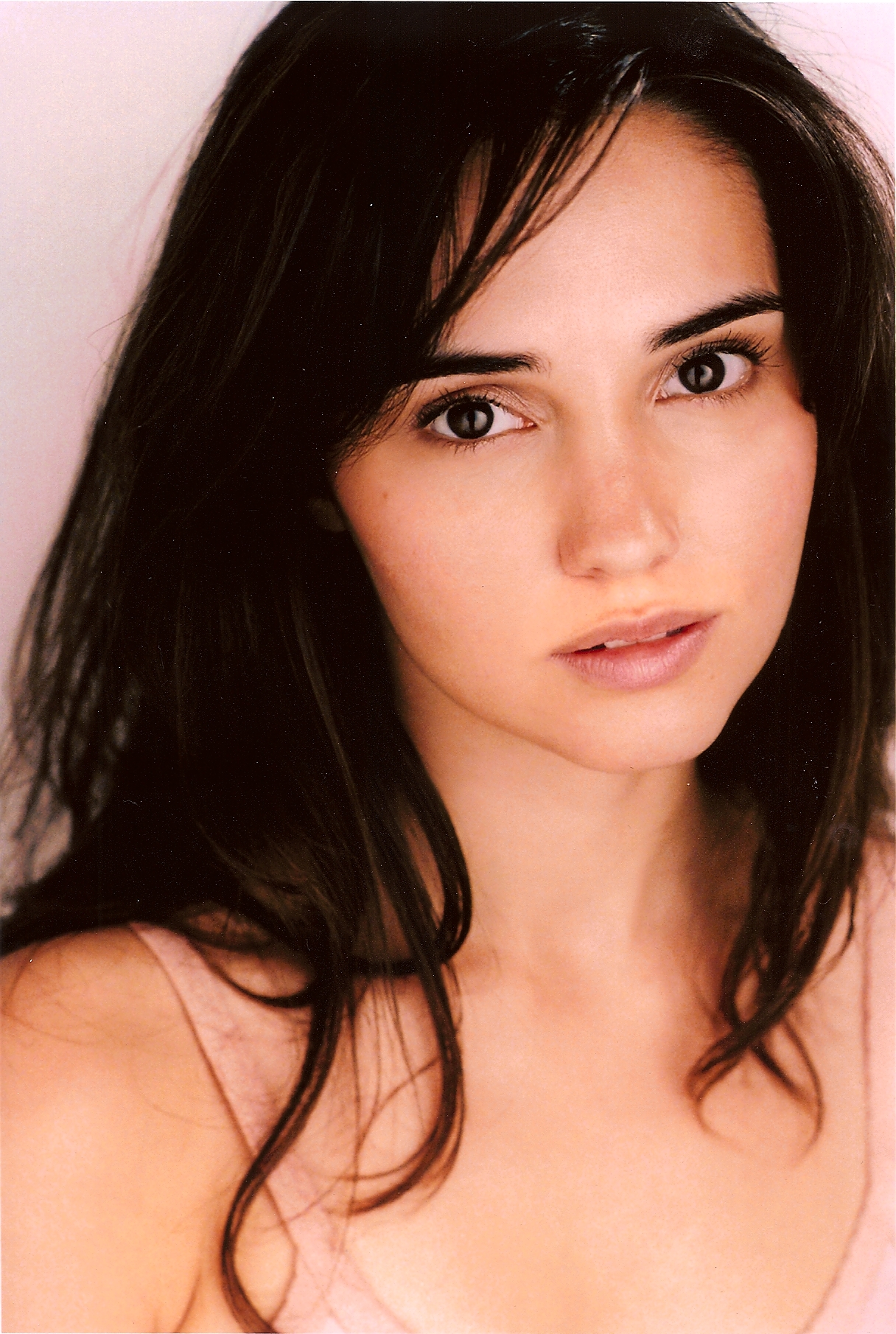
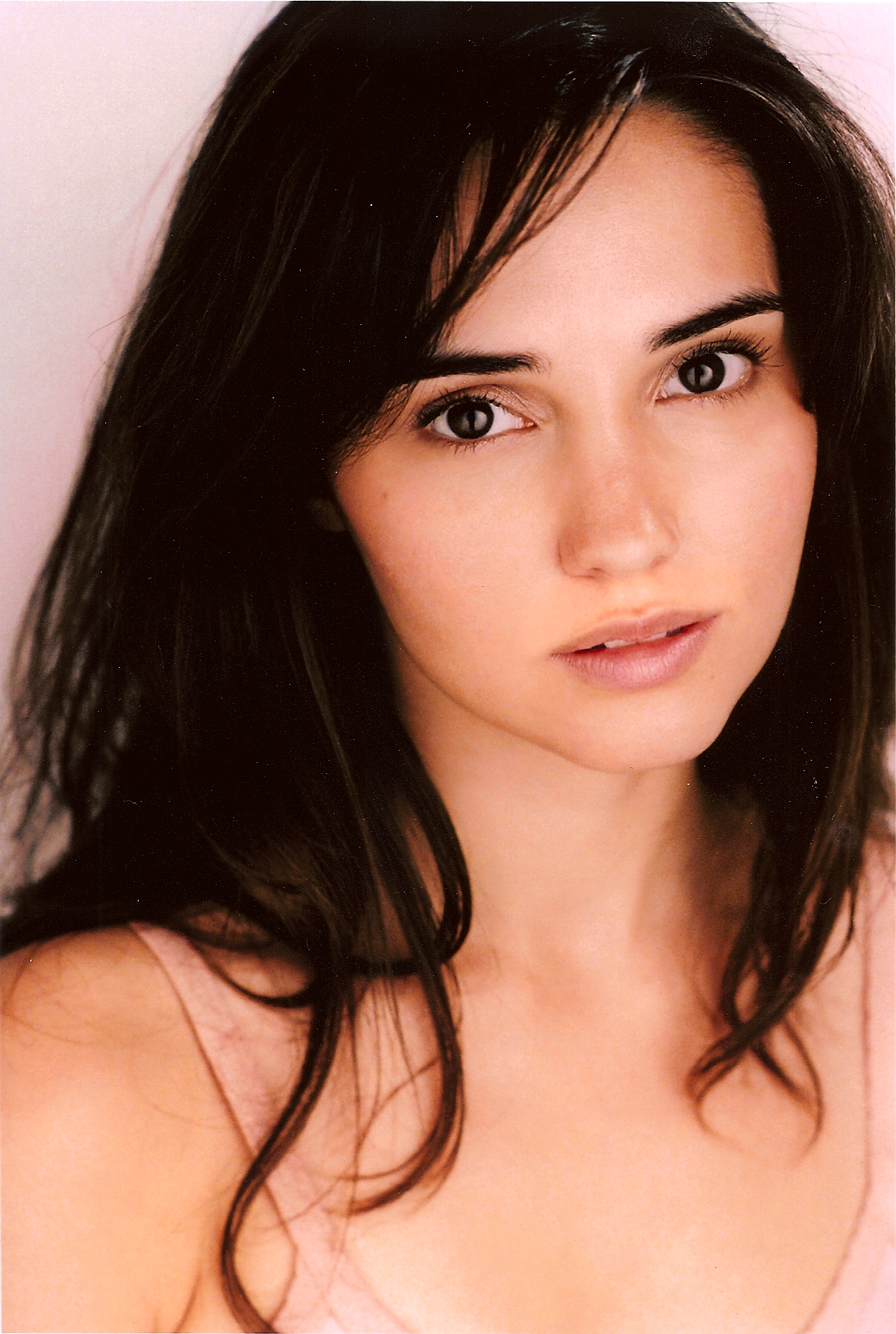
Class” is a new romance premiering August 14 on the Hallmark Channel, and I spoke to its star, Jodi Lyn O’Keefe (“Prison Break”), who plays a single mother struggling to take care of her son assigned to an arrogant law student (Justin Bruening) who is required to perform public service in order to graduate. Ms. O’Keefe called me to talk about the appeal and the challenges of a role very different from her previous appearances.

This is very different from your previous roles — you have often played more aggressive, physical characters. In this part, the way you held yourself and moved was so distinctive.

I just tried to keep everything quiet and small.

What attracted you to this part?

I kept my niece in mind the entire time. She’s nine and she doesn’t get to see a lot of what I do.

Your character has a very close relationship with her sister, which helps us see her as someone who is wounded but still open to connections with others. Are you close to your sisters?

I’m very close to my two sisters. It was a wonderful way to grow up, with two strong older sisters who always had my back. And the actress who plays my sister is a good friend of mine, Lauren Glazier. So that part was easy for me.

You began working very young, didn’t you?

Yes, I began modeling when I was very young, catalog work and all that, and then the modeling agency merged with a talent agency and I got an audition. That was the beginning of the end for me; I was in love. I was 13 or 14 and walked into the audition and the casting director said, “What did you think of the script?” That was what did it! That was the first time somebody asked my opinion and made me think I actually had one. Before that it was “Stand there,” “Wear this,” “Look over here.” There wasn’t a whole lot of “how do you feel about the character.” I was such a huge reader I had 40 thousand things to say about the script. My mom used to have to tear books out of my hands to go to school.

What were some of your favorite books?

I read everything I could get my hands on! I loved The BFG by Roald Dahl. His books are incredible.

When this script came to you, what made you want to do it?

Class_0007U_JLO_MPC_091209-162543.jpg

It was something new for me. I wanted to see if I could do it. It’s been a long time since I’ve been the good guy. And my niece always asks why I don’t live in New Jersey. I wanted to make something she could watch. She and my nephews have been begging me for years to be a cartoon and I’d love nothing more, but until then, this is for them.

What connection did you feel to the character?

That whole “don’t judge a book by its cover thing.” And she feels confused and misunderstood. Like everyone else growing us, I have felt that way. I relied on that. And it is such a lovely, sweet, romantic story. I went with that. And I had such a great supporting cast. I fell so in love with Maxwell Perry Cotton, who plays my son, Shane. I was just over the moon about him. I could not get over him. He’s one of the loveliest kids ever, so funny and so bright, and he became more of himself every single day. It was one of the nicest sets I’ve ever worked on.

Did you have any formal training as an actor?

My training was working on a soap opera . It was overwhelming at such a young age but I learned a lot. It was where I learned everything, the longest hours I ever put in, a show a day. Incredible.

What makes you laugh?

Anything inappropriate! I’m from New Jersey!

And what inspires you?

Books! Right now I am reading the books about Sookie Stackhouse. I cannot get enough of my vampires! I just re-read my favorite book, Pride And Prejudice, and I just read The Diving Bell and the Butterfly, which I loved.

Are you reading book books or ebooks? Have you succumbed to the Kindle?

I absolutely did! I have a dust allergy and literally for six months my mother told me I had to get a Kindle. I used to travel with an extra suitcase just for books. She talked me into it and it changed my world. And now I have an iPad! It’s the greatest thing ever!

And what do you aspire to?

It’s pretty simple. I want to keep working, pay my mortgage, spend time with my family, and take care of my dogs. I have two sharpeis and a bulldog, Penny, Ophelia, and George.

Related Tags:


Actors Drama Interview Romance Television
Breakthrough Performer: Laura Breckenridge

Breakthrough Performer: Laura Breckenridge

Posted on July 30, 2010 at 8:00 am

LB Color Headshot 2.jpgI make no pretense of objectivity. But even if she was not my friend I would appreciate Laura Breckenridge as one of the most talented young actresses working today. She has appeared on television (“Gossip Girl,” “Related”), in movies (“Loving Annabelle,” “Southern Belles”), and on- and off-Broadway (“The Crucible” and “The Cherry Orchard”). Because I know her, I can appreciate her professionalism, judgment, and dedication. And because I have seen her on stage, on television, and in films playing a wide variety of characters, I can appreciate her talent and her ability to captivate an audience.
I was thrilled to hear that Laura will appear on “Drop Dead Diva,” this weekend, co-starring with Cybill Shepherd in a plot she describes as “‘Devil Wears Prada’ with a twist.” First, I can’t wait to see it. Second, it gave me an excuse to catch up with her and congratulate her on her graduation this spring from Princeton. We chatted a bit about the movies we’ve enjoyed lately and then I asked her about her latest role.
Tell me about “Drop Dead Diva!” People love that show.
It’s a really good show! It’s very well done and very smart. They handle the fantastical element very well and make it very real, and at the same time it’s a lot of fun to watch. I watched a bunch of episodes to understand the tone of the show when I was preparing, and loved them. I now watch the show whenever I can. The cast is very talented and I can see why it is a big hit.
I’m in an episode called “Queen of Mean,” airing August 1. It stars Cybill Shepherd. She plays Ellie Tannen, head of a fashion line, and I’m her former assistant who has written a tell-all book, and she’s suing me now. Then you see there’s a few other things that happen and I may not be as innocent as I seem. The character is a lot of fun, and one of the things I am most thrilled about is that I got to sit on a witness stand. I don’t know if I’d ever want to do that in real life, but I’d never done it in a show and there’s something about sitting in that box! They have built most of their sets on a soundstage and they replicated a courthouse that they used in the first season, down to the last detail, so it felt very much like a courtroom.
What did it feel like to be cross-examined?
It was fun but not so fun at the same time. She is good! What I think Brooke does so well is that she will be the smart lawyer Jane and then have a flash of Deb, the model. She balances it so well and I think she lights up the screen. She’s just like that in the room. So she looks at me and I think, “Oh, no, she’s got me!” It was easy to play rattled in the scene. She is a great scene partner because she has a theater background so she is always very present, very there. She’s so talented.
Another thing that was fun was the scene where we all enter. Because Cybill Shepherd’s character is such a famous person we are surrounded by paparazzi, all these photographers. There were a lot of people involved, and a lot of components to the scene, so everyone had to coordinate and work together. It was the first scene I shot, and it gave me a chance to meet everyone and get into the flow. There was so much happening it was exciting, and I felt so lucky to be there. It reminded me how much I love being on set, where all the various parts of a show come together.
How long did it take to shoot the episode?
It took eight days. After I got the job I found out that shooting began on the day before my last exam. They were really accommodating and worked out the schedule so I could go to Atlanta, where they film, right after my last exam. It was nice to finish my exam and go right to work. We were in Peachtree City, Georgia, which is about 40 minutes outside of Atlanta. It is a planned community with 90 miles of golf cart trails. There are cars on the main road but everything in the city is attached by golf cart paths. So there was something relaxing about traveling around the town in the golf carts.
Did you have to go to Atlanta to audition?
I did it in New York. Most agencies have tape rooms, a teeny room with a camera, where you can do an audition on tape. The benefit is that you can do it over if you want to, but the drawback is that the casting director is not there to give you feedback. I did an audition for an earlier episode, and then they asked me to come back and do another one for this one.
Tell me about working with Cybill Shepherd.
Cybill is so knowledgeable. It’s not just that she’s been doing it for a long time. She is very observant. She knows eye-lines as well as any director of photography. She understands camera angles, knows where she needs to be, she just knows it all, so just watching her was amazing. And she is very sweet and very lovely to work with. When she was doing her scene on the witness stand it was amazing to watch; she was just so good.
I know the schedule for shooting television is very fast. How do you coordinate with the other actors?
With TV, there’s no overall rehearsal. You have a blocking rehearsal and then back in hair and make-up or on the set after the wide shot is when you have a chance to talk. There’s definitely a collaborative aspect, but it’s more on the moment.
You had quite a contrast this summer because you did a big budget scripted television series and you also did a microscopic budget 24 Hour Plays in New York. What was that like?
A friend told me it was the most amazing, thrilling, frightening experience of her life — and it’s true. You meet at 9 pm and everyone brings a costume and a prop and contribute it to a pile. There are six writers and they pick the actors, costumes, and props they want. They write until 6 or 7 am. The directors show up and pick their plays. And then the actors show up and you have 12 hours to rehearse and memorize. You’re going on instinct so sometimes things happen on stage and you just go with it. It’s a wonderful experience, very collaborative, all of us just holding hands and diving in and hoping for the best.
I did it last year, and was so happy to be invited back, because I loved the experience. This year I did a play called “Hero Dad,” about three different dads. I played three different versions of the same type of girl, to come into these dads’ lives and remind them of their responsibility, going from kind of funny to very serious. It was an intense and challenging play to learn in twelve hours, but that type of experience is always the most thrilling and enjoyable. 24 Hour Plays really re-awakens your instincts and helps remind you to rely on your fellow actors, use their energy and act off of it.
It sounds like theater is your favorite.
I really do love all three. I like the challenge of different ways of working. I value rehearsal time and the energy of live theater, where it’s different every night. Sometimes the audience does not know it, but they are a part of the performance. They bring the final piece to it, and every audience is different. I will always love theater, but it is hard to pick a favorite. With film and TV you are able to capture things that happen in one specific moment, and because they are filmed, they are captured forever. The challenge in film and TV is to find the precise moments right there and then, with only the energy of your fellow actors to help you. Once the scene is done, it’s done; it won’t change as it can in theater. What I love about TV is it’s constantly evolving and you’re evolving with it. TV characters feel like they’re in our lives, not just because they are in our living rooms every week but because we get to see them grow and develop and you get to see how the same character takes on new challenges and new perspectives. I feel fortunate to have had experiences in theater, film and TV, and I hope that I will have a career that balances all three.

Related Tags:


Actors Behind the Scenes Breakthrough Perfomers Interview Television
The Winner Twins at Comic-Con

The Winner Twins at Comic-Con

Posted on July 25, 2010 at 11:38 am

IMG_8271.JPG

I was thrilled to have a chance to catch up with Brittany and Brianna Winner, now 15, to hear about their Strand book series, their school appearances, and their dream of making their story into a movie. One of the highlights of Comic-Con for them was meeting Christopher Paolini, author of the best-selling Eragon series.

Related Tags:


Books Festivals Interview Kids Movie Mom’s Top Picks for Families Teenagers Tweens Writers
Interview: Chris Epting, a ‘Pop Culture Junkie’

Interview: Chris Epting, a ‘Pop Culture Junkie’

Posted on July 21, 2010 at 3:48 pm

Beliefnet’s new blogger is Chris Epting, author of Hello, It’s Me: Dispatches from a Pop Culture Junkie, the story of his love for the television shows, movies, and music of his life and the unexpected encounters with the people behind them. The vignettes about stars from Mick Jagger, Michael Jordan, Milton Berle, Jerry Lewis, Jay Leno, Fred Willard, and many, many more, are funny, touching, and remarkably vivid.

Why are people fascinated with the personal lives of celebrities?

I think there are a variety of reasons but primarily, I believe it’s due to the images that the general public is “sold” about celebrity life. On TV, in magazines–thanks to many publicists–we are fed spectacular stories of what it’s like to live as a celebrity–sort of like our own American version of royalty–and since most of us do not live like that, our curiosities get built up in extreme ways. Vicariously, many people want a peek into the “glitter dome” simply to imagine what it might be like to exist there. On the down side, I think people also get overly fascinated in celebrity downfall–over all, I think all of the interest and fascination simply stems from the innate desire to know the inside details of people we find interesting.

Most people have a hard time getting in touch with celebrities and an even harder time making any kind of connection to them when they do meet because celebrities are understandably reserved. Yet over and over, you seem to have been almost instantly on a friendly basis with people from John Cheever to Borscht Belt comics and sitcom stars. What do you do to earn their trust?

I’m not exactly sure but my hunch is that I’m interested in certain people in ways that appeal to them or put them at ease. With John Cheever, I was very young–didn’t even really know who he was, and I think he liked that. Everyone always fawned over him but I was just a student interested in some guidance. I was also enthusiastic about writing and very respectful of his time and privacy. As I got older, when I met many of the older actors and started working with them, I think the trust was based on the fact that I knew and appreciated much of their work–and that I wanted to help them evolve as actors and comedians based on the enthusiasm I had for them growing up. And again–I was always mindful of their needs and never asked for too much. Lastly, I’d say many of the people I’ve gotten to know are passionate and energetic about life–qualities I try to embrace as much as I can–and so we have similar values/approaches to life.

You speak very warmly about Jack Riley, co-star of “The Bob Newhart Show” and Sally Struthers of “All in the Family” and “The Gilmore Girls.” What makes them so special?

To me, Jack and Sally both have a special depth and understanding of how they view friendship. Their warmth and honesty is natural, which allows for strong bonds to develop. They’re both also incredibly funny, smart, talented and savvy to the ways of the world, which I like. Actors are interesting people because they’re lives are so unpredictable, so steeped in creativity, rife with the insecurity of not knowing what will come next–but they forge on, against many odds, because it’s in their blood–they’re performers. Jack and Sally, to me, deal with those things well, with the insanity of it all–and they put the same passions and creativity into their friendships that they do their performances.

How did you end up drinking whiskey in a Radio City Music Hall closet with Ron Wood and Rod Stewart?

When I was about 21, I ended up with the job of acting as a sort of creative assistant to Dan Aykroyd, who was co-hosting the very first MTV Music Video Awards (in 1984–the ad agency where I worked was producing the show)). For a week or two I shadowed him, helped come up with little creative bits for the show, and basically did whatever he needed. He was terrific, and had a slew of interesting pals, including Ronnie Wood.

One night, Wood wanted a drink so we snuck, on our hands and knees, into co-host Bette Midler’s dressing room and he “borrowed” a bottle of whiskey. Wood, aware the Dan didn’t want drinking going on near his dressing room, dragged me and Rod Stewart into a closet. There, by the glow of Ron Wood’s cigarettes, I listened to them tell stories and jokes. (I’m a huge Rolling Stones fan, and Rod Stewart fan, so this was a big deal). After we left the closet, they made me stand next to them at the window and when fans looked up and started screaming, they told me that now I had a sense of what it was like to be them. An interesting night to be sure.

You have a story-teller’s sense for the revealing detail. I was very touched by the comment about America made by the late Manute Boll. What do you think it meant?

(Thanks!) When the legendary 7 foot seven NBA center said “You have so much in this country that can be broken. Who fixes it all?” after smashing his head on light fixture, I think he was referring to the excess he perceived in America. He came from a small tribe in the Sudan, and he was understandably overwhelmed by what he found here. When I told him we could fix the glass cover, I think he took that as a metaphor and stretched it across our society.

What is it about pop culture that makes it so indelible? Does it sometimes feel more real to us than our real lives?

I think the reason pop culture resonates with many of us is that it defines our frames of reference. The music, movies, TV, books that we grow up on our entire lives touch us emotionally and spiritually–it shapes how we view life – it provides some universal truths for us or simply makes us think about our place on the planet in whatever era we are living through. If it does ever seem more real than our real lives, then maybe that’s because it *is* our lives – we breath it everyday and by doing so, becomes part of pop culture ourselves–willing participants in the evolution of our own cultural surroundings.

What’s your all-time favorite television show and why?

That is so tough! I have many favorites, but I think my “Desert Island” TV show would be The Andy Griffith Show. The setting of Mayberry, the honest characters, the humor, but most of all for me, the show’s strong moral compass always provided a deep comfort. That was important to me, and still is–that small-town sense of decency, civility and friendship that the show represented.

What is it you like so much about the song whose title you use for the book?

I love the Todd Rundgren song “Hello It’s Me” because I feel it evokes an earnest, honest emotional appeal. It also has a vulnerability and spontaneity that I always found interesting–it’s not overly slick or produced – but feels more natural and inviting than a lot of other hits of the era (to me, anyway)

Which of these encounters taught you the most important lesson?

There are many. Though I will say that watching Michael Jordan tend to a dying child was extremely profound for me. The class, grace and soul he demonstrated to someone in need was spectacular. I will add that watching my own children grow, thrive and embrace their own passions teaches me everyday the importance of parenthood–and the lessons we as parents learn from it (and I think my wife would agree with that).

How are today’s celebrities and fan interactions different from those in the 70’s and 80’s?

The internet has obviously changed a lot. Celebrities tweet and blog and communicate in a variety of ways that was never possible back then. I think things are more controlled now and less is left to chance, VIP “meet and greets” are sold and auctioned–celebrities tend to (I think) live in more of a secure bubble–so chance meetings are less likely. Also, the paparazzi has added an element of intensity that many celebrities, justifiably in my opinion, react to by becoming more private.

One thing that makes your book unique is the opportunity you gave some of the people you wrote about to have their say. How did that happen?

It was a concept I had early on for the book–but I had no idea if anyone would be interested in contributing. To me, it was a way to add a fresh angle on the proceedings by incorporating more voices. The first person I approached was Elliot Lurie, who wrote and sang the 1970s hit, “Brandy” (You’re a Fine Girl). I’d written an essay about how the song helped bring my twin sister and I closer and I asked if he’d elaborate on his own impressions of the song and its effects on pop culture. Well, he delivered a terrific piece and that gave me the confidence to approach a few other people. Soon, I had “reflections” from “Wicked” composer Stephen Schwartz, old friends, Lou Gramm from Foreigner and others. Elliot Lurie really helped that idea thrive–and so I was thrilled (as were others) when he made a surprise appearance at a book party the other night to talk about the book, and “Brandy” of course.

P7103818.JPG

What makes you laugh?

Incongruity, mostly — the unexpected moments, the surprises, the unintended–(and Fred Willard)

What inspires you?

People – who live with passion, curiosity, humor and enthusiasm
Places – that reminds us of how spectacular this world is
Things – that illustrate how much opportunity and talent surrounds us – a good book, beautiful painting, perfect song, etc.

Not to mention my faith and my family – the two most definitive forces in my life.

****

Write to me at moviemom@moviemom.com to tell me which celebrity you’d like to meet and I will send the first to respond a copy of this delightful and touching book.

Related Tags:


Books Contests and Giveaways Interview Writers

Interview: Lionel Chew of ‘long-distance princess’

Posted on July 17, 2010 at 8:00 am

This isn’t the way he envisioned using his Ph.D. in Sociology from Stanford. But after deciding he wasn’t going to be an academic after all, Lionel Chew brought his knowledge of sociology into the making of the feature film “long-distance princess” (in lower-case because it’s based on a screen name). The movie, which is a teen romance and comedy, finished post-production earlier this year. His goal is to fill a void in values-based movies geared toward youth.
“There’s a dearth of movies that communicate something meaningful to today’s teens, and I want to fill that gap,” offers Chew, who is also a licensed minister. Dr. Chew was nice enough to take time to answer my questions.

Hollywood movies overwhelmingly seem geared toward teenagers. What is it
that makes movies like the “Twilight” series so powerful for kids in that age
group?

In general terms, I think the producers have tapped into the teens’ collective
psyche. They’ve provided vehicles for them to experience vicariously emotions
and lifestyles that are either forbidden or inaccessible. Or they’ve crafted
a statement that validates the youths’ thoughts and longings. It could also
be those things in tandem. But as for Twilight, specifically, I think it’s a
unique phenomenon. I believe several factors work together to make the series
powerfully attractive to teens (or at least to the girls): 1) A
pre-legitimation before it hit the big screen thanks to a devoted fan base of
its books; 2) An attractive and believable lead actress who successfully
embodies a readily identifiable, every-girl persona; 3) Good-looking,
co-leading males, with sculpted physiques to tantalize the girls’ awakening
sexuality; 4) Dramatic tension in the possibility of being destroyed by a
ruthless vampire clan as well as the uncertainty of which of the two male
friends of the lead character, Bella, will eventually win her love; 5) The
vicarious experience of being passionately desired and pursued with an undying
and unconditional love by Bella’s two suitors; and 6) The novel idea that
there are actually such things as not only vampires and werewolves but also
good ones.
What differences do teenagers and adults have in the way they see movies?
Why do teenagers so often want to see the same thing — often the same movie
— over and over?

I’ve observed that usually adults are so much more cynical and critical than
teenagers. In the socialization process, adults are conditioned to think
analytically and professionally and to have professional taste. So it is with
movies. Everyone’s a film critic. I believe it’s also a natural part of the
cognitive maturation process. Adults have been exposed to so much stimuli
throughout their life spans that the mind has been trained to focus
selectively on and retain only that which is essential and non-processed.
What is tangential, trivial or already similar is dismissed in mili-seconds.
As for movies, very few things seem novel. What is new is processed quickly
into already established and comfortable interpretive categories. Then the
adult mind immediately moves on to more important things, like figuring out
whether to get the sedan or minivan. On the other hand, teens (and those
younger) are open to boatloads of stimuli as new. They’re like sponges.
Beside the cognitive, on the emotional level they enjoy things that they can
identify with and seem cool. They can relive those experiences again and
again as a form of positive self-reinforcement. Resolving narrative tension
is not nearly so important as affirming cultural identification. “Yeah, I
know what happens, so what? It’s awesome!!” And movies that resonate with
them also foster a sense of stability and familiarity at an age and in a world
wrought with tumultuous changes. They offer a rare level of security and
comfort as the teens endure an often very uncomfortable stage of life.
What does studying sociology help you understand about teenagers?
One thing that my sociological perspective has helped me understand is the
significance and prevalence of status. One of my areas of focus while at
Stanford was social stratification, which happens in all groups and in all
areas of life. So, naturally, I’m alert to its presence and dynamic. And
teens are also very sensitive to it. That’s why in junior highs and high
schools everywhere cliques are not only ubiquitous but also very well-defined.
And just about everybody knows who the high status, mid-status and low status
cliques are. And if you don’t, you’re probably on the bottom. In
“long-distance princess,” I do highlight this, but also poke fun at it,
because, in my opinion, everyone’s a little too obsessed with it, if not
consciously then subconsciously. A large part of the main character’s quest
is not just seeking love but breaking rank.
Why do you think so few movies communicate meaningfully to teenagers?
Most Hollywood executives are not out to communicate but to market. Money,
aka the prohibitive cost of making and marketing a film, so dominates the
landscape that executives–the money men–have reign of the regime and not the
artists, visionaries nor auteurs, of whom the latter are now industry relics.
Studios can’t afford to take risks on niche movies that don’t have obvious
mainstream allure. And, so they make movies that appeal viscerally with the
lowest common denominators (explosions, skin, weed, 3D, etc.) to fill seats in
the theaters.
What were your favorite movies when you were a teenager?
Wow, I’m not sure if I should admit this! But my favorites were “Star Wars,”
“Close Encounters of the Third Kind,” and, yes, “Saturday Night Fever.” The
one that has influenced my filmmaking perspective today (at least consciously)
would be “Star Wars,” only because I know that its creator, George Lucas,
wrote the script, paying careful attention to employ hero myths that were
supposedly embedded in our collective subconscious. Similarly, when I wrote
“long-distance princess,” I purposefully employed common themes and motifs
underlying the princess archetype.
How did the idea for the “long-distance princess” come about?
I wanted to reach teens with something positive and affirming, knowing that
most Hollywood fare hasn’t been meeting this need. Teens today are assailed
by so many confusing messages and, given today’s post-modernized milieu of
morals in flux, aren’t sure where to turn. So they depend on their peers and
the media to be arbiters and gatekeepers of mores and style, however
unqualified. This creates a vacuum of positive messages and models and a
misguided glorification of the material, physical and superficial. The
pressure to conform to the resulting draconian social norms is paralyzing.
It’s not surprising that tragically the teen suicide rate in our nation has
been rising, especially among girls . To combat all this, I purposed to make
a movie that showed that someone cares about them and their struggles and that
ethics and convictions are still powerfully relevant. I also wanted to let
them know there’s real hope.
What were the most unexpected challenges you faced in making the film?
It was the difficulty of post-production. We had unforeseen equipment and
compatibility issues with the footage and editing system in the beginning and
middle of the process that nearly scuttled the project as well as my sanity.
Eventually, after endless hours of consultation with various “experts” and
simple, blind experimentation, all of it was finally resolved, which I really
consider a minor miracle. I’m just glad I can now communicate with you here
instead of some half-way house.
What is your favorite scene in the movie?
Ah, so hard to chose, when after all, all of it’s your baby. I’ll need to
choose among those that won’t give away the movie, but I’d say it’s the scene
at the beach where the two lead characters, Lisa and Todd, share their deepest
dreams. It sounds cliche, but I feel their exchange is poignantly real.
Overlooking the gentle roll of the ocean, they pine for those things that seem
hopelessly idealistic. Yet, they’re so earnestly honest. They give each
other a chance to peek into the most treasured part of themselves, and this is
when their hearts really start to touch.
What do you want to do next?
Right now, I’m working hard to attract the attention of potential distributors
for the movie by building interest and momentum. As for fan reaction, it’s
been great! Teens at preview screenings have gotten so into it that they’ll
actually shout things at the characters on the screen or scream in excitement
at certain parts. Obviously, I wanted the movie to connect with them, but,
honestly, I was really surprised it happened to this extent. And the parents
who’ve seen it have also been quite positive. This has really convinced me to
try to secure a wide, theatrical release. As for future films, I’ve got a lot
of ideas on the easel. But I’d like to give audiences the chance to
experience this one first.

Related Tags:


Directors Interview Teenagers Tweens Understanding Media and Pop Culture Writers
THE MOVIE MOM® is a registered trademark of Nell Minow. Use of the mark without express consent from Nell Minow constitutes trademark infringement and unfair competition in violation of federal and state laws. All material © Nell Minow 1995-2026, all rights reserved, and no use or republication is permitted without explicit permission. This site hosts Nell Minow’s Movie Mom® archive, with material that originally appeared on Yahoo! Movies, Beliefnet, and other sources. Much of her new material can be found at Rogerebert.com, Huffington Post, and WheretoWatch. Her books include The Movie Mom’s Guide to Family Movies and 101 Must-See Movie Moments, and she can be heard each week on radio stations across the country.

Website Designed by Max LaZebnik