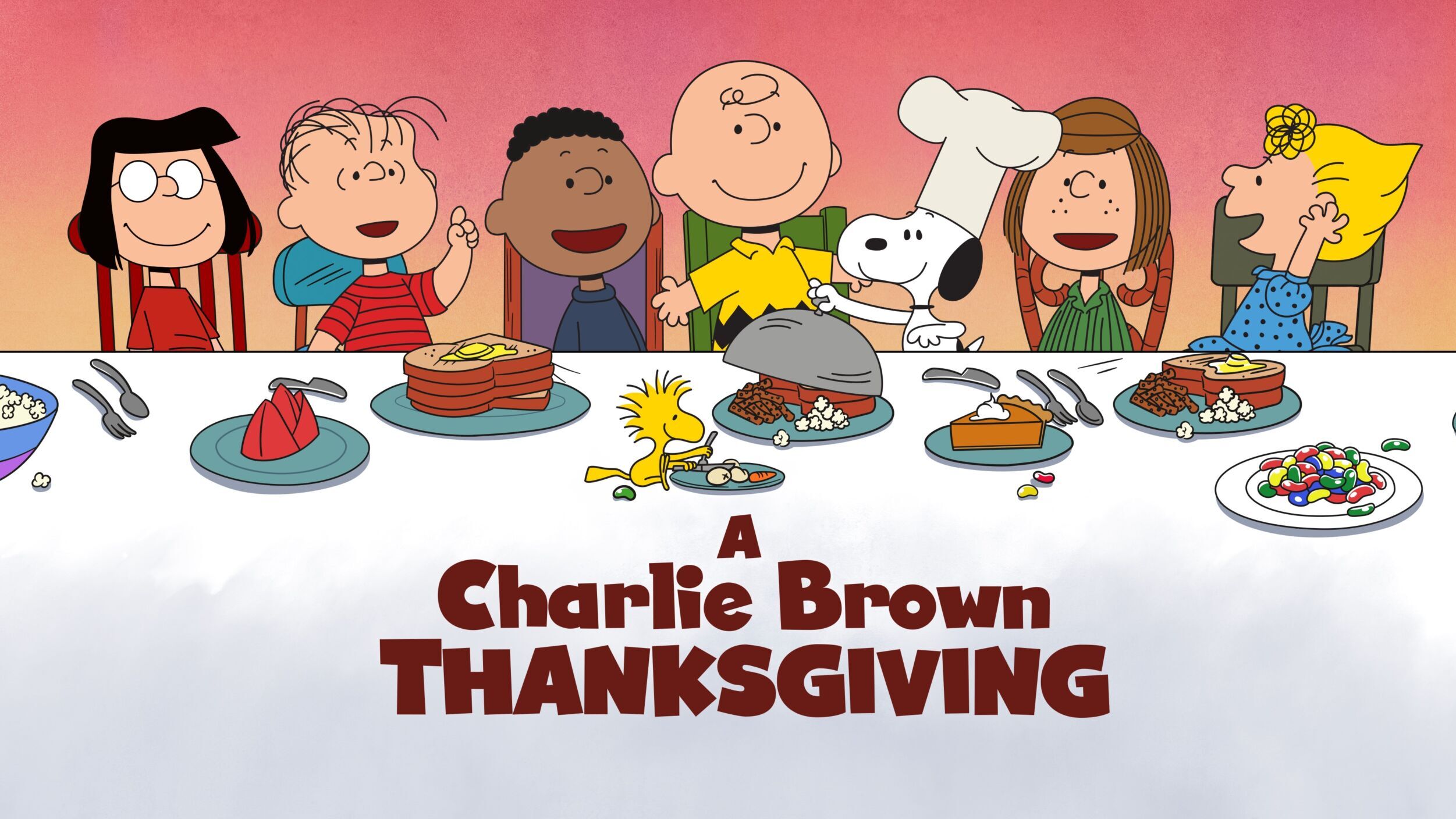
A Charlie Brown Thanksgiving This is the one with the famous episode about Charlie Brown trying to kick the football Lucy keeps snatching away from him. And Peppermint Patty invites herself to Charlie Brown’s house for Thanksgiving and he is too kind-hearted to tell her that he won’t be there because his family is going to his grandmother’s. When the Peanuts gang comes over for a feast prepared by Charlie Brown himself, Patty gets angry at being served toast and jelly beans. But when she realizes how hard her friend tried to be hospitable, she learns what gratitude really means.
Copyright 1947 20th Century Fox
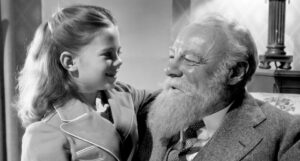
Miracle on 34th Street is a Christmas movie, but it begins with the Macy’s Thanksgiving Day Parade and it is a great family movie (for those who are comfortable with questions about Santa’s being real. The original is a classic with an adorable Natalie Wood and Edmund Gwenn won an Oscar for playing Kris Kringle. But the remake is nice, too.
Squanto and the First Thanksgiving , Native American actor Graham Greene and musician Paul McCandless tell the story of Squanto’s extraordinary generosity and leadership in reaching out to the Pilgrims after he had been sold into slavery by earlier European arrivals in the New World.
Planes, Trains, and Automobiles Okay, I have to admit I don’t love this movie the way so many other people do. Parts of it seem mean-spirited to me. But we can all identify with the frustrations of holiday travel and with the unexpected connections we sometimes are lucky enough to find along the way.
An Old Fashioned Thanksgiving Jacqueline Bisset stars in this warm-hearted tale, based on a short story by Louisa May Alcott (Little Women).
My favorite Thanksgiving movies are “What’s Cooking?” with four families preparing for the holiday and “Pieces of April,” about a family, including a terminally ill mother, driving to an estranged daughter for Thanksgiving. Both are funny, touching, and wise. Wishing all of you a Thanksgiving filled with gratitude for being together, even the crazy parts.
Rated PG for some scary action, brief suggestive material, and thematic material
Profanity:
None
Alcohol/ Drugs:
None
Violence/ Scariness:
Fantasy peril and violence
Diversity Issues:
A theme of the movie
Date Released to Theaters:
November 22, 2024
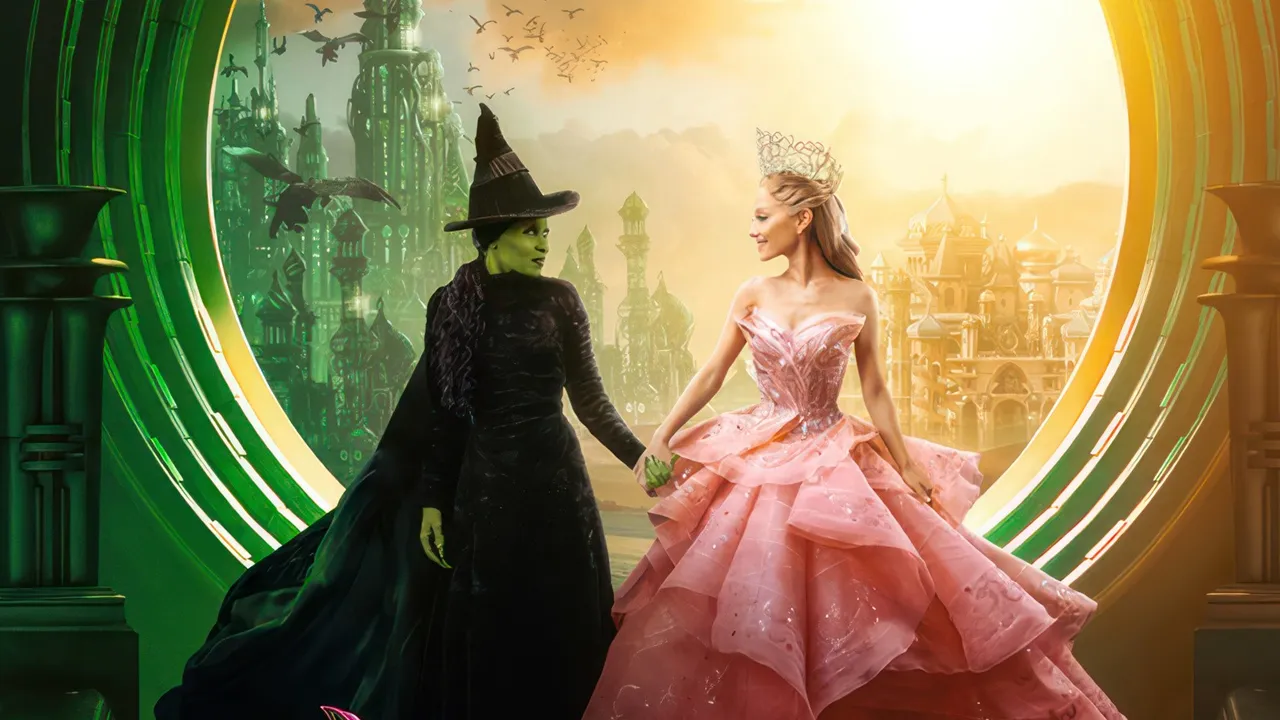
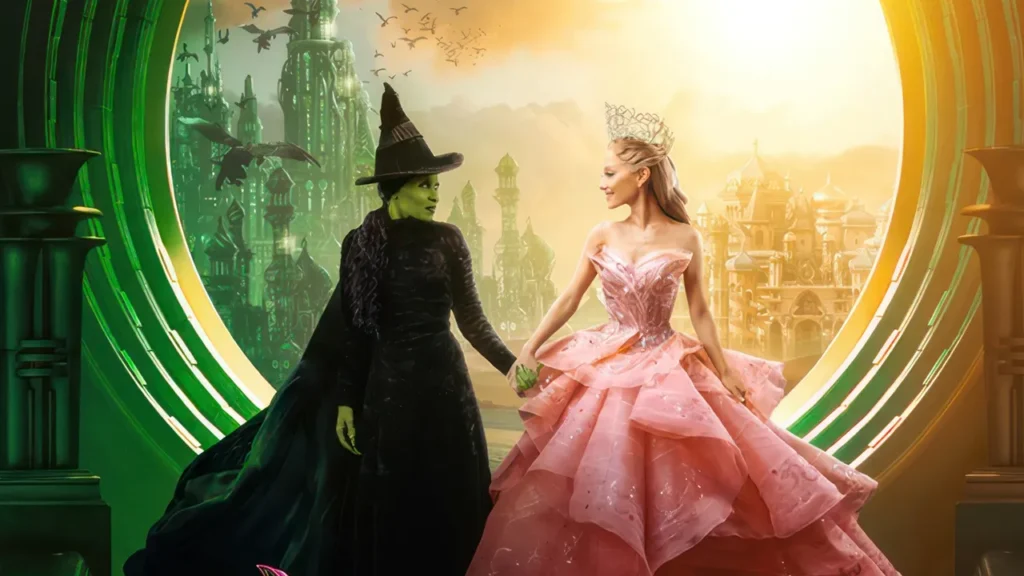
I feel confident that “Wicked,” this movie musical set in Oz is going to be POP-ular. It is, of course, adapted from the long-running, award-winning Broadway play, which was adapted from the book by Gregory Maguire, which was itself inspired by The Wizard of Oz by L. Frank Baum and the family classic MGM movie it inspired, starring Judy Garland, plus the funkified The Wiz, another musical play and movie. But this is not just some IP brand extension; it is as much an exploration of the nature of good and evil as it is a backstory about some of the world’s most iconic characters. It is also a lot–part one is nearly three hours long, with every minute a cornucopia of visuals, music, dancing, and ideas. Some will be overwhelmed, but many will find it dazzling and worth many repeat viewings.
Copyright 2024 Universal
The movie begins with the report that the Wicked Witch of the West has melted due to “a bucket of water thrown by a child.” Glinda the Good Witch arrives via bubble in Munchkin Country to confirm the news. This parallels Judy Garland’s arrival in the MGM film, her tornado-tossed house landing on the Wicked Witch of the East, and then Glinda arrives by bubble to ask Dorothy if she is a good witch or a bad witch. We will glimpse a few other references to the classic film, including a cute animal peeking out of a basket on the back of a bicycle, a shot of the four classic characters, plus Toto, walking through the poppy fields, and the first stop in the Emerald City a makeover musical number in a fantasy beauty salon. We also see the origins of some familiar elements, including the witch’s broom and Glinda’s name. As in the Baum book, the magical slippers are silver, not ruby.
One of the Munchkins asks a questions humans have been pondering since pondering began: Are people born wicked or do they become wicked, and if so, why? That is the theme of this version of the story.
Ariana Grande, appearing under the name on her birth certificate, Ariana Grande-Butera, plays Galinda (yes, that’s her name), a pampered princess who arrives at Oz’s most prestigious institute of higher learning, Shiz University. Think Hogwarts, because though the students are adults, it feels more like a boarding school. It is set in a fabulous compound that feels like a dream project (in both senses of the word) for brilliant production designer Nathan Crowley that is part Victorian, part Edmund Dulac fairy tale, with curves and curlicues everywhere inspired by Art Nouveau, and a sprinkle here and there of steampunk.
Also arriving are two sisters, Elphaba (Cynthia Erivo), with bright green skin, and her sister, Nessarose (played by Marissa Bode, who, like her character, does not have green skin and uses a wheelchair. Galinda is so confident she expects everyone to adore her and is so careless about mistakes that she often uses malapropisms that sort of sound like real words but are not. Elphaba is tentative and shy, but has internal strength of character and a sense of responsibility. She was the result of her late mother’s affair. The only father she has ever known, her mother’s husband, barely acknowledges her, except to order her to take care of Nessarose.
Madame Morrible (Michelle Yeoh) immediately recognizes that Elphaba is gifted with extraordinary magical powers and takes her on for special tutoring. She also decides that the two young women should share a room. At first they dislike and mostly ignore one another, and Galinda pranks Elphaba by giving her an ugly hat to wear to a party. But when the other students laugh at Elphaba, who responds defiantly by dancing by herself, Galinda experiences her first spark of genuine empathy. Instead of claiming to be kind, she shows real kindness by joining Elphaba on the dance floor, and her unquestioned role as the arbiter of status soon has the rest of the crowd joining them in the dance.
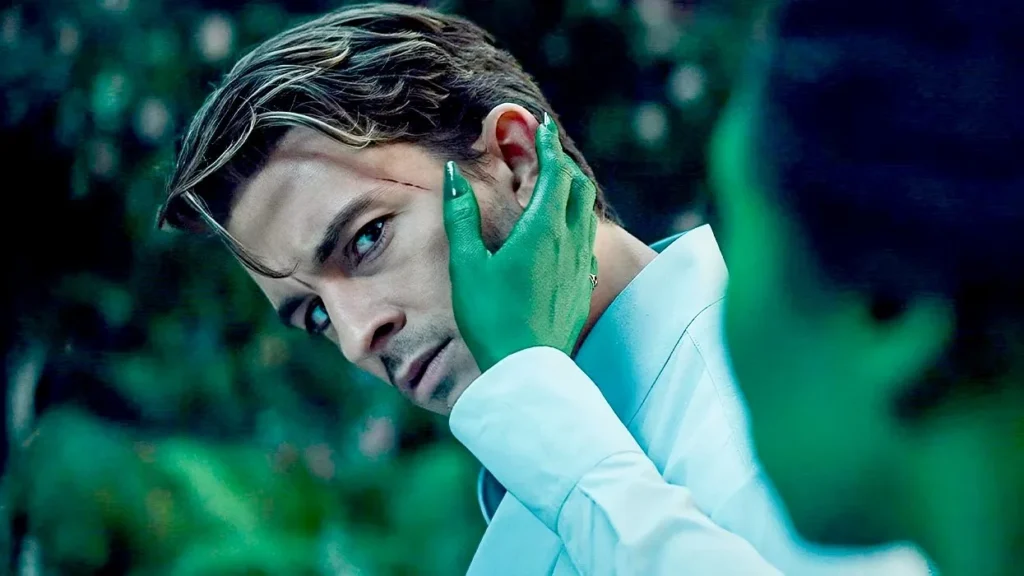
Also at the party are Nessarose with Boq (Ethan Slater), who has a crush on Galinda but invited Nessarose because Galinda told him to, and the extremely handsome and charming Prince Fiyero (“Bridgerton’s” Jonathan Bailey). He was a late arrival at Shiz, after being kick out of other schools. At first he seems to be a perfect match for Galinda (she certainly thinks so). They are both gorgeous but superficial and incurious. Then, in the movie’s most significant scene, Fiyero is the only one who helps Elphaba rescue a caged lion cub, and she is the only one who realizes that his constant pursuit of pleasure is not making him happy.
Jonathan Bailey as Flyero Copyright 2024 Universal
Director Jon M. Chu (“Crazy Rich Asians,”) brings a lot of energy to the movie. Though he does not have the luxury of his “Step Up” and “In the Heights” acting leads’ extensive dance training and skill, the musical numbers, especially the big dance numbers, are creatively and dynamically staged. I especially liked “One Short Day,” as Glinda (she’s changed her name by then) and Elphaba first arrive in the Emerald City. Keep an eye out for the original Broadway Glinda and Elphaba, Kristen Chenoweth and Idina Menzel, in a stage show about Oz history, or rather the Wizard’s preferred version of it.
Bailey has a sinuous charm that conveys Fiyero’s charisma but hints at his feeling lost and struggling with aimlessness beneath the surface. Goldblum’s quirky energy is just right as the Wizard who began as a carny from the midwest. Erivo is the heart of the film, always magnetic and compelling as Elphaba. The bright green makeup does not mask the extraordinary expressiveness of her face, always thoughtful, present, authentic, and grounded, despite the distracting details of the ultra-fantasy world around her. And like Grande, she has a once-to-a generation voice.
The splendor and imagination of the setting and costumes and even the huge musical numbers surround and mostly support real and meaningful questions about bad people doing good things, good people doing bad things, and everyone struggling to find a place somewhere on the continuum between being good and being wicked. Galinda (we learn how she became Glinda) is considered good because she is pretty and smiles a lot. But she is arrogant and selfish. Elphaba is considered if not bad at least weird because she does not smile or conform (note that neither wears the school uniform) but she is devoted to her sister. She is looking for the love she has never received but has no interest in changing anything about herself to try to get it. She knows that would not be real. Other characters surprise us by not being what we expect on the good/wicked scale.
This is a sumptuous and unsubtle treat grounded in Erivo’s graceful and subtle performance. When she defies gravity, she lifts us with her, and we lean forward to the next chapter.
Parents should know that like the MGM movie version, this story features fantasy action and peril with some scary and disturbing images, along with issues of bigotry and cruel treatment. A child is the result of an affair, causing grief and shame.
Family discussion: Why did Elphaba tell Flyero he was not happy? Why did the Wizard want to cage the animals? Are these characters good or wicked or both: Elphaba, Galinda, Madame Morrible? Are any of the characters like someone you know?
If you like this, try: the original Wizard of Oz book and its sequels (great for reading aloud) and the many other versions of the story
Extended, intense, and graphic violence, swords, animal attacks, characters injured and killed, disturbing images
Date Released to Theaters:
November 22, 2024
Date Released to DVD:
January 22, 2025
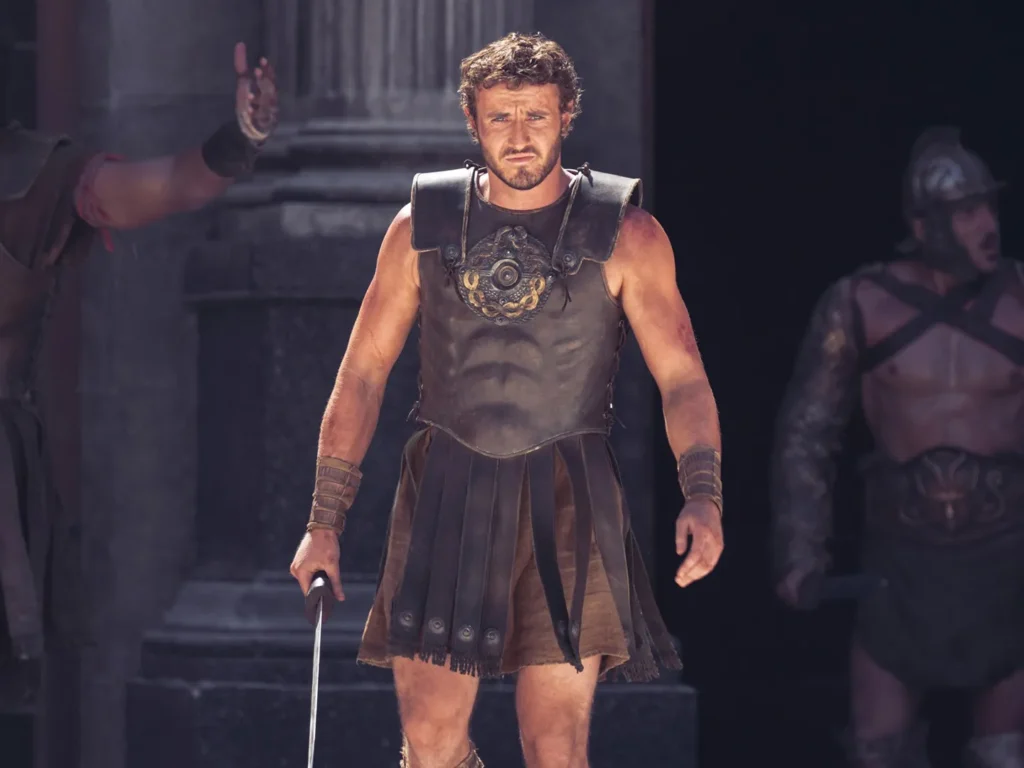
Gladiator II copyright 2024 Paramount
“Gladiator II” looks magnificent. Denzel Washington effortlessly steals every scene he is in and all but winks at us to show how much he is enjoying it. But the script is weak and too repetitive , the movie is too long, and the fight scenes, no matter how staged, just get numbing after a while. When I saw it, the audience was so disconnected from the storyline that they laughed at an admittedly corny reveal that was clearly a turning point that puts one of the main characters in danger.
For those who still remember the details of 2000’s Oscar-winning “Gladiator,” starring Russell Crowe, this film takes place a generation later, with only one returning main character aside from a couple of brief flashbacks and Derek Jacobi in a few scenes as a member of the political elite.
Connie Nelson is back as Lucilla, the royal daughter of the idealistic Emperor Marcus Aurelius, who was murdered by his son and her brother in the first film. She is now married to Rome’s top soldier, Marcus Acacius (Pedro Pascal).
We get a few minutes of blissful farm life in a remote village before the Roman navy arrives to take it over and the farmer and his beautiful and beloved wife have to suit up as soldiers. We know what happens to peaceful farmers and beautiful, beloved wives in these kinds of movies. Indeed, this is pretty much a replay of the first “Gladiator,” except this time the beautiful wife is also a fierce soldier. No big difference, though, because she gets killed off to fuel what we will later hear is the farmer’s biggest asset as an arena fighter, not strength or skill but rage.
That assessment of the farmer (Mescal) comes from Macrinus (Washington), who runs the gladiator program, wears only the finest glam. He is a trusted purveyor of news and rumors to everyone in Rome, especially Geta (Joseph Quinn of “Stranger Things”) and Caracalla (Fred Hechinger of “Thelma”), the decadent young emperor-brothers who whine and lounge around in white face make-up except when they are enjoying the bloody battles in the colosseum. When the farmer-turned fighter says what he wants is a chance to cut off Acacius’ head, Macrinus tells him he will have it, and his freedom, too, if he succeeds in the arena.
Paul Mescal and Pedro Pascal are two of the most charismatic, versatile, and talented actors in movies. Mescal can make a smile convey more than a page of dialogue or 15 minutes of backstory. Pascal has unmatchable comic timing. The one-dimensional characters they play do not give them a chance to show us their best. Instead, they have distractingly bulked up, like Popeye after the spinach. They look great in those Roman skirts, especially in the fight scenes, but even they cannot make the wooden dialogue and awkward plot twists work.
So much for the plot. Some people may want to make parallels between the fall of Rome and some of today’s headlines, but it won’t get you very far. I’m not going to give away the not-much-of-a-twist, which is in the trailer, so if you don’t want to know, don’t peek. In fact, you might do better to watch the without sound (you’d miss the score but you’d also miss the sounds of bones crunching and blood spurting). The dialogue is clunky and the storyline is hackneyed. The fans who come for the spectacle and pageantry will do fine, though, as director Ridley Scott and production designer Arthur Max make all of the long shots very impressive. Those who are there for the fight scenes will appreciate the variety — swords, of course, and attacks by crazed monkeys, sharks, and a rhino.
For me, though, it started to feel more like a game than a story and much too long.
Parents should know that this film has extended, very graphic violence with many characters injured and killed and many, many disturbing bloody images and sounds including decapitation. Characters drink alcohol and use drugs. A character essentially commits suicide. There is a reference to venereal disease.
Family discussion: Was rage the gladiator’s most valuable quality? How were the gladiator and the general alike?
If you like this, try: “Gladiator” with Russell Crowe
Rated PG-13 for strong language, violent content, some suggestive references and smoking
Profanity:
Strong language including many uses of the n-word
Alcohol/ Drugs:
Alcohol
Violence/ Scariness:
Tense emotional confrontations, recollections of enslavement and abuse, supernatural horror
Diversity Issues:
A theme of the movie, disabled character
Date Released to Theaters:
November 22, 2024
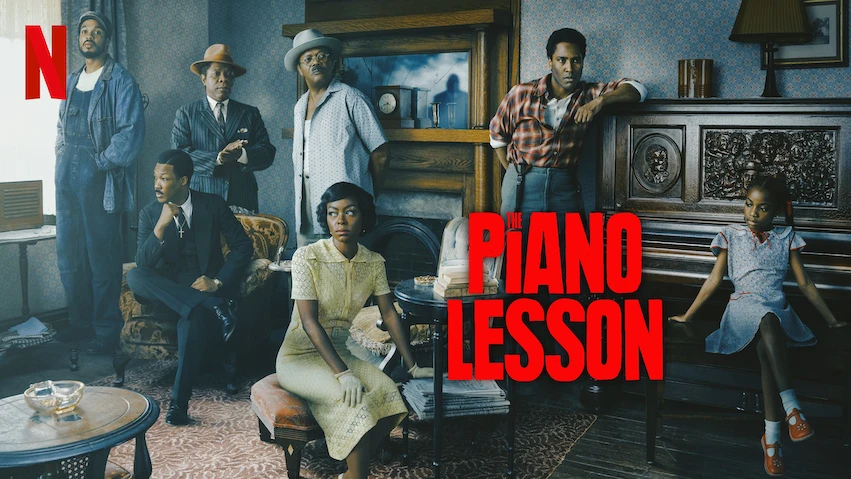
Copyright 2024 Netflix The Piano Lesson
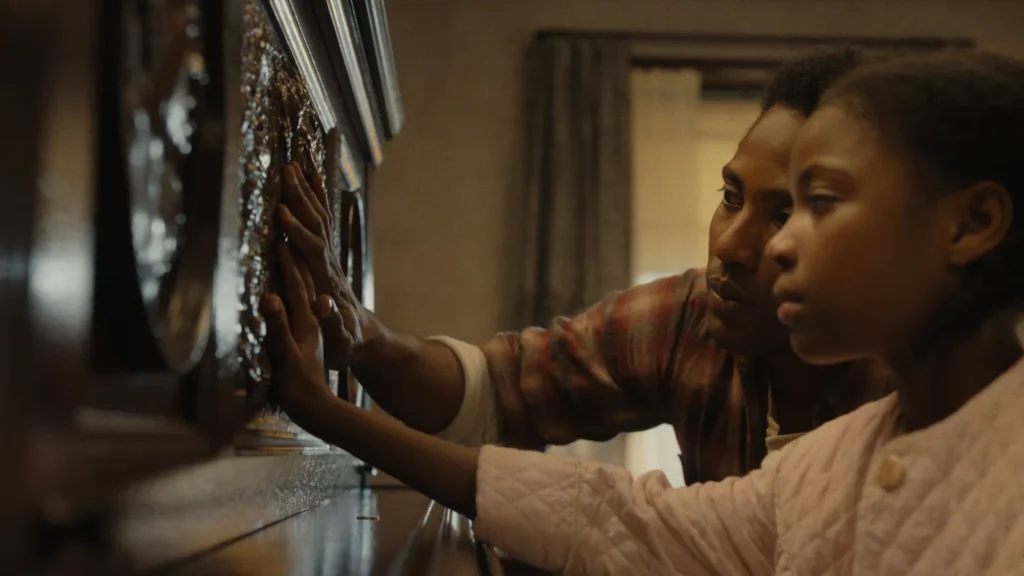
August Wilson wrote a play for each of the decades of the 20th century, all set in Pittsburgh and all exploring themes of race, family, and generational trauma. Denzel Washington, who starred in “Fences” on Broadway and directed and starred in the 2106 film that featured Viola Davis in her Oscar-winning role and produced “Ma Rainey’s Black Bottom,” also starring Davis, who nominated for an Oscar, along with her co-star, Chadwick Boseman. This third in the series is a family story on screen and behind the camera, produced by Washington, directed by his son Malcolm Washington (who adapted the screenplay with Virgil Williams), starring his other son, John David Washington (“BlackkKlansman”), and his wife Pauletta and daughter Olivia in small roles.
The lesson here is not about someone learning how to play the piano. It is the struggle between Charles family siblings who represent two polar opposite views on history, heritage, and obligation. John David Washington and Danielle Deadwyler give sizzling performances as Boy Willie and Berniece (her name possibly a reference to a character in The Member of the Wedding).
Boy Willie, described by Wilson as “brash and impulsive, talkative and somewhat crude in speech and manner,” arrives at the Pittsburgh home shared by Berniece, her young daughter, and their Uncle Doaker (Samuel L. Jackson). He is uninvited, unannounced, unexpected, and unwanted. He and his friend Lymon (Ray Fisher) have driven a truck filled with watermelons from their rural community in Mississippi. Boy Willie’s plan is to sell the watermelons to get the money to buy property. It is more than a chance to be his own boss. The property was once owned by the Sutter family that enslaved his ancestors. The Sutter patriarch has just died by falling into his well.
The Sutter family also once owned a piano they got in exchange for slaves, separating a mother and child of the Charles family from the husband and father, a gifted carpenter, who was considered too valuable to sell. He carved his family’s history into the piano, and a later generation stole it from the Sutters. Now it is in the living room of Berniece’s home. The conflict in the play is between Berniece, who does not play the piano but refuses to sell it because of what it represents about the pain, skill, courage of her family. Boy Willie is determined to sell it so he can build a future which in his mind also honors the family history. If stealing the piano was a triumph over enslavement and abuse, owning the Sutter property is even more so.
Washington is a mesmerizing performer and his Boy Willie is electric, charismatic, and dangerous. Deadwyler has a quieter role, especially in the first half of the film, but gets a chance to show Berniece’s fiery determination. Wilson, always a master of creating arresting, complex characters, has two of his best in the two siblings. A conventional story would have the widowed Berniece find a happy ending with the preacher who loves her (Cory Hawkins, excellent as always). But Wilson’s plays grab onto big, existential issues and he did not hesitate to go to extremes to demonstrate the intensity of his characters’ struggles. When does your family history support you? When does it weigh you down? What do you do when the answer is both?
Parents should know that this film has strong language, including many uses of the n-word. Characters drink and smoke. There are references to the sad death of a husband and father and to the abuses and deprivations of enslavement and bigotry. The story also includes some supernatural/horror events with disturbing images.
Family discussion: Who is right, Berniece or Boy Willie? What could they have said to better explain why they felt so strongly? Does your family have a cherished heirloom and who cares the most about it?
If you like this, try: “Fences” and “Ma Rainey’s Black Bottom”
Rated PG-13 for ction, some violence, and language
Profanity:
Some strong and crude language
Alcohol/ Drugs:
Alcohol
Violence/ Scariness:
Extended action-style peril and violence, scary monsters
Diversity Issues:
None
Date Released to Theaters:
November 15, 2024
Copyright MGM/Amazon 2024
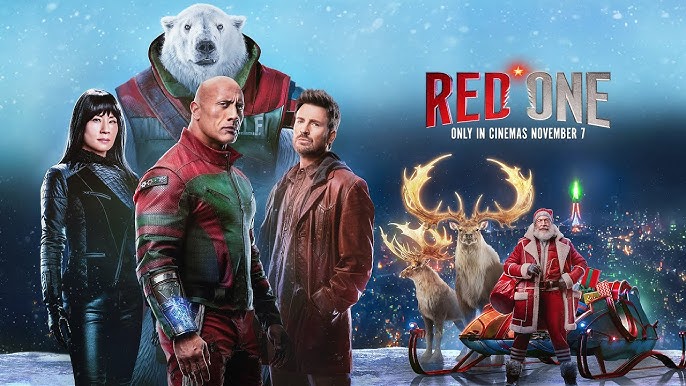
The “Jumanji” team has not managed to match the same mixture of fantasy and heart, but Christmas spirit boosts their latest production to the level of solid family entertainment. Director Jake Kasden and star Dwayne Johnson have managed to turn the saga of the North Pole’s most beloved character into an action film, with Santa (code name: Red One) kidnapped on Christmas Eve. Who can save him? The Rock, of course, with some help from Captain America’s Chris Evans and Charlie’s Angel Lucy Liu.
Oscar-winner J.K. Simmons is in the title role, not fat, not jolly, but kind, wise, generous (emotionally, not to mention all those gifts). He truly loves all children, and as for adults, even the least lovable are dear to him because he sees the child they once were.
Johnson plays Callum Drift (was that intended to be a parody of an action hero name?), head of security and Santa’s most trusted colleague. But Drift insists this will be his last Christmas sleigh ride. After literally hundreds of years in the job, he has become cynical, not about the children but about the adults, who seem increasingly selfish and corrupt. For the first time, the naughty list is longer than the nice list, and he’s lost that Christmas spirit.
This is one of the film’s worst decisions. Johnson is an endlessly charismatic and charming screen presence, but here he is playing a character who is depressed and grim. It’s like he turned down the pilot light of his personality, and not in a fun way. And did he steal toys from the toy store? We don’t see him paying for them as he goes out through the supply room.
When Santa is kidnapped, Callum is on the job, reporting to Zoe (Liu), who oversees all magical characters. She assigns him to work with a Level 4 on the Naughty List named Jack (Evans), a Dark Web specialist and hacker with a gambling problem. He provided the geographic coordinates to the kidnapper without knowing what they would be used for.
Poor decision number two is the choice of bad guy. No spoilers, but both the casting and the reason for the kidnapping are not as compelling as they should be. And Liu has an underwritten part that is mostly striding purposively and monotone orders. That does not matter much because we are there for the action, and there is plenty, especially if you see the movie in a theater equipped with an immersive 4KD experience, so your seat will rumble in the car scenes and shake when the characters are in Santa’s sleigh. And I mean SHAKE. Plus some spritzing in your face. At a couple of points I thought the guy behind me was kicking my seat, but it was the 4KD.
Here’s a good decision: Chris Evans. He understands the assignment. He is playing Jack, a guy who literally steals candy from a baby — while he is orchestrating a sophisticated hacking job that involves setting a fire as a distraction so he can grab an employee ID. He is a terrible father to his son, Dylan (Wesley Kimmel), both neglecting him and encouraging him to take revenge on a friend and follow his dad’s example into a life of crime. Sounds like someone needs to learn the true meaning of Christmas! Evans handles the action scenes and is a master of the rhythms of comedy. He draws our eyes his way in every scene.
The fight scenes and special effects hit the sweet spot between fun and scary. There are attacking snowmen and a visit to Krampus (Kristofer Hivju), who used to punish naughty children on Christmas as Santa was leaving gifts for the good ones, according to German legend. Nick Kroll plays the intermediary who connected the villain to Jack and is now hanging out on a tropical island.
It wants us to feel the warmth of the season, but it takes it for granted that Christmas is universally celebrated and that it is mostly about the presents. Some of the jokes are pretty lightweight (Cullum asks Jack, “Do I look human?” and there are two jokes about Jack’s wanting a life-size Wonder Woman action figure and two about essential oils). Some are outright groaners (don’t bother to pay attention to what ELF stands for or notice the license plate on the snowmen’s van). There is a nice lesson about how every choice is an opportunity to decide who you are and which list will have your name on it. With a few better choices, this could have been a holiday classic.
Parents should know that this film has extended peril and action with some scary monsters. Characters use strong and crude language and drink alcohol.
Family discussion: Can you remember a decision that helped you decide who you are? Why was Jack a bad father?
If you like this, try: “Jumanji: Welcome to the Jungle”