Snatched

Snatched

Posted on May 11, 2017 at 5:30 pm

B-
Lowest Recommended Age: Mature High Schooler
MPAA Rating: Rated R for crude sexual content, brief nudity, and language throughout
Profanity: Very strong and crude language
Alcohol/ Drugs: Drinking and drunkenness, drug references
Violence/ Scariness: Extended action-style comic peril and violence with some disturbing and grisly images, characters injured and killed, graphic medical procedure
Diversity Issues: Stereotyped portrayal of South Americans
Date Released to Theaters: May 12, 2017

Copyright 2017 20th Century Fox
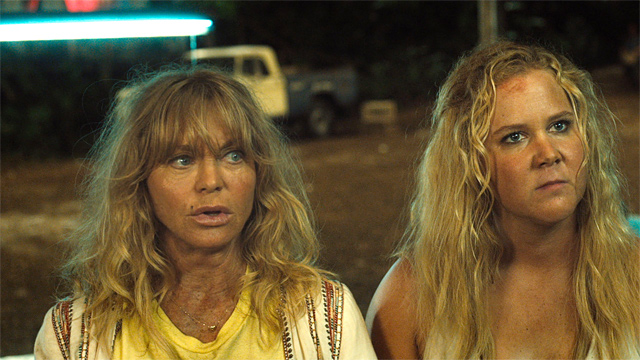
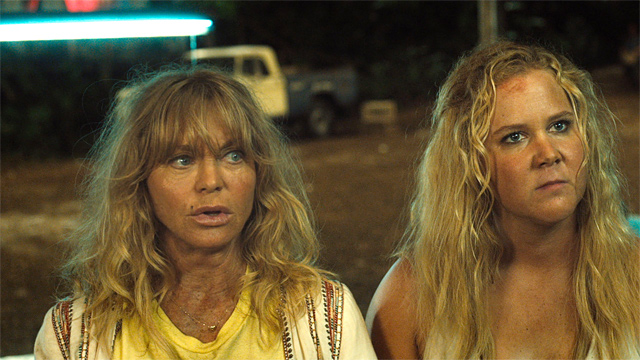
Emily Middleton (Amy Schumer), pulls an old scrapbook out of the closet in her childhood home and leafs through old photos of her mother, Linda (Goldie Hawn). Like Emily, those images bring back memories of happier times and remind her how much she misses her once-adventuresome mom. Unfortunately, they also bring back our memories of better movies and how much we have missed Hawn’s irresistible effervescence in the 15 years since her last film. Schumer has been everywhere talking about how much she adores Hawn and how thrilled she was to get a chance to co-star with her in “Snatched,” directed by Jonathan Levine (“50-50,” “The Wackness,” “The Night Before”), and written by Katie Dippold (“The Heat,” “Ghostbusters”). It is too bad she relegated her to the dreary role of the risk-averse mother. And it is too bad that Schumer continues to relegate herself to the almost-as-dreary role of the immature, millennial.

Emily gets both fired and dumped (both for good reason) just as she is about to take a vacation in Ecuador, so she retreats to her childhood home, where her agoraphobic brother (Ike Barinholtz) still lives with her divorcee mother, whose character traits come straight out of the cliche drawer: she sips white wine, loves her cats, has four locks on her front door, does not know the difference between a private message and posting on a Facebook wall and needs help unlocking the CAPS key. And Schumer’s Linda is the same self-centered and childish but raunchy character we’ve seen Schumer play too many times already. Emily is too careless. Linda is too careful. Got it? The opening crawl warns us that the movie will feature “violence, mayhem, and a reckless disregard for human life…the kidnappers did bad stuff, too.” So, another “Hangover” variation in the jungles of South America (but filmed in Hawaii).

How does Emily persuade the hyper-cautious Linda to go to Ecuador with her? Wheedling and guilt don’t work, but the magic word is “nonrefundable ticket.” (“Put the ‘fun’ in ‘nonrefundable!'”) So the next thing they know, they are at an elegant resort, where, just to make sure we did not miss the point, Emily lounges by the pool in a bikini and Linda comes out dressed, as Emily points out, like the sun-sensitive character in “Powder” — or a beekeeper. And she slathers sun block on Emily like she’s a toddler.

Emily and Linda get kidnapped for ransom, bicker, escape, get captured again, bicker, escape, etc. Pretty much every South American is a servant or a criminal. The State Department is useless. There are pratfalls and shoot-outs and one very disgusting medical procedure. Various encounters along the way are funny in the usual raunchy comedy mode, especially Christopher Meloni as a khaki-wearing guide who is up for adventure but maybe not up to it, and the invaluable Wanda Sykes and Joan Cusack as American tourists with some special ops skills. The movie would have been better if it was about them.

Parents should know that this film includes very explicit sexual references and crude humor, very strong language, brief nudity, graphic medical treatment, extended peril and violence, some humor about mental illness and disability, characters injured and killed (played for comedy), and some graphic and disturbing images.

Family discussion: Who changes more on the trip, Linda or Emily? Why is it hard for Emily to be nice to her mother?

If you like this, try: “Trainwreck” and “Inside Amy Schumer”
Related Tags:


Comedy Movies -- format
The Zookeeper’s Wife

The Zookeeper’s Wife

Posted on March 30, 2017 at 3:47 pm

B +
Lowest Recommended Age: Preschool
MPAA Rating: Rated PG-13 for thematic elements, disturbing images, violence, brief sexuality, nudity and smoking
Profanity: Some strong and bigoted language
Alcohol/ Drugs: Drinking, smoking
Violence/ Scariness: Wartime and holocaust violence involving humans and animals, characters injured and killed, rape of a young girl (off-camera), sexual abuse
Diversity Issues: A theme of the movie
Date Released to Theaters: March 30, 2017
Copyright Scion Films 2017

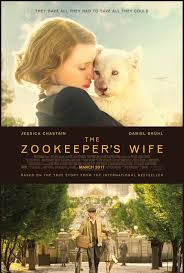
Jessica Chastain is luminous in the real-life story of Antonina Zabinski, a Warsaw zookeeper, who, with her husband and son, saved the lives of Jews during the Holocaust. Director Niki Caro (“Whale Rider”) brings her love of the natural world and her gift for telling stories of courage and triumph over bigotry to give us a timely reminder that the direst circumstances can inspire the greatest acts of courage and generosity. It also reminds us that there are still new stories to be discovered, even in a period of history that has inspired hundreds of films and thousands of books.

The movie opens on scenes of Edenic paradise. Antonina looks lovingly at her sleeping son — and at the baby lions sleeping beside him. She leans over and holds his foot, but it is the lion cubs she nuzzles. We then see her opening the zoo for the day, riding her bicycle through the magnificent Belle Epoque zoo, with the young camel loping along behind her, lovingly greeting each of the creatures. We will later learn that she is a refugee from Russia, and her childhood hardships left her more willing to trust animals than people. Animals trust her, too. Her skill at “whispering” even the most frightened and frightening wild thing will prove essential once Germany invades Poland.

Antonina is married to Jan (the Belgian actor Johan Heldenbergh), and the zoo is in every way their home. They live on the premises, but it is more than that. There is no distinction between the rooms they live in and the rest of the zoo. Animals wander in and out of the house and Antonina feels that the animals are her treasured guests — that is the term she uses.

And then Germany invades Poland, and the zoo is destroyed. A German zookeeper, Lutz Heck (Daniel Brühl of “Rush” and “Captain America: Civil War”) offers to take the best of the surviving animals to his zoo in Berlin, promising to care for them and return them after the war. Later, as an officer in the German army, he returns to shoot the animals left behind. The Jews of Warsaw are moved into the Warsaw ghetto. Antonina and Jan figure out a way to smuggle some of them out of the ghetto, and soon they are living in underground cages once used to house animals. Once again, Antonina refers to them as her guests, and each night, after the patrol has gone home, she has music and serves food on elegant trays to remind them that there is still civilization in the midst of madness and kindness and courage in the midst of brutality and terror.

It would be easy to mistake the gentleness of Caro’s approach as not sufficiently harrowing to convey the horrors of the Holocaust, especially after the Oscar-winning “Son of Saul.” But that would be wrong. Caro, who made a film about sexual predation in “North Country,” understands that an unwanted touch of a hand or coming a few millimeters too close can feel soul-destroying, especially when it is misunderstood by someone whose trust and respect mean everything. She understands that a drawing, a bunny, a chance to create, a moment of sympathy can begin to heal a ravaged heart, and she presents Antonina’s story with as much grace and humanity as Antonina showed her guests.

Parents should know that this movie takes place during WWII and the Holocaust, and there are disturbing and violent images including scenes of bombing, the Warsaw uprising, and execution of Jews. A young girl is raped (off-screen) and a woman faces a sexual predator. There is some bigoted language and human and animal characters are injured and killed.

Family discussion: How did Antonina’s love of animals help her in taking care of her “guests?” Why was it important to her to treat her “guests” to gracious entertainment in the evenings? What should she have said to her husband about Heck?

If you like this, try: the book by Diane Ackerman

Related Tags:


Based on a book Based on a true story Drama Epic/Historical Movies -- format War
Beauty and the Beast

Beauty and the Beast

Posted on March 16, 2017 at 5:55 pm

A-
Lowest Recommended Age: Preschool
MPAA Rating: Rated PG for some action, violence, peril and frightening images
Profanity: None
Alcohol/ Drugs: None
Violence/ Scariness: Fairy tale peril and violence, wolves, mob, guns
Diversity Issues: Very subtle suggestion that a character might be gay, tolerance a metaphorical theme of the film
Date Released to Theaters: March 17, 2017
Copyright Disney 2017

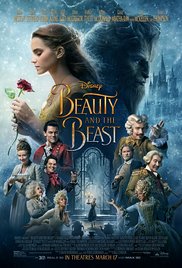
Disney’s live action remake of one of its most beloved animated fairy tales is every bit as enchanting as we could hope, gently updating and expanding the story to give the characters more depth and appeal and filling it with movie magic.

In a prologue, we see that the Beast was once a handsome but vain and selfish prince who cared only about beauty. An enchantress cursed him to become a beast, the courtiers all turned into furniture, serving pieces, and accessories. If the Beast cannot find a way to love and be loved before the last petal falls from the enchanted rose, they will never return to human form. The Beast has given up. He is angry, hurt, and terrified that he is unlovable, as Stevens shows us with just his voice, posture, and piercing blue eyes.

Emma Watson, best known as Hermione in the Harry Potter films, plays Belle, introduced in the opening musical number as a bit of an outsider in her small “provincial” French village. She loves to read, but seems to have read everything on the one shelf of books in the town. Belle is not concerned with her looks, and Watson is encouragingly messy, with locks of hair falling around her face and sturdy boots instead of the animated version’s flats. We can see that she truly loves to learn and has an independent, adventurous spirit.

Belle adores her father (Kevin Kline as Maurice), an artist turned repairman, and she is an inventor herself, creating a washing machine that can do the laundry while she reads. Gaston (a terrific Luke Evans, clearly enjoying the way Gaston enjoys being Gaston) is an arrogant soldier who wants to marry Belle because she is beautiful and because she is the only girl in town who does not think he is dreamy. “She hasn’t made a fool of herself just to gain my favor.” Like the prince who turned into a beast, Gaston judges people only on how they look and how they respond to him.

Away from home, Maurice is chased by wolves and ends up seeking shelter at the Beast’s mysterious enchanted castle where the candelabra and teacup can talk. As he leaves, he picks a rose for Belle and the Beast (Dan Stevens of “Downton Abbey”) furiously captures him. Belle tries to rescue her father but ends up taking his place as the Beast’s prisoner.

But in this “tale as old as time,” we know that Belle and Beast will begin as “barely even friends, then somebody bends, unexpectedly,” and it is genuinely touching to see how it unfolds. With additional songs from original composer Alan Menken (with lyrics from Tim Rice, along with some lyrics written by the late Howard Ashman for the original film that were not used), some backstory about both Belle and the Prince, and a more thoughtful portrayal of the development of their relationship. I was especially glad to see that their shared love of books played an important part in their connection.

The storyline is unexpectedly resonant with contemporary challenges, with the greatest threat from an angry mob suspicious of anything unfamiliar and easily spurred to violence. We get to see a bit more of the enchantress behind the curse as well.

The two moments fans of the original film will count on are the “Beauty and the Beast” waltz in the ballroom (now sung by Emma Thompson as Mrs. Potts) and the musical extravaganza “Be Our Guest” (now sung by Ewan McGregor as Lumiere), and both are gorgeously, joyously stunning, but the moments that stay with us are the sensitive performances and the tenderness of the relationships.

Parents should know that this film includes cartoon/fantasy peril and violence, wolves, a monster, a curse, some scary images, and a subtle reference to a gay crush.

Family discussion: What did the Beast learn from his enchantment? Why is Gaston so selfish? What do Belle and the Beast discover that they have in common?

If you like this, try: the animated original and the live action “Jungle Book” and “Cinderella”

Related Tags:


Based on a book Date movie Fantasy For the Whole Family Movies -- format Musical Remake Romance
Logan

Logan

Posted on March 2, 2017 at 6:00 pm

C
Lowest Recommended Age: Mature High Schooler
MPAA Rating: Rated R for strong brutal violence and language throughout, and for brief nudity
Profanity: Very strong language
Alcohol/ Drugs: Drinking and drunkenness
Violence/ Scariness: Very intense and graphic peril and violence with many disturbing and bloody images, many characters injured and killed
Diversity Issues: A theme of the movie
Date Released to Theaters: March 3, 2017

Copyright Fox 2017
Copyright 20th Century Fox 2017
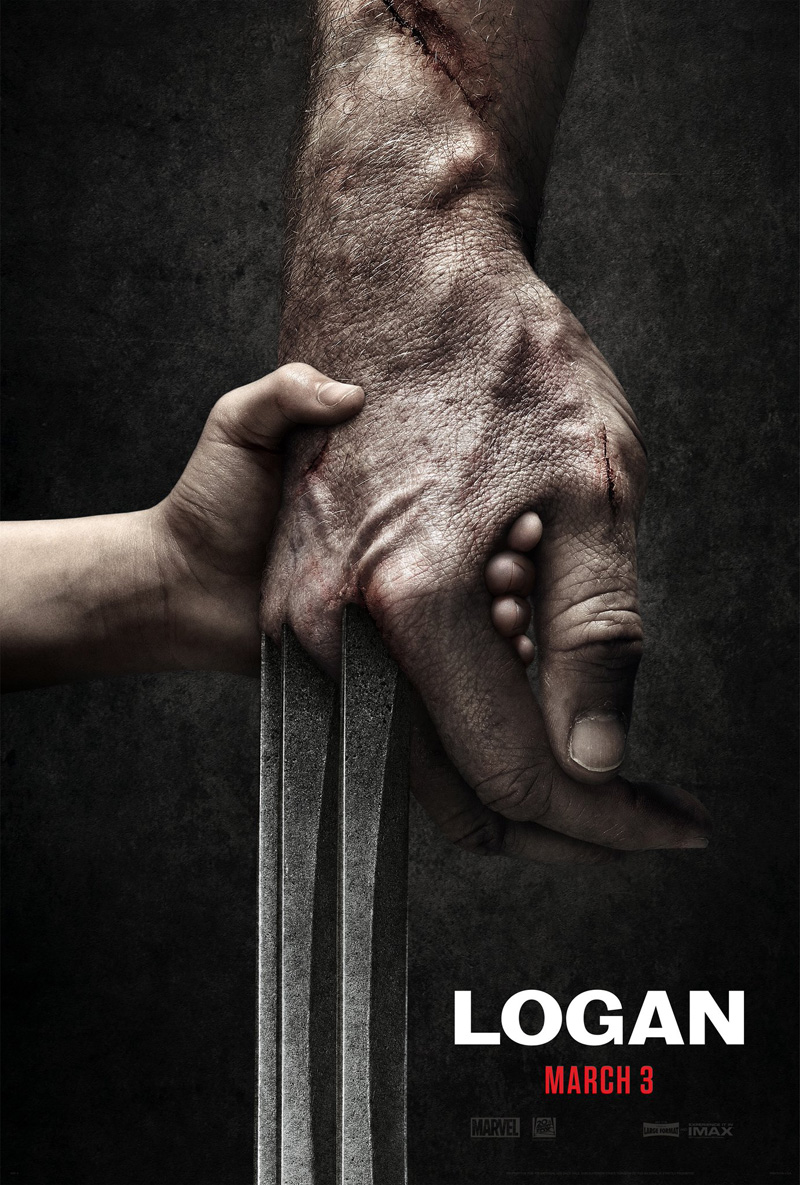
A lot of Wolverine fans love the elegaic final chapter, “Logan,” but I do not. Perhaps if you are deep in the weeds of the MCU, you will see meaning and closure in “Logan,” but for me, even as a Comic-Con-attending fangirl, it was slow and depressing, and not in a good way.

Wolverine fans know that he is a loner, only intermittently joining forces with the X-Men, and his stories often show the influence of classic western sagas. “Logan” is set in the west, and its dry, dusty terrain fits the somber tone of the story. Logan/Wolverine is old and tired. His legendary powers of healing are slowing, and so is he. He and Caliban (Stephen Merchant, looking like Uncle Fester in “The Addams Family”) are caring for Professor Xavier, who is also losing his powers and near the end of his life. The time of the X-Men seems to be ending, too. No new mutants have appeared.

Or, so everyone thought. Logan is threatened by Pierce (Boyd Holbrook), who says he is looking for a woman who is looking for Logan. And she finds him, and offers to pay Logan a lot of money to transport a little girl to the Canadian border. He does not want to do it, but he needs the money to take care of Professor X, and when the woman is murdered, he feels that he has no choice.

Professor X, who struggles with dementia, keeps insisting that the girl has some special qualities, but Logan refuses to believe him…until the tough guys show up and she dispatches them with some very familiar-looking adamantine claws that pop out from her knuckles. Time for a road trip, including an encounter with a sweet farm family and with many perils and threats along the way.

The action is well-staged, though brutal even by comic book movie standards. Jackman and Stewart are always watchable, but the story drags (the movie is well over two hours), and we know where it’s going at every step. One big plot point has to do with Logan’s belief that the story in the comic books cannot be true. He may be persuaded otherwise, but we never are.

Parents should know that this film includes constant and very graphic comic-book/sci-fi peril and violence with many disturbing images and many characters injured and killed, and brief non-sexual nudity.

Family discussion: How does this movie show the influence of classic westerns? Why does Caliban stay loyal?

If you like this, try: the previous Wolverine and X-Men films

Related Tags:


Comic book/Comic Strip/Graphic Novel Movies -- format Science-Fiction Series/Sequel
The Shack

The Shack

Posted on March 2, 2017 at 5:57 pm

B
Lowest Recommended Age: Middle School
MPAA Rating: Rated PG-13 for thematic material including some violence
Profanity: Mild language
Alcohol/ Drugs: Alcoholic parent
Violence/ Scariness: Tragic murder of a child, domestic and child abuse, gun, possible attempted suicide
Diversity Issues: Diverse characters
Date Released to Theaters: March 3, 2017
Copyright Summit 2017

“The Shack,” based on the best-seller by William P.Young seeks to provide comfort and healing for those struggling with a terrible loss and with something even worse — the fear that tragedy has no purpose and the doubt that pain engenders about whether life makes sense. Can there be meaning in a world of senseless tragedy, where the innocent suffer? The book‘s subtitle is Where Tragedy Confronts Eternity, and it is somewhere between a parable, a fantasy, and a story about a man devastated by grief who spends a week in a shack in the woods, talking to God.

While some people, including some Christians, will find the theology of this story questionable, it presents an accessible and comforting notion of God’s love and the healing power of forgiveness.

Sam Worthington plays Mackenzie, a loving husband and father of three children who still struggles with his memories of his abusive father, a man of “calloused hand, rigid rules” and alcoholism. “Pain has a way of twisting us up inside and making us do the unthinkable,” and “the secrets we keep have a way of clawing themselves up to the surface.” (It is not clear exactly what the most painful secrets are but it seems possible he murdered his abusive dad?)

Mack takes his children on a camping trip, where his youngest daughter Missy is kidnapped and brutally murdered while he is rescuing his son, trapped under an overturned canoe. Mac, who had always been surprised and touched by Missy’s simple faith in a God she felt close enough to that she referred to Him as Papa, is shattered by guilt and grief. Even though he sees the pressure it puts on his family, he cannot break out of his isolation.

When his family is away, Mack finds a note in his mailbox, though there are no footprints in the snow. The note is signed “Papa” and it invites him to come to the woods, to the very shack where Missy’s bloody dress was found.  Although he dreads returning to the place of his crushing pain, he goes, and it is there he meets the Trinity. God, known as Elousia, I Am, or Papa, is in the form of an African-American woman who was a kind neighbor in his childhood and who wears Ma Griffe, the perfume he mother loved (Oscar-winner Octavia Spencer). She says he will be most open to her in the form of a mother, and apparently one who loves Neil Young.

God’s Son is in the form of a young carpenter who can walk on water and run on it, too (Avraham Aviv Alush), and the Spirit is known as Sarayu (Sumire Matsubara).  

They live in a Kinkade-like Eden, filled with warmth, light, nature, good food, and laughter.  Very gently, they guide him to an understanding that God’s love does not mean freedom from pain, but a sharing of that pain that can help him forgive and help make his spirit whole.

Some believers will dismiss this as “comfort food Christianity.” The Son actually says that religion is too much work. “I don’t want slaves; I want friends,” and he himself is “not exactly a Christian.” Papa tells him, “I can work incredible goodness out of unspeakable tragedy, but that does not mean I orchestrate the tragedies.”

But its idea that God loves us enough to reach out to every one of us in our the way we are best able to understand is genuinely touching. The insights Sam reaches about forgiveness and healing could be arrived at via psychotherapy or a number of other ways, but for this man — and this audience, the message is meaningful and touching, and a good reminder that patience and forgiveness are always worth making time for, and that every act of kindness changes the universe.

Parents should know that this movie concerns the brutal kidnapping and murder of a child, with images of her bloodied dress and dead body, a gun and possible attempted suicide, as well as depictions of wife and child abuse and alcoholism.

Family discussion: Why is it important to learn to forgive, even when the transgression is evil?  How did each member of the Trinity teach Mack a different lesson?

If you like this, try: “What Dreams May Come” and “Henry Poole is Here”

Related Tags:


Based on a book Drama Movies -- format Spiritual films
THE MOVIE MOM® is a registered trademark of Nell Minow. Use of the mark without express consent from Nell Minow constitutes trademark infringement and unfair competition in violation of federal and state laws. All material © Nell Minow 1995-2026, all rights reserved, and no use or republication is permitted without explicit permission. This site hosts Nell Minow’s Movie Mom® archive, with material that originally appeared on Yahoo! Movies, Beliefnet, and other sources. Much of her new material can be found at Rogerebert.com, Huffington Post, and WheretoWatch. Her books include The Movie Mom’s Guide to Family Movies and 101 Must-See Movie Moments, and she can be heard each week on radio stations across the country.

Website Designed by Max LaZebnik