Middleburg Film Festival 2019

Posted on October 22, 2019 at 7:47 am

After just seven years, the Middleburg Film Festival has become a major cultural event, showcasing not-yet-released films likely to be on a lot of year-end ten-best lists, presented by filmmakers, all in one of the state’s most beautiful settings out in the countryside about 30 miles from Washington D.C. For me, the highlight every year is an event unique to Middleburg, a tribute to a film composer. Festival founder and visionary Sheila Johnson originally studied to be a concert violinist, and she says that without music, movies have no soul. She wants audiences to understand that film scores are not about what you hum as you leave the theater; the music helps to tell the story and reveal the characters. It helps you feel the feelings the people who made the movie wanted you to feel. The festival always includes a tribute featuring a full orchestra performing the composer’s work.

This year’s awardee was Terence Blanchard, who has composed the smoky, jazz-influenced scores for films including Spike Lee’s “Malcolm X,” “Clockers,” “BlackKklansman,” “Inside Man,” and “25th Hour” as well as Lee’s documentary that was very personal for Blanchard, who is from New Orleans, the Katrina documentary “When the Levees Broke.”

Blanchard also brought his own ensemble, the E Collective. He spoke about his career, including performing with Miles Davis, Lionel Hampton, Art Blakey, about going to music camp with Wynton and Branford Marsalis when they were children, about how he works with different directors, and about his long friendship with director Kasi Lemmons, from “Eve’s Bayou” to her newest film, “Harriet,” starring Cynthia Erivo, which was also featured at the festival. Blanchard and Lemmons have collaborated on an opera based on Charles Blow’s memoir, called “Fire Shut Up in My Bones.”

Another event I look forward to every year is the “Talk Back to the Critics” panel, when audience members get to ask us about movies and let us know when they disagree with our reviews. Sharing the stage with my friends Travis Hobson, Tim Gordon, Susan Wloszczyna, and Jason Fraley in the sunny courtyard of the Old Ox Brewery

“Harriet” was one of the highlights of the festival, the stirring story of Harriet Tubman, who escaped enslavement by running from Maryland to Pennsylvania without a map — and could not have read one if one existed. She then returned repeatedly to rescue more than 70 other enslaved persons, including elderly and an infant and then, during the Civil War, became the first — and still one of the very few — women to lead U.S. military forces in batter. Erivo’s performance is powerful and moving, and the superb cast includes “Hamilton’s” Leslie Odom, Jr., Jonelle Monae, and Joe Alwyn.

Writer/director Kasi Lemmons and producer Debra Debra Martin Chase at the Q&A

Probably the most anticipated film at the festival was saved for the last spot, which, as Festival director Susan Koch, had gone to the films later selected for Best Picture Oscars the previous two years. This time it was Martin Scorsese’s elegiac three and a half hour epic “The Irishman,” starring Al Pacino as Jimmy Hoffa and Robert De Niro as the title character, once Hoffa’s most trusted colleague, who later confessed to murdering him. We see the characters age over 40 years, with the help of computer imaging.

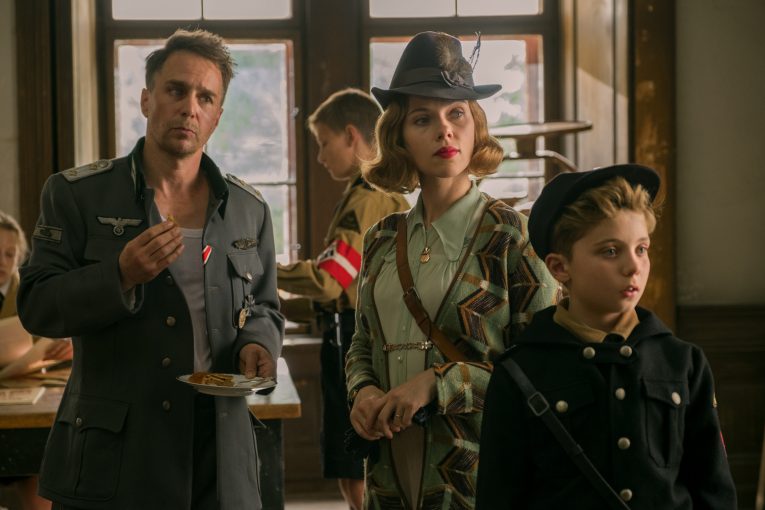
Noah Baumbach’s “Marriage Story” stars Scarlett Johansson and Adam Driver in a searing look at a deteriorating relationship. Each appeared in another high profile film in the festival, Johansson in “Jo Jo Rabbit,” about an Austrian boy in the last months of WWII — with writer/director Taika Waititi playing the child’s imagined version of Hitler, and Driver as the real-life investigator who wrote the Senate Intelligence Committee’s report on the torture of witnesses detained by the CIA.

Ira Sachs’ “Frankie” is the sensitively told story of a day in the life of an actress (Isabelle Huppert) vacationing with her family in Portugal. “Waves” is a poetic look at a family with two teenagers who have to deal with the aftermath of tragedy. My favorite, and I suspect the favorite of many others, too, was Tom Hanks as Mr. Rogers in “A Beautiful Day in the Neighborhood.” Put it on your calendar to take the family to see for Thanksgiving. And maybe put Middleburg on your calendar for next year as well.

Related Tags:


Festivals
Maleficent: Mistress of Evil

Maleficent: Mistress of Evil

Posted on October 17, 2019 at 5:30 pm

B-
Lowest Recommended Age: Middle School
MPAA Rating: Rated PG for intense sequences of fantasy action/violence and brief scary images
Profanity: None
Alcohol/ Drugs: None
Violence/ Scariness: Extended fantasy peril and violence, characters injured, cursed, and killed, disturbing images
Diversity Issues: A metaphorical theme of the movie
Date Released to Theaters: October 18, 2019
Date Released to DVD: January 13, 2020

Copyright Disney 2019
Come on, Disney. You can do better than this. “Mistress of Evil” makes Maleficent sound like she is hosting cheesy old horror movies on late night television. Maleficent, of course, is the wicked fairy from the classic animated Disney version of “Sleeping Beauty” who was so angry she wasn’t invited to Princess Aurora’s christening that she cursed her to eternal slumber after pricking her finger on the spindle of a spinning wheel. She could only be awakened by true love’s kiss, and ultimate her fury is so great she turns into a fire-breathing dragon. All because she felt she should have been on the palace guest list.

On the 60th anniversary of that film’s release, we get this sequel to the 2014 “Maleficent,” with Angelina Jolie as a villain more sinned against than sinning. It turns out it was more than a social oversight that made her angry. She was a fairy cruelly betrayed by the human man she loved, who ruined her so he could become king (the severing of her wings was a deeply disturbing scene). Basically, she was Glenn Close from “Fatal Attraction” with horns and magical powers. Who needs to boil a bunny when you can just zap people?

But then she could not help loving the darling little Princess Aurora. The famously maternal Angelina Jolie — formerly the famously wild child Angelina Jolie — was well cast as the fairy whose anger was cooled by the love of a child. Everything ended up pretty close to happily ever after, but that doesn’t help the box office so here we are again.

Princess Aurora (Elle Fanning) is now queen of the Moors, which is fairy territory, and everyone loves her, from little pixies to Groot-like tree creatures. She floats around in hippie chick finery, and everything is blossoms and butterflies, kind, and peaceful. She accepts a proposal from Prince Philip (now played by Harris Dickinson), son of the king and queen who rule over the neighboring human country. Like so many brides before her, she implores her family, meaning Maleficent, to behave at the meet-the-prospective-in-laws dinner. And like so many meet-the-prospective-inlaw dinners, it does not go as well as the young couple hoped. Maleficent feels insulted, she lashes out, the king (Robert Lindsay) collapses, Maleficent is blamed (after all, she does know how to curse people into perpetual sleep), Aurora feels betrayed. And so, the princess stays with her new family, and Maleficent is banned again.

This time is different, though, because Maleficent finds for the first time, her own community, with horned and winged creatures like herself, though none with her magical gifts. They are outcasts, living in a secret underground community. The film’s best moments are those that make the most of the fabulously inventive visual designers and effects crew, and the “It’s a Small World”-style tour of the many variations within this group will make audiences wish for a pause button.

Unfortunately, some of the rest of the film will make them wish for a fast-forward button, including some very oddly off-key moments that give the movie a disconcertingly inconsistent tone. “I see what you did there” is not a line that belongs in what is otherwise a straightforward fantasy, not a post-modern, air-quotes, meta-take. The title character is intended to be complex, but she is just inconsistent as well. Nearly as emaciated as Joaquin Phoenix in “Joker,” with sepulchral skin and red red lips over dainty white fangs, she has heightened cheekbones that could cut glass and make Jolie look like she ate a coat hanger.

And then there is the political overlay, with messages about welcoming immigrants. non-violence, and justice for minorities that are lovely thoughts but not conveyed with any special insight or depth. More attention is given to some nonsense about creating a powder that is instantly deadly to fae folk, which is then deployed in mass quantities, but to keep the PG rating the amount of carnage is left unclear. Michelle Pfeiffer is the most vital element of the film as Philip’s mother (and her gowns and jewels are stunning), but she is not given enough to work with in the messy script, over-plotted and under-written. That’s the real villain in this fairy tale.

Parents should know that this film includes fantasy/action peril and violence much more intense than a typical PG with some very disturbing images including dissolving magical creatures, betrayal by a parent, curses, and a very sad death.

Family discussion: Why did Boora and Conall disagree? How are the issues in the movie similar to conflicts in the news? Why did Conall say we should not use our anger? Why did Aurora ask Maleficent to cover her horns and why did she apologize?

If you like this, try: the first “Maleficent,” “Sleeping Beauty,” and “Stardust”

Related Tags:


Based on a book DVD/Blu-Ray Fantasy movie review Movies -- format Series/Sequel
Zombieland: Double Tap

Zombieland: Double Tap

Posted on October 17, 2019 at 5:25 pm

B +
Lowest Recommended Age: Mature High Schooler
MPAA Rating: Rated R for bloody violence, language throughout, some drug and sexual content
Profanity: Constant very strong language
Alcohol/ Drugs: Alcohol and marijuana
Violence/ Scariness: Extremely violent and gory zombie peril and action with many characters injured and killed and many gruesome images
Diversity Issues: None
Date Released to Theaters: October 18, 2019
Date Released to DVD: January 20, 2020

Copyright Columbia 2019
Start lining up the cast for part three; we’re going to need another one of these every decade or so. The original Zombieland was a brash, grimly funny story about a post-apocalyptic world in which characters who would otherwise be unlikely to meet, much less spend time together, identified only by their home towns, form a kind of family in the midst of zombie attacks. They are the high-strung but determined Columbus (Jesse Eisenberg), the tough, peppery cowboy Tallahassee (Woody Harrelson), and two survival-savvy sisters who are skeptical of anyone else, Little Rock (Abigail Breslin) and Wichita (Emma Stone).

As Zombieland: Double Tap opens, the group is moving into the White House, now surrounded by fields of overgrown vegetation. It makes a good fortress and there are lots of cool things to play with, from a Twister game to Presidential portraits and gifts given by dignitaries over the years. Columbus and Wichita are a couple, but there is a problem. In this era of chaos and unpredictability, everyone has different ideas about what makes them feel safe. Columbus keeps making lists of his rules for survival (humorously displayed on screen) and wants to make the relationship official by proposing — with the Hope Diamond, which, like everything else, is up for grabs. But Wichita feels safest not having any connections, except for her sister, and Little Rock, now a teenager, wants to find someone her own age. So they leave.

On a “retail therapy” expedition to a shopping mall, Tallahassee and Columbus meet Madison (Zooey Deutch), who has been living there. Deutch just about steals the movie with one of the truly great comic performances of the year as the perfectly ditsy girl whose understanding of what is going on may be dim and who may not be willing to shoot zombies, but who has a knack for survival on her own terms. Just as she and Columbus get together, Wichita returns. Little Rock has run off with a guitar-playing pacifist named Berkeley (Avan Jogia). So, the group goes on the road to find her, running into some new characters, including many zombies, now faster, stronger, and smarter than before, an Elvis fan near Graceland, and a duo who seem uncannily parallel to Columbus and Tallahassee (Thomas Middleditch and Luke Wilson, both terrific).

Like the original, the zombie attacks and shoot-outs are punctuated with deadpan (maybe the correct term is undead-pan) humor, brilliantly delivered by the powerhouse cast. From the opening Columbia logo showing the lady using her torch to bash some zombies, the film moves briskly along with a gruesomely delightful mix of mayhem, romance, and humor. It’s a story about family, resilience, courage, and staying limber — with a great scene over the credits featuring a not-too-surprising guest star.

Parents should know that this film includes constant zombie peril and violence with many graphic, bloody, and disturbing images, characters injured and killed, constant very strong and crude language, sexual references and non-explicit situations, and alcohol and marijuana.

Family discussion: Why did Wichita say no to Columbus? What rules do you follow?

If you like this, try: the first “Zombieland” and “Sean of the Dead”

Related Tags:


Comedy DVD/Blu-Ray Fantasy Gross-out Horror movie review Movies -- format Scene After the Credits Science-Fiction
Critics Choice Documentary Award Nominees 2019

Critics Choice Documentary Award Nominees 2019

Posted on October 14, 2019 at 12:11 pm

The nominees for this year’s Documentary Awards from the Broadcast Film Critics Association are:

BEST DOCUMENTARY FEATURE
American Factory (Netflix)
Apollo 11 (Neon)
The Biggest Little Farm (Neon)
The Cave (National Geographic)
Honeyland (Neon)
The Kingmaker (Showtime)
Knock Down the House (Netflix)
Leaving Neverland (HBO)
Maiden (Sony Pictures Classics)
One Child Nation (Amazon Studios)
They Shall Not Grow Old (Warner Bros.)

BEST DIRECTOR
Waad Al-Kateab and Edward Watts, For Sama (PBS)
Steven Bognar and Julia Reichert, American Factory (Netflix)
John Chester, The Biggest Little Farm (Neon)
Feras Fayyad, The Cave (National Geographic)
Peter Jackson, They Shall Not Grow Old (Warner Bros.)
Todd Douglas Miller, Apollo 11 (Neon)
Nanfu Wang and Jialing Zhang, One Child Nation (Amazon Studios)

BEST CINEMATOGRAPHY
Ben Bernhard and Viktor Kossakovsky, Aquarela (Sony Pictures Classics)
John Chester, The Biggest Little Farm (Neon)
Fejmi Daut and Samir Ljuma, Honeyland (Neon)
Nicholas de Pencier, Anthropocene: The Human Epoch (Kino Lorber)
Muhammed Khair Al Shami, Ammar Suleiman, and Mohammad Eyad, The Cave (National Geographic)
Richard Ladkani, Sea of Shadows (National Geographic)

BEST EDITING
Georg Michael Fischer and Verena Schönauer, Sea of Shadows (National Geographic)
Todd Douglas Miller, Apollo 11 (Neon)
Jabez Olssen, They Shall Not Grow Old (Warner Bros.)
Amy Overbeck, The Biggest Little Farm (Neon)
Lindsay Utz, American Factory (Netflix)
Nanfu Wang, One Child Nation (Amazon Studios)

BEST SCORE
Jeff Beal, The Biggest Little Farm (Neon)
Matthew Herbert, The Cave (National Geographic)
Matt Morton, Apollo 11 (Neon)
Plan 9, They Shall Not Grow Old (Warner Bros.)
H. Scott Salinas, Sea of Shadows (National Geographic)
Eicca Toppinen, Aquarela (Sony Pictures Classics)

BEST NARRATION
Anthropocene: The Human Epoch (Kino Lorber)
Alicia Vikander, narrator
Jennifer Baichwal, writer
The Biggest Little Farm (Neon)
John Chester and Molly Chester, narrators
John Chester, writer
The Edge of Democracy (Netflix)
Petra Costa, narrator
Petra Costa, Carol Pires, David Barker and Moara Passoni, writers
The Elephant Queen (Apple)
Chiwetel Ejiofor, narrator
Mark Deeble, writer
For Sama (PBS)
Waad Al-Kateab, narrator
Waad Al-Kateab, writer
Joseph Pulitzer: Voice of the People (First Run)
Adam Driver, narrator
Oren Rudavsky and Bob Seidman, writers
One Child Nation (Amazon Studios)
Nanfu Wang, narrator
Nanfu Wang, writer
Western Stars (Warner Bros.)
Bruce Springsteen, narrator
Bruce Springsteen, writer

BEST FIRST DOCUMENTARY FEATURE
Midge Costin, Making Waves: The Art of Cinematic Sound (Matson Films)
A.J. Eaton, David Crosby: Remember My Name (Sony Pictures Classics)
Pamela B. Green, Be Natural: The Untold Story of Alice Guy-Blaché (Kino Lorber/Zeitgeist Films)
Tamara Kotevska and Ljubomir Stefanov, Honeyland (Neon)
Richard Miron, For the Birds (Dogwoof)
Garret Price, Love, Antosha (Lurker Films)

BEST ARCHIVAL DOCUMENTARY
Amazing Grace (Neon)
Apollo 11 (Neon)
Maiden (Sony Pictures Classics)
Mike Wallace is Here (Magnolia)
Pavarotti (CBS Films)
Rolling Thunder Revue: A Bob Dylan Story by Martin Scorsese (Netflix)
They Shall Not Grow Old (Warner Bros.)
What’s My Name: Muhammad Ali (HBO)

BEST BIOGRAPHICAL DOCUMENTARY
David Crosby: Remember My Name (Sony Pictures Classics)
The Kingmaker (Showtime)
Linda Ronstadt: The Sound of My Voice (Greenwich)
Love, Antosha (Lurker Films)
Mike Wallace is Here (Magnolia)
Pavarotti (CBS Films)
Toni Morrison: The Pieces I Am (Magnolia)

BEST MUSIC DOCUMENTARY
Amazing Grace (Neon)
David Crosby: Remember My Name (Sony Pictures Classics)
Linda Ronstadt: The Sound of My Voice (Greenwich)
Miles Davis: Birth of the Cool (Abramorama)
Pavarotti (CBS Films)
Rolling Thunder Revue: A Bob Dylan Story by Martin Scorsese (Netflix)
Western Stars (Warner Bros.)

BEST POLITICAL DOCUMENTARY
American Factory (Netflix)
The Edge of Democracy (Netflix)
Hail Satan? (Magnolia)
The Kingmaker (Showtime)
Knock Down the House (Netflix)
One Child Nation (Amazon Studios)

BEST SCIENCE/NATURE DOCUMENTARY
Anthropocene: The Human Epoch (Kino Lorber)
Apollo 11 (Neon)
Aquarela (Sony Pictures Classic)
The Biggest Little Farm (Neon)
The Elephant Queen (Apple)
Honeyland (Neon)
Penguins (Disney)
Sea of Shadows (National Geographic)

BEST SPORTS DOCUMENTARY
Bethany Hamilton: Unstoppable (Entertainment Studios)
Diego Maradona (HBO)
Maiden (Sony Pictures Classics)
Rodman: For Better or Worse (ESPN)
The Spy Behind Home Plate (Ciesla Foundation)
What’s My Name: Muhammad Ali (HBO)

MOST INNOVATIVE DOCUMENTARY
Aquarela (Sony Pictures Classics)
Cold Case Hammarskjöld (Magnolia)
Rolling Thunder Revue: A Bob Dylan Story by Martin Scorsese (Netflix)
Screwball (Greenwich)
Serendipity (Cohen Media)
They Shall Not Grow Old (Warner Bros.)

BEST SHORT DOCUMENTARY
The Chapel at the Border (Atlantic Documentaries)
(Director and Producer: Jeremy Raff)
Death Row Doctor (The New York Times Op-Docs)
(Director: Lauren Knapp)
In the Absence (Field of Vision)
(Director: Yi Seung-Jun. Producer: Gary Byung-Seok Kam)
Lost World
(Director and Producer: Kalyanee Mam. Producers: Adam Loften and Emmanuel Vaughan-Lee)
Mack Wrestles (ESPN)
(Directors and Producers: Taylor Hess and Erin Sanger. Producers: Erin Leyden and Gentry Kirby)
Period. End of Sentence. (Netflix)
(Director: Rayka Zehtabchi. Producers: Melissa Berton, Garrett K. Schiff and Lisa Taback)
The Polaroid Job (The New York Times Op-Docs)
(Director: Mike Plante)
Sam and the Plant Next Door (The Guardian)
(Director and Producer: Ömer Sami)
The Unconditional
(Director and Producer: Dave Adams. Producers: Adam Soltis, Renee Woodruff Adams, Josie Swantek Heitz, and Chris Tuss)
The Waiting Room (The Guardian)
(Director and Producer: Victoria Mapplebeck)

MOST COMPELLING LIVING SUBJECTS OF A DOCUMENTARY
Dr. Amani Ballor – The Cave (National Geographic)
David Crosby – David Crosby: Remember My Name (Sony Pictures Classics)
Tracy Edwards – Maiden (Sony Pictures Classics)
Imelda Marcos – The Kingmaker (Showtime)
Hatidze Muratova – Honeyland (Neon)
Alexandria Ocasio-Cortez, Amy Vilela, Cori Bush, and Paula Jean Swearengin – Knock Down the House (Netflix)
Linda Ronstadt – Linda Ronstadt: The Sound of My Voice (Greenwich)
Dr. Ruth Westheimer – Ask Dr. Ruth (Hulu)

The first-time winner of the new D.A. Pennebaker award for lifetime achievement will very appropriately go to the legendary Frederick Wiseman. There is hardly an institution in America, from high school to mental hospital to upscale department store to library that has not been the subject of one of and illuminated by his documentaries.

Another outstanding awardee is Michael Apted, who will receive the Landmark Award for the groundbreaking UP series. There’s never been anything like it. A documentary about school children turned into one of the most extraordinary longitudinal studies in the history of science. I always look forward to the next episode.

Related Tags:


Awards Documentary
THE MOVIE MOM® is a registered trademark of Nell Minow. Use of the mark without express consent from Nell Minow constitutes trademark infringement and unfair competition in violation of federal and state laws. All material © Nell Minow 1995-2026, all rights reserved, and no use or republication is permitted without explicit permission. This site hosts Nell Minow’s Movie Mom® archive, with material that originally appeared on Yahoo! Movies, Beliefnet, and other sources. Much of her new material can be found at Rogerebert.com, Huffington Post, and WheretoWatch. Her books include The Movie Mom’s Guide to Family Movies and 101 Must-See Movie Moments, and she can be heard each week on radio stations across the country.

Website Designed by Max LaZebnik