Floyd Norman: An Animated Life

Floyd Norman: An Animated Life

Posted on August 25, 2016 at 12:37 pm

B+
Lowest Recommended Age: 4th - 6th Grades
MPAA Rating: Not rated
Profanity: A bleeped word
Alcohol/ Drugs: Reference to alcohol
Violence/ Scariness: Reference to divorce
Diversity Issues: A theme of the movie
Date Released to Theaters: August 26, 2016
Copyright Michael Fiore Films 2016

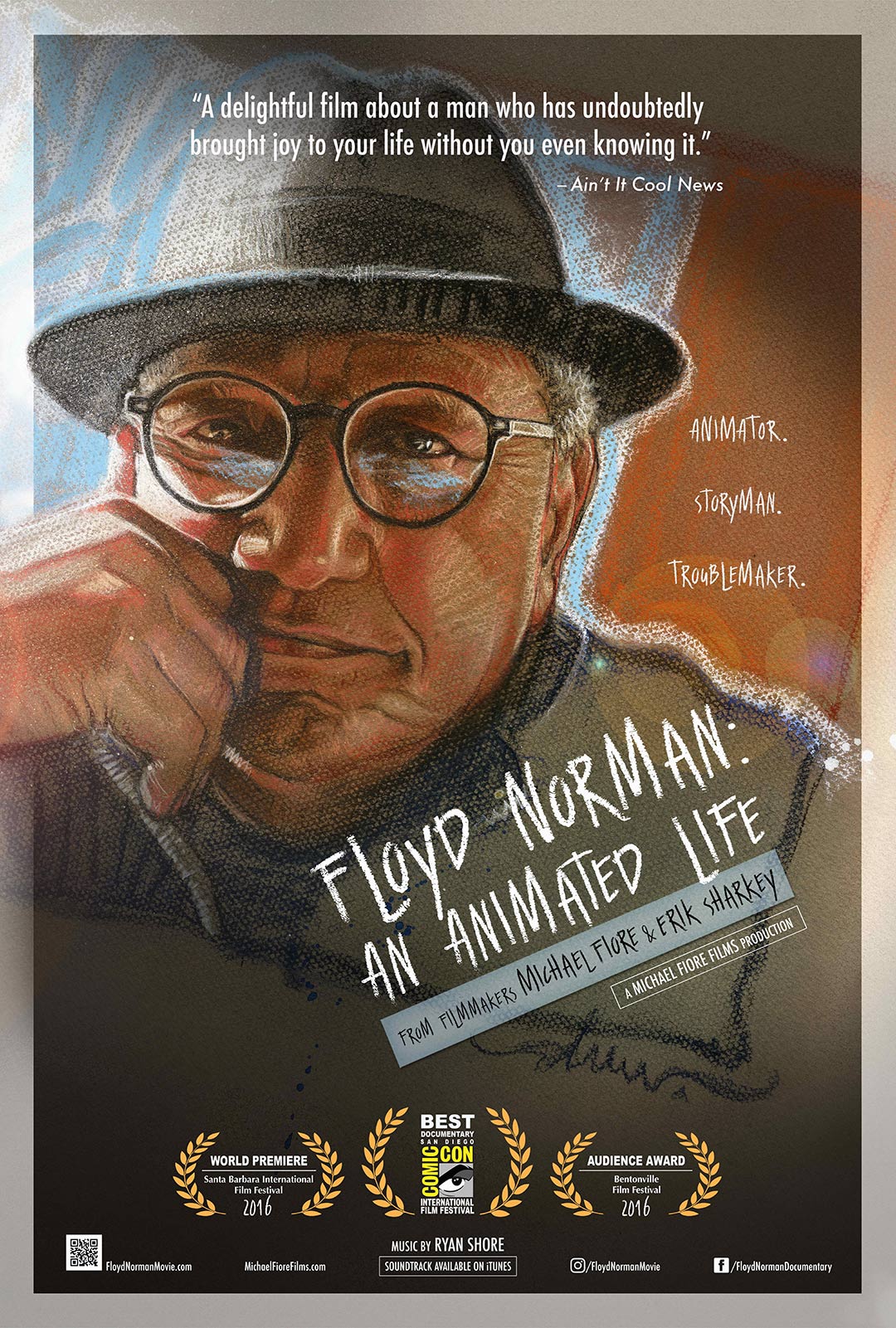
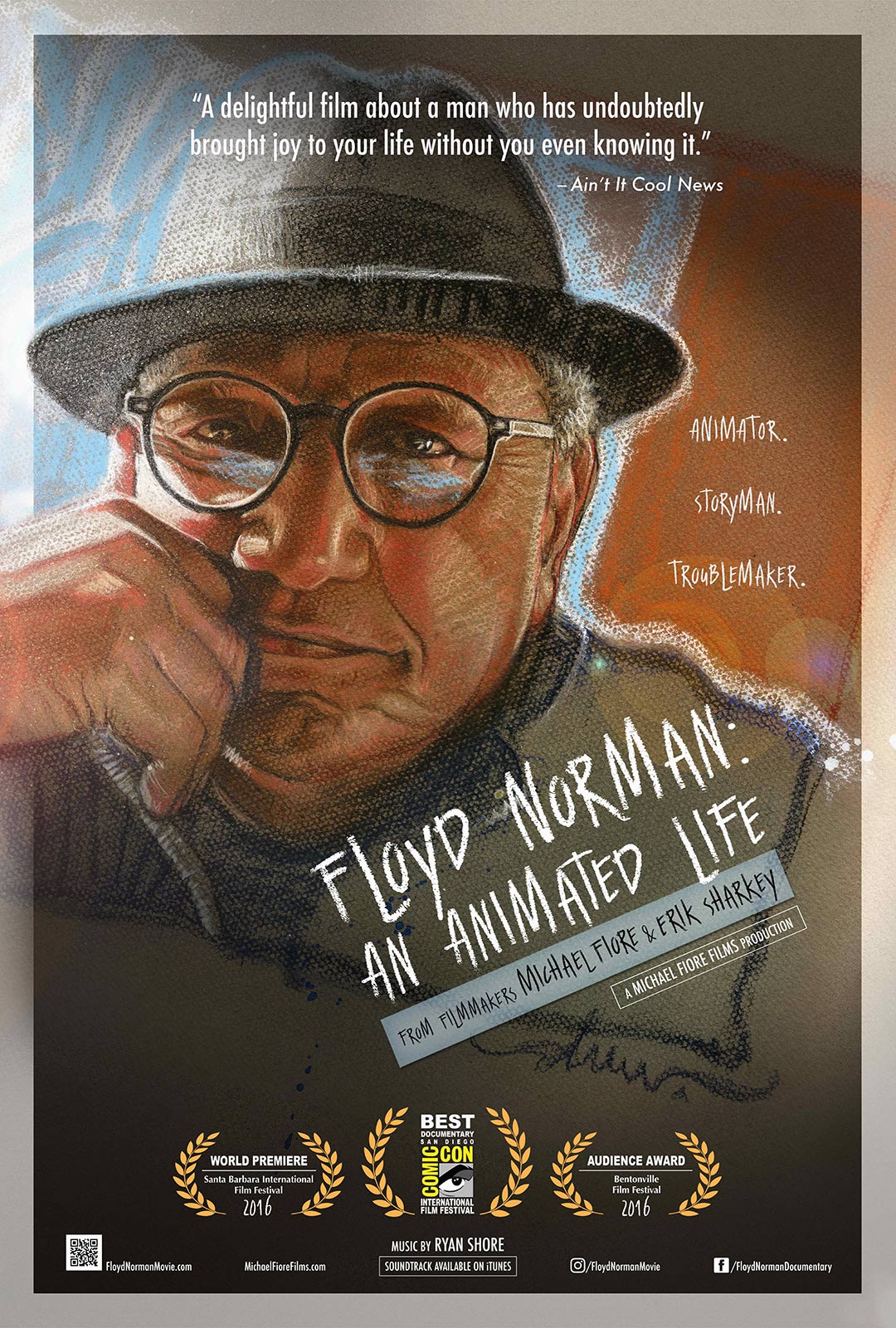
Disney foolishly forced legendary animator Floyd Norman to retire at age 65, but he was not foolish enough to stop coming to work. Every day, he brings his wife Adrienne to her job at Disney, and then he spends the day wandering around, asking questions, talking to people, and generally, to use the portmanteau word Adrienne came up with, “floitering.” “The whole Disney campus is Floyd’s office,” says one colleague. Eventually, Disney realized they could not do without him and they gave up and just hired him again.

This delightful documentary about the very “animated life” of Floyd Norman is a must-see for fans of animation, movie history, and stories of lives filled with creativity, courage, and a sense of adventure. His career extends from the classic “nine old men” era at Disney, where he worked for Walt Disney himself animating the prince, the horse, and the three fairy godmothers in “Cinderella” and Kaa the snake in “The Jungle Book” and the “Jolly Holiday” musical number in “Mary Poppins” to animating, writing, and directing for Hanna-Barbera, Pixar, and for his own company. He used Roy Disney’s camera to go into Watts and shoot footage of the riots that was broadcast on the NBC news, and he worked on iconic Saturday morning cartoon shows like “Fat Albert and the Cosby Kids,” “Johnny Quest,” and “Scooby-Doo.” (The only negative comment the sunny-tempered Norman makes in the whole documentary is a good-natured aside on Scooby — “I hate that dog!”) He even animated the opening logo for “Soul Train.”

Copyright Disney 1968

More characteristic is his description of his childhood in Santa Barbara as “incredibly pleasant.” It was there he saw his first Disney animated film — “Dumbo” and knew that making cartoons would be his life’s work. It didn’t matter that Disney had no black animators. He was “just another kid who wanted to work for Disney,” and when they saw what he could do, they hired him as an “assistant in-betweener” on “Sleeping Beauty,” where he was expected to turn out eight “dead-on precise” completed drawings a day.

One of the highlights of the film is seeing Floyd Norman at San Diego Comic-Con’s Quick Draw, with MAD Magazine artist Sergio Aragonés. But every moment is pure pleasure, as we see the man who is still “in touch with his inner 20-year-old” demonstrate the skill, imagination, and dedication that has been central to much of the most creative entertainment of the past 60 years.

Parents should know that this movie has a bleeped bad word, a sexual reference, and references to drinking and divorce.

Family discussion: Which is your favorite Floyd Norman animation and why? How did he show flexibility and “shape-shifting?”

If you like this, try: “Waking Sleeping Beauty,” “Walt and El Groupo,” and, of course, “The Jungle Book,” and Norman’s other animated classics
Related Tags:


Biography Documentary Film History Movie History Movies -- format Race and Diversity
Florence Foster Jenkins

Florence Foster Jenkins

Posted on August 11, 2016 at 5:29 pm

Copyright 2016 BBC Films

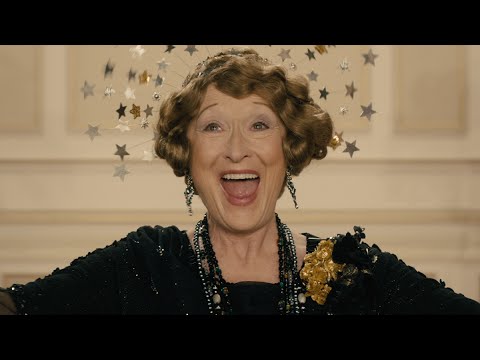
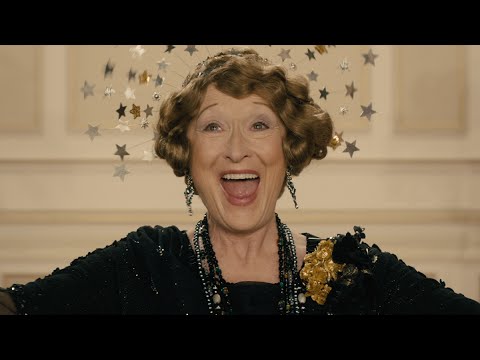
The charm of the popular “Lip Synch Battle” series is the way that the contestants, all very talented and successful performers, transcend the limits of race and gender — and other limits, too, like vocal range. In her way, real-life heiress Florence Foster Jenkins was doing the same thing a century ago. Her dedication to music was monumental. So was her lack of talent. But she lived a blissful life with a devoted husband, staging elaborate tableaux and concerts. Like the emperor with the non-existent and therefore invisible new clothes, she was surrounded by people who never told her that her singing was a disaster in every category, from hitting the right note to staying in any single key from measure to measure.

In the second film of 2016 based on the life of Ms. Jenkins, Meryl Streep gives (of course) a performance of exquisite humanity and precision. (Earlier this year, the French film, “Marguerite,” was also inspired by Jenkins.) You have to know how to sing well (see “Mamma Mia,” “Postcards from the Edge,” and “Ricki and the Flash”) to sing this badly and you have to be an actor of sublime perfection to make terrible singing funny and brave and poignant. Hugh Grant is also superb as the magnificently named St. Clair Bayfield, Jenkins’ consort, a failed Shakespearean actor who shares Jenkins’ passion for performance and almost envies her complete freedom from self-awareness.

There are lovely performances from Nina Arianda as a brassy showgirl who married a wealthy man, Rebecca Ferguson (“Mission Impossible: Rogue Nation”) as Bayfield’s girlfriend, and “Big Bang Theory’s” Simon Helberg as Jenkins’ long-suffering accompanist, the equally magnificently named Cosmé McMoon. Jenkins is the ultimate exemplar of the Dunning-Kruger syndrome: those who are least able are also worst at assessing their own ability. The fun of this film, far more than laughing smugly at Jenkins’ cluelessness, is the fantasy of having endless resources to create our own fantasies of stardom.

Parents should know that this film includes drinking, smoking, sexual references and non-explicit situation, and a sad death.

Family discussion: Was St. Clair right to hide the truth from Florence? What do we learn from her visit to Cosme?

If you like this, try: The documentary “Florence Foster Jenkins: A World Of Her Own”

Related Tags:


Based on a true story Biography Comedy Drama Musical

Love Under New Management: The Miki Howard Story Starring Teyonah Parris — on TV One

Posted on June 11, 2016 at 12:29 pm

My favorite performance of 2015 was Teyonah Parris in “Chi-Raq” and so I am very excited to see her latest starring role in “Love Under New Management: The Miki Howard Story,” premiering June 12, 2016 on TV One.

This is the first film adaptation of TV One’s “Unsung” series about the lives of performers. R&B singer Miki Howard’s life has had struggle and heartbreak but also resilience and triumph. The cast includes Gary Jourdan as Augie Johnson, Daruis McCrary as Gerald Levert, Lisa Raye as Sylvia Rhone and Indira Khan as her mother Chaka Khan.

Here’s the real Miki singing the title song:

Related Tags:


Based on a true story Biography Music Television
Genius

Genius

Posted on June 9, 2016 at 5:23 pm

Copyright Lionsgate 2016

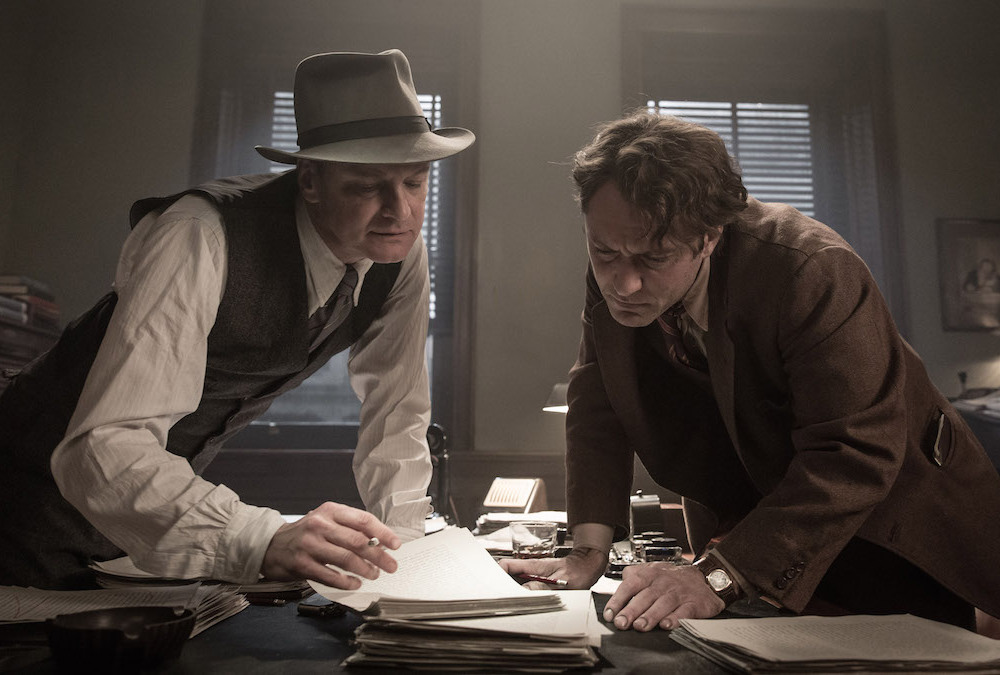
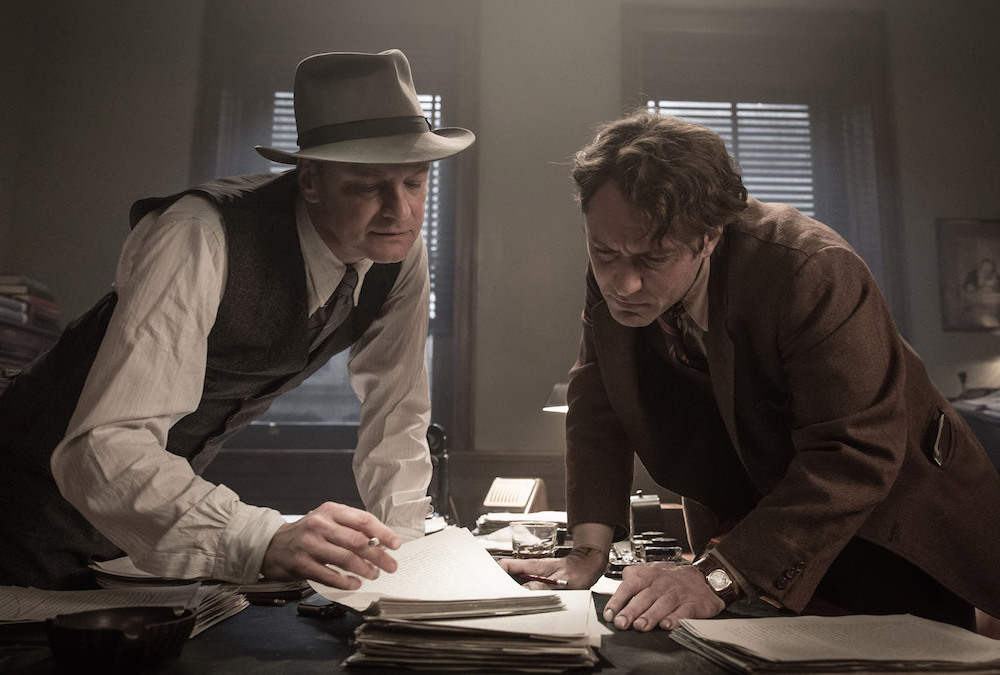
They are legends of 20th century American letters, so renowned a single name suffices: Fitzgerald, Hemingway, Rawlings, Lardner, Wolfe. But there is another name — Maxwell Perkins — who was essential to their work and often advisor and support system for their personal lives as well. A. Scott Berg’s brilliant 1978 biography of Perkins has inspired a film that focuses on the most important relationship of Perkins’ professional life — his work on the first two books by Thomas Wolfe.

Intriguingly, all of the major male roles are taken by British and Australian actors playing Americans, and unsurprisingly they are all superb, never missing an final r or an elongated vowel — or worse — showing off. Colin Firth plays Perkins, a mild-mannered man who loved his family but was most alive as a appreciator of literature — he knew it when he received it as a manuscript and he knew how to trim away the underbrush to make it better. His great skill was seeing the story the writer wanted to tell and doing whatever was necessary to get it into the hands of readers.

After Hemingway’s spare, masculine prose and Fitzgerald’s elegant sentences and impeccable structure, Perkins receives a submission from Wolfe that is vital, poetic, and a veritable avalanche of words. “Please tell me it’s double-spaced,” he says, looking at the pile of paper. “That’s a long paragraph,” Perkins daughter remarks, reading over his shoulder. “It started four pages ago,” her father replies.

Like Michelangelo seeing the statue inside the block of marble, Wolfe sees a novel that preserves Wolfe’s torrential style but prunes away the excess. He reassures Wolfe that he will only “shape it a bit, cut off the top branches.” Wolfe knows it needs pruning. “You don’t know how I struggled to cut the gorgon down.”

And Wolfe (Jude Law), who tells Perkins that not just his books but most of all literature is about the search for a father, responds to Perkins’ utter engagement in service to his story. The relationship between a writer and a great editor is one of the most intimate and fulfilling, something between a gifted psychoanalyst, an inspiring teacher, and a fairy godparent — or, just a parent. Perkins, the father of five daughters (charmingly portrayed), found a spiritual son in the troubled genius, and, as Berg’s book argues, was a genius himself in the way he was able to cull out of him timeless classics.

This sympathetic portrayal acknowledges the devastation that can be wrought by geniuses. We see Wolfe’s troubled relationship and careless dismissal of his supporter and mentor, the set designer Aline Bernstein (Nicole Kidman), who is anguished not because she left her husband and children for the much-younger Wolfe, but because once she was successful at getting him launched, he did not need her anymore. We the devastation that can be felt by them as well, as Fitzgerald (Guy Pearce) struggles to write and to care for his wife, Zelda, who is near-catatonic. But the hero of the story is the man waiting patiently backstage, ready to supply a discreet loan or a helpful suggestion: Don’t name the book Trimalchio in West Egg — how about The Great Gatsby? The quiet dignity and integrity of Firth’s performance is a tribute to all whose art is a life of service.

Parents should know that this film includes drinking and drunkenness, smoking, abusive behavior, some sexual references, mental illness, and a sad death.

Family discussion: What did Perkins see in Wolfe that the other publishers did not? Do you agree with Wolfe’s statement that literature is about the search for fathers? How was that reflected in his relationship with Perkins?

If you like this, try: the writing of Wolfe, Fitzgerald, and Hemingway and the biography of Maxwell Perkins by A. Scott Berg. You can also read the unedited manuscript originally submitted to Perkins to see if you think he was right.

Related Tags:


Based on a book Based on a true story Biography Drama

Coming to Netflix: The Queen Elizabeth II Story “The Crown”

Posted on May 3, 2016 at 3:54 pm

As Great Britain’s longest-reigning monarch turns 90, “The Crown” focuses on Queen Elizabeth II as a 25-year-old newlywed faced with the daunting prospect of leading the world’s most famous monarchy while forging a relationship with legendary Prime Minister, Sir Winston Churchill. The British Empire is in decline, the political world is in disarray, and a young woman takes the throne….a new era is dawning. Peter Morgan’s masterfully researched scripts reveal the Queen’s private journey behind the public facade with daring frankness. Prepare to be welcomed into the coveted world of power and privilege and behind locked doors in Westminster and Buckingham Palace….the leaders of an empire await.

Related Tags:


Based on a true story Biography Epic/Historical VOD and Streaming
THE MOVIE MOM® is a registered trademark of Nell Minow. Use of the mark without express consent from Nell Minow constitutes trademark infringement and unfair competition in violation of federal and state laws. All material © Nell Minow 1995-2026, all rights reserved, and no use or republication is permitted without explicit permission. This site hosts Nell Minow’s Movie Mom® archive, with material that originally appeared on Yahoo! Movies, Beliefnet, and other sources. Much of her new material can be found at Rogerebert.com, Huffington Post, and WheretoWatch. Her books include The Movie Mom’s Guide to Family Movies and 101 Must-See Movie Moments, and she can be heard each week on radio stations across the country.

Website Designed by Max LaZebnik