The Laundromat

The Laundromat

Posted on October 10, 2019 at 5:46 pm

A-
Lowest Recommended Age: Mature High Schooler
MPAA Rating: Rated R for language, some sexual content and disturbing images
Profanity: Very strong language
Alcohol/ Drugs: Drinking and drug dealing
Violence/ Scariness: Boat accident, electrical accident, murder characters killed, sad loss of spouse
Diversity Issues: None
Date Released to Theaters: October 18, 2019

Copyright 2019 Amazon Studios
The numbers are unimaginable. The vocabulary is mind-numbing — and intended to be so. One of the biggest financial scandals of all time is known as the Panama Papers, a global money laundering/tax evasion/corruption-concealing scheme involving some of the world’s wealthiest and most powerful people, including politicians and crooks. They hid their money in what are called “shell” corporations — shell as in “shell game,” where the pea is always under the shell you don’t pick. The interlocking network of these companies was revealed with the help of a still-undisclosed whistleblower thanks to the tireless work of a group of non-profit journalists who had to comb through millions of arcane legal documents to understand and explain it all.

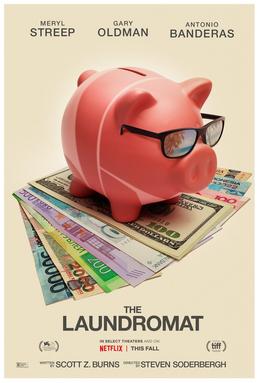
Great journalistic coup. But unlike a simple straightforward fraud like the Bernie Madoff Ponzi scheme, which was depicted in two different and very watchable film versions, starring Oscar winners Robert De Niro and Richard Dreyfuss, the Panama Papers mess was so big and complicated it seemed impossible to put into dramatic form. That was the challenge faced by journalist Jake Bernstein, who wrote the sober, meticulously detailed book, and screenwriter Scott Z. Burns (“The Bourne Ultimatum”), who wrote the colorful, funny, and dramatic movie. Director Steven Soderbergh knows how to do a heist film following “Oceans 11” and “Logan Lucky,” and he wisely structures this as another story of clever thieves outwitting ordinary people. Except this time the people outwitting are not lovable underdogs and the people outwitted are us.

Our guide to this world is an irrepressible pair of lawyers played by Antonio Banderas (playing Ramón Fonseca) and Gary Oldman (as Jürgen Mossack). It is hard to say which is more charming, their impeccably bespoke suits, which get increasingly outrageous over the course of the film, or their cheerful frankness about their equally cheerful and highly lucrative lack of any shred of integrity or responsibility. The linked stories that illustrate different aspects of the scheme are introduced by Fonseca and Mossack who explain what is going on and tie the stories to “rules” that underly the legal and human realities that created this monster. They should have just quoted Pogo: We have met the enemy and he is us. Or, as one of them says, “The world does not want to be saved.”

“Think of them as fairy tales that actually happened,” they tell us. “They’re not just about us. They’re about you.” Their first rule: “The meek are screwed.”

And that is how we meet a nice lady named Ellen Martin (Meryl Streep), devoted to her husband (James Cromwell). When the pilot of the tour boat ride they are on is distracted, there is an accident, it sinks, and her husband is killed. Ellen is devastated. And then she finds out that the tour boat’s insurance company will not pay, and then she finds out that it does not really exist. It exists on paper, but it is just a shell company used for money laundering, and it never pays out on claims. There are no claims officers, no offices. It’s a mail drop run by a man who gets paid $15 per signature for acting as representative for hundreds of shell companies.

We peek into other stories. A shakedown of a Chinese official does not go as planned. The literally shocking death of a low-lever functionary throws the whole system out of whack because she is — on paper — a director of 25,000 companies. And a betrayal leads to a brutal lesson in the value of values, which turns out to be less than we might hope.

It is briskly told, with a heightened, farcical tone that ends with not one smart twist, but two. Soderbergh knows how to entice us into paying attention, and entertain us until we are willing to think.

Parents should know that this movie concerns a real-life massive financial fraud, with many stories of betrayal and theft, peril, accidental death and murder, sexual references and non-explicit situations, personal and professional betrayal, drinking, drugs, and very strong language.

Family discussion: Who is in position to prevent this kind of abuse? What is the difference between privacy and secrecy?

If you like this, try: “The Big Short” and the books and documentary about the Panama Papers

Related Tags:


Based on a book Based on a true story Crime Journalism movie review Movies -- format Movies -- Reviews Politics
Critics Choice Awards: Shape of Water, The Big Sick, and More

Critics Choice Awards: Shape of Water, The Big Sick, and More

Posted on January 12, 2018 at 7:16 am

It was a thrill to attend the Critics Choice Awards as a voting member of the Broadcast Film Critics Association. I got to tell so many of the filmmakers I love how much their work means to me. And I am very proud of our selections.

The Broadcast Film Critics Association (BFCA) and Broadcast Television Journalists Association (BTJA) announced the winners of the 23rd Annual Critics’ Choice Awards tonight, live from the Barker Hangar in Santa Monica. Hollywood’s brightest stars shined at the gala event, which aired on The CW Network at 8PM ET (delayed PT), and was hosted by actor and activist Olivia Munn.

“The Shape of Water,” the most nominated film of the evening, took home four awards, the most of the night, including Best Picture, Best Director for Guillermo del Toro, Best Production Design for Paul Denham Austerberry, Shane Vieau and Jeff Melvin, and Best Score for Alexandre Desplat.

The top film acting awards were bestowed upon Gary Oldman, who took home Best Actor for his work in “Darkest Hour,” and Frances McDormand, awarded Best Actress for “Three Billboards Outside Ebbing, Missouri.” McDormand’s co-star Sam Rockwell won the trophy for Best Supporting Actor, while Best Supporting Actress went to Allison Janney for her standout performance in “I, Tonya.”

Nominated for five awards, Big Little Lies (HBO) earned four trophies including Best Limited Series and Best Actress in a Movie Made for TV or Limited Series for Nicole Kidman, while co-stars Alexander Skarsgård and Laura Dern were named Best Supporting Actor and Best Supporting Actress in a Movie Made for TV or Limited Series, respectively. The Handmaid’s Tale (Hulu) won Best Drama Series, in addition to Best Actress in a Drama Series for Elisabeth Moss, and Best Supporting Actress in a Drama Series for Ann Dowd. The Marvelous Mrs. Maisel (Amazon) won Best Comedy Series, in addition to Best Actress in a Comedy Series for its leading lady, Rachel Brosnahan.

As previously announced, Gal Gadot received the #SeeHer Award presented by the Association of National Advertisers in conjunction with The CW Network. Gadot accepted the award from her “Wonder Woman” director, Patty Jenkins.

“The Critics’ Choice Awards” are bestowed annually by the BFCA and BTJA to honor the finest in cinematic and television achievement. The BFCA is the largest film critics’ organization in the United States and Canada, representing more than 300 television, radio and online critics. BFCA members are the primary source of information for today’s film-going public. BTJA is the collective voice of journalists who regularly cover television for TV viewers, radio listeners and online audiences. Historically, the “Critics’ Choice Awards” are the most accurate predictor of the Academy Award nominations.

The 23rd Annual Critics’ Choice Awards show was produced by Bob Bain Productions and Berlin Entertainment. The BFCA and BTJA are represented by Dan Black of Greenberg Traurig and WME.

About BFCA/BTJA
The Broadcast Film Critics Association (BFCA) is the largest film critics organization in the United States and Canada, representing more than 300 television, radio and online critics. The Broadcast Television Journalists Association (BTJA) is a partner organization to the BFCA and includes TV, radio and Internet journalists who cover television on a regular basis. For more information, visit: www.CriticsChoice.com.

WINNERS OF THE 23RD ANNUAL CRITICS’ CHOICE AWARDS

FILM:
BEST PICTURE – “The Shape of Water”

BEST ACTOR – Gary Oldman, “Darkest Hour”

BEST ACTRESS – Frances McDormand, “Three Billboards Outside Ebbing, Missouri”

BEST SUPPORTING ACTOR – Sam Rockwell, “Three Billboards Outside Ebbing, Missouri”

BEST SUPPORTING ACTRESS – Allison Janney, “I, Tonya”

BEST YOUNG ACTOR/ACTRESS – Brooklynn Prince, “The Florida Project”

BEST ACTING ENSEMBLE – “Three Billboards Outside Ebbing, Missouri”

BEST DIRECTOR – Guillermo del Toro, “The Shape of Water”

BEST ORIGINAL SCREENPLAY – Jordan Peele, “Get Out”

BEST ADAPTED SCREENPLAY – James Ivory, “Call Me By Your Name”

BEST CINEMATOGRAPHY – Roger Deakins, “Blade Runner 2049”

BEST PRODUCTION DESIGN – Paul Denham Austerberry, Shane Vieau, Jeff Melvin, “The Shape of Water”

BEST EDITING (TIE) – Paul Machliss, Jonathan Amos, “Baby Driver”

BEST EDITING (TIE) – Lee Smith, “Dunkirk”

BEST COSTUME DESIGN – Mark Bridges, “Phantom Thread”

BEST HAIR AND MAKEUP – “Darkest Hour”

BEST VISUAL EFFECTS – “War for the Planet of the Apes”

BEST ANIMATED FEATURE – “Coco”

BEST ACTION MOVIE – “Wonder Woman”

BEST COMEDY – “The Big Sick”

BEST ACTOR IN A COMEDY – James Franco, “The Disaster Artist”

BEST ACTRESS IN A COMEDY – Margot Robbie, “I, Tonya”

BEST SCI-FI OR HORROR MOVIE – “Get Out”

BEST FOREIGN LANGUAGE FILM – “In The Fade”

BEST SONG – “Remember Me” from “Coco”

BEST SCORE – Alexandre Desplat, “The Shape of Water”

TELEVISION:
BEST COMEDY SERIES – The Marvelous Mrs. Maisel, Amazon

BEST ACTOR IN A COMEDY SERIES – Ted Danson, The Good Place, NBC

BEST ACTRESS IN A COMEDY SERIES – Rachel Brosnahan, The Marvelous Mrs. Maisel, Amazon

BEST SUPPORTING ACTOR IN A COMEDY SERIES – Walton Goggins, Vice Principals, HBO

BEST SUPPORTING ACTRESS IN A COMEDY SERIES – Mayim Bialik, The Big Bang Theory, CBS

BEST DRAMA SERIES – The Handmaid’s Tale, Hulu

BEST ACTOR IN A DRAMA SERIES – Sterling K. Brown, This Is Us, NBC

BEST ACTRESS IN A DRAMA SERIES – Elisabeth Moss, The Handmaid’s Tale, Hulu

BEST SUPPORTING ACTOR IN A DRAMA SERIES – David Harbour, Stranger Things, Netflix

BEST SUPPORTING ACTRESS IN A DRAMA SERIES – Ann Dowd, The Handmaid’s Tale, Hulu

BEST LIMITED SERIES – Big Little Lies, HBO

BEST MOVIE MADE FOR TV – The Wizard of Lies, HBO

BEST ACTOR IN A MOVIE MADE FOR TV OR LIMITED SERIES – Ewan McGregor, Fargo, FX

BEST ACTRESS IN A MOVIE MADE FOR TV OR LIMITED SERIES – Nicole Kidman, Big Little Lies, HBO

BEST SUPPORTING ACTOR IN A MOVIE MADE FOR TV OR LIMITED SERIES – Alexander Skarsgård, Big Little Lies, HBO

BEST SUPPORTING ACTRESS IN A MOVIE MADE FOR TV OR LIMITED SERIES – Laura Dern, Big Little Lies, HBO

BEST TALK SHOW – Jimmy Kimmel Live!, ABC

BEST ANIMATED SERIES – Rick and Morty, Adult Swim

BEST UNSTRUCTURED REALITY SERIES – Born This Way, A&E

BEST STRUCTURED REALITY SERIES – Shark Tank, ABC

BEST REALITY COMPETITION SERIES – The Voice, NBC

BEST REALITY SHOW HOST – RuPaul, RuPaul’s Drag Race, VH1

Related Tags:


Awards Critics
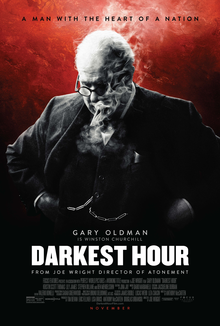
Darkest Hour

Darkest Hour

Posted on December 7, 2017 at 5:48 pm

A-
Lowest Recommended Age: High School
MPAA Rating: Rated PG-13 for some thematic material
Profanity: Some strong language
Alcohol/ Drugs: Drinking, smoking
Violence/ Scariness: Wartime violence
Diversity Issues: None
Date Released to Theaters: December 8, 2017
Date Released to DVD: February 26, 2018
Copyright 2017 Focus

A bitter debate is going on in Parliament. The Prime Minister, Neville Chamberlain (Ronald Pickup) has responded to Hitler’s invasion of other countries with appeasement and many of the politicians are with him. A combination of denial and sun-never-sets-on-the-British-Empire smugness of those who have colonized a quarter of the planet and are situated on the other side of the Channel makes them confident that they can work with Hitler. But it is increasingly clear to at least some of the politicians believe it is time to take a stronger stand. Is there someone they can call on to lead them in that direction?

There is, and he is still in bed, “insuring his fingerprints are not on the murder weapon.” He is Winston Churchill (Gary Oldman, disappearing into the character and giving a dazzling performance worthy of the real-life man he portrays). The very inevitability of Churchill’s selection, no one’s first choice, a man who “has a knack for drawing out the very worst in those who are trying to help him,” according to his devoted but perceptive wife Clementine (Kristin Scott Thomas), increases the frustration of the elected officials around him, who continue to plot to undermine his determination to to go to war, if necessary, to fight Hitler’s takeover of Europe. “I’m getting the job only because the ship is sinking,” he says glumly but grimly. “It’s not a compliment. It’s revenge.”

Earlier this year, Christopher Nolan’s “Dunkirk” gave us a bracing look at the turning point that ends this film, when certain catastrophic defeat was turned into a victory just by escaping, rescued with the help of a citizens’ armada of boats. That film paid tribute to the ordinary men who retreated to come back stronger. This film gives us another side of the story in a more traditional “great man” portrayal of history and it could not have a better subject. Churchill was a master of language, grandiloquent at a time when people needed to be inspired by a leader of vision, a deep knowledge of history, and shining integrity. The benefit of having a central character in Churchill is that he pretty much spoke in movie dialogue, hyper-articulate, wryly witty, and with an underlying patriotism rooted in compassion, not jingoism.

Churchill knows that it is not enough for him to be right about Hitler. He has to get the support of the other politicians and he has to get the support of the population. He knows what he will be asking them to do will involve unimaginable sacrifice. And there is no time. “We are looking at the collapse of Western Europe in the next few days,” says a general. “Should the public be told?” There is no time. And, as yet, there is no plan for a counter-attack and Franklin Roosevelt, Churchill’s good friend in the United States, tells him that Congress has prevented him from being of help.

Churchill also knows what it is to fail, publicly and miserably. Will he make mistakes again? Clementine assures him that he is wise because he has doubts. Even if Hitler wins, Churchill knows it is better to give him as much of a fight as possible. “Countries that go down fighting come back.”

The compressed time period and the urgent conversations with Clementine, member of Parliament, and the king (superbly played by Ben Mendelsohn) are riveting, bolstered by an urgent score by
Dario Marianelli and masterfully sinuous camerawork by Bruno Delbonnel and editing by Valerio Bonelli. The camera maneuvers through Churchill’s legendary wartime cabinet rooms (a must-visit for London tourists), showing us the cramped quarters and the fierce energy of what is going on.

Oldman disappears into the role, a performance like the famous Karsh portrait come to life. His Churchill is crafty, sometimes impatient, sometimes uncertain, but compassionate, and always sure of what his values are. The Churchills had a famously devoted love match, and Kristin Scott Thomas is impeccable in showing us Clementine’s elegance, and resolve.

“He mobilized the English language and sent it into battle,” a character says. And with this film, director Joe Wright mobilized the language of film and presents us with an uplifting reminder of what the right person at the right time can do even under the direst circumstances.

Parents should know that this is a wartime story with tense peril and reference to violence and loss, some strong language, and smoking and drinking.

Family discussion: What should be factors in deciding when to intervene and when to negotiate? Why did the king change his mind? Read My Early Life, Churchill’s autobiography of his youth. Which self will you be today?

If you like this, try: “The King’s Speech,” “Dunkirk,” and some of the other movies about this towering figure of the 20th century, including the “First Churchills” miniseries about his ancestors.

Related Tags:


Based on a book Based on a true story Biography Drama DVD/Blu-Ray movie review Movies -- Reviews Politics War

Dawn of the Planet of the Apes

Posted on July 10, 2014 at 6:00 pm

dawnoftheplanetoftheapesceasarAll hail Caesar!

The intelligence-enhanced ape from Rise of the Planet of the Apes takes center stage in this sequel, which begins ten years after the last film. The virus we saw infecting the human population has now wiped out almost all human life. The assorted apes, led by Caesar, have asserted their primacy over other animals. In the opening scene, we see them hunting with spears they have crafted, killing a bear, and riding on horses. They live in homes they have constructed from logs, communicate — mostly via sign language — teach their children the alphabet in school, and have an organized society, with Caesar as their leader. They demonstrate loyalty and tenderness.  They adorn themselves; Caesar’s mate wears a small crown.

Ceasar is played by the brilliant motion-capture actor/artist Andy Serkis and the CGI work of the geniuses at Weta Digital.  The seamless integration of the CGI characters and the human characters and the subtlety of the apes’ eyes and facial expressions brings us straight into the story, underscored by the immersive 3D.  It is dramatic, not stuntish, with the possible exception of some spear-throwing toward the screen.

The film recalls old-school cowboys-and-Indians westerns, with the apes riding into battle on horses and the humans and their armory holed up in the ruins of San Francisco like it is Fort Apache.  Then the apes get the guns, and everything escalates fast.  The film wisely gives both groups of primates a range of characters, some wise and trustworthy, some bigoted and angry.  Both species have to learn that respect has to be based on character and actions, not on genetics.  The division is not between man and ape but between those who can envision a future with cooperation and trust and those who cannot.

There are some thoughtful details.  The destroyed city tells the story of a decade of unthinkable loss and also of great courage.  A dropped sketchbook conveys information that in a world without mass communications is revelatory.  A long-unheard CD plays The Band and we see the humans react, thinking of where they were the last time they heard it and what access to electricity could mean for them now.  The humans have the advantage of knowing how to create and use power; they also have the disadvantage of needing it.

In the midst of the battle, there is a quiet moment when a small mixed group hides out together in a location with a lot of resonance from the previous film.  It lends a solemnity to the story, even a majesty, that gives it weight.  Even those who seem from our perspective to be making decisions that are disastrously wrong do so for reasons we can understand.  The action is compelling but it is the ideas behind them that hold us.

Parents should know that this film includes constant peril and violence, post-apocalyptic themes and images, many characters injured and killed, guns, fire, drinking, smoking, and some strong language.

Family discussion: Why were there so many different opinions within both the ape and the human communities? How did they choose their governing structure? Why didn’t Carver want to listen to Ellie’s explanation of the source of the virus?

If you like this, try: the original “Apes” movies to compare not just the stories but the technology used by the filmmakers

Related Tags:


3D Action/Adventure Based on a book Drama Fantasy Romance Science-Fiction Series/Sequel Talking animals
The Real Story (and the movie versions) of ‘Tinker, Tailor, Soldier, Spy’

The Real Story (and the movie versions) of ‘Tinker, Tailor, Soldier, Spy’

Posted on December 5, 2011 at 2:28 pm

Tinker Tailor Soldier Spy, the story of the hunt for a mole at the highest levels of British intelligence, began as a 1974 novel written by spy-turned novelist David John Moore Cornwell, who writes under the pen name John le Carré.  The dense, opaque story became the first of a trilogy about the ironically named George Smiley that is ranked with the very best of fiction in any genre.  It became an equally lauded British miniseries starring Alec Guiness.  I’ve watched it at least four times and get more out of it with every viewing.

http://www.youtube.com/watch?v=ILYP9YnCZUs

Le Carré was inspired by the biggest spy scandal in British history involving double agents known as the Cambridge Five.  The revelation that five distinguished, upper-class Cambridge graduates, one a prominent art historian and adviser to the Queen Mother were giving UK and American secrets to the Soviet Union shattered deeply embedded cultural assumptions in the UK.  The story has inspired non-fiction books as well including The Great Betrayal and Deceiving the Deceivers. It also inspired dramatic re-enactments like the BBC’s Philby, Burgess, and Maclean, Cambridge Spies, and the intriguing An Englishman Abroad, written by Alan Bennett about actress Coral Browne’s encounter with Cambridge Five traitor Guy Burgess, who defected to the USSR after he was uncovered.  She was appearing in a British production of “Hamlet” and he asked her to help him order a suit from his London tailor.Browne plays herself and Alan Bates plays Burgess.

Next week a theatrical version of Tinker Tailor Soldier Spy is being released, starring Colin Firth and Gary Oldman.  Watch for the review next Thursday evening.

Related Tags:


Books The Real Story
THE MOVIE MOM® is a registered trademark of Nell Minow. Use of the mark without express consent from Nell Minow constitutes trademark infringement and unfair competition in violation of federal and state laws. All material © Nell Minow 1995-2026, all rights reserved, and no use or republication is permitted without explicit permission. This site hosts Nell Minow’s Movie Mom® archive, with material that originally appeared on Yahoo! Movies, Beliefnet, and other sources. Much of her new material can be found at Rogerebert.com, Huffington Post, and WheretoWatch. Her books include The Movie Mom’s Guide to Family Movies and 101 Must-See Movie Moments, and she can be heard each week on radio stations across the country.

Website Designed by Max LaZebnik