Can the Naughtiest Kids Put on the Best Christmas Pageant Ever?
Posted on December 25, 2019 at 10:00 am
Loretta Swit (“M*A*S*H”) stars in this classic about a teacher who puts the “worst” kids in the Christmas pageant.
Posted on December 25, 2019 at 10:00 am
Loretta Swit (“M*A*S*H”) stars in this classic about a teacher who puts the “worst” kids in the Christmas pageant.
Posted on December 24, 2019 at 5:05 pm
B +| Lowest Recommended Age: | Kindergarten - 3rd Grade |
| MPAA Rating: | Rated PG for action, violence, and rude humor |
| Profanity: | Some schoolyard language |
| Alcohol/ Drugs: | Transformation potion |
| Violence/ Scariness: | Action/cartoon-style violence, consequences of violence an issue in the film |
| Diversity Issues: | Diverse characters and issues of diversity but includes the "bad buy with disabilities" cliche |
| Date Released to Theaters: | December 25, 2019 |
| Date Released to DVD: | March 9, 2020 |
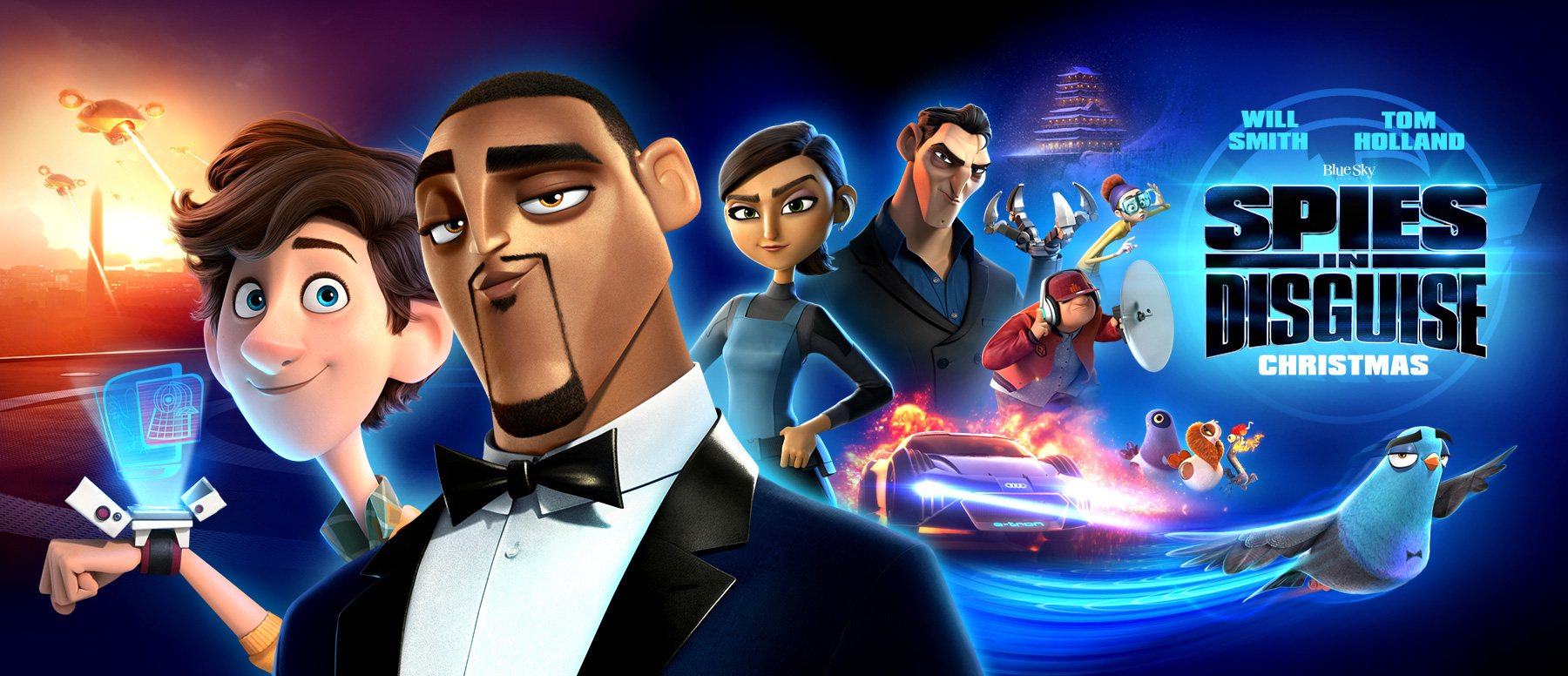
Lance is after some sort of MacGuffin thingamajig about to be sold by international weapons dealer Kimora (Masi Oka) to a mysterious buyer with a robot hand named (in case we didn’t know he was the villain) Killian, played by Ben Mendelsohn, who seems to own all the bad guy roles these days. (It is too bad this film could not avoid the tired convention of the evil guy with disabilities.) With astounding skill and panache — and some cool-spy quips — Lance saves the day and is greeted at home back in CIA headquarters as a hero.
Until….it turns out that the briefcase he so cleverly snatched away from Killian is empty. And it also turns out that surveillance footage shows Lance himself is the one who grabbed the whateveritis. Suddenly, the whole CIA is after him.
Meanwhile, Walter (“Spider-Man’s” Tom Holland) is a quirky, unashamedly weird gadget guy whose non-violent inventions include the “inflatable hug” protective device and “kitty glitter” that distracts the bad guys with adorable pictures of cats suspended in air. He was working out of tiny closet-like space in the CIA, until he was impulsively fired by Lance.
Lance likes to think he works alone and never needs anyone else’s help. But it is part of his job to know how to solve problems, and he has to admit that not only does he need help to hide from the agency while he tracks down whoever is pretending to be him, he is going to need resources he cannot get from the CIA any more.
Unfortunately, the only one who can help him is Walter, who is now pretty much off the grid as far as the CIA is concerned. Lance remembers Walter saying he could make spies disappear. So, Lance tracks him down and then discovers that it’s not “disappear” as in “invisible.” It’s “disappear” as in “bio-dynamic concealment,” transformation at the cellular level into someone, or something, no one will notice.
Lance learns too late that what he was been turned into is a pigeon. “Un-bird me!” he demands. But the antidote will take some time. And as much as Lance resists help, there are some things he cannot do as a winged creature who weighs about two pounds. So, Lance-as-pigeon and Walter with a backpack of gadgets and his personal comfort pigeon Lovey go off to find Kimora and Killian.
In the midst of all the action, Walter and Lance have a thoughtful conversation about the best way to resolve conflict. Lance believes in fighting fire with fire (“Evil doesn’t care that you’re nice”) and he never wants to depend on anyone. Walter believes in working as a team and does not think that hurting other people solves anything. This slightly mitigates the unfortunate reliance on the outdated cliche of a disfigured/disabled bad guy by making Lance face (literally) the consequences of his dashing “fire with fire” strategy.
Directors Nick Bruno and Troy Quade have created a film that is gorgeously designed with a swanky, stylish, slightly retro design, “Spies in Disguise” is visually bright, graphic, and engaging, and the characters and their interactions are vivid and appealing. Here’s hoping Blue Sky retains its quirky charm under its new ownership — and that we get to see Lance and Walter team up again.
Parents should know that the film has extended cartoon/action-style peril and action, with some characters injured and killed, chases, shoot-outs, and explosions. A theme of the movie is the consequence of collateral damage. There is some schoolyard language and some potty humor. Unfortunately, the movie relies on the outdated cliche of the disfigured/disabled villain whose injuries are a reason for his cruelty and anger.
Family discussion: Which of Walter’s gadgets would you like to have? Who is on your team and whose team are you on? What’s the best part of being weird?
If you like this, try: “Megamind,” “Robots,” and “Rio”
Posted on December 24, 2019 at 5:00 pm
A-| Lowest Recommended Age: | 4th - 6th Grade |
| MPAA Rating: | Rated PG for thematic elements and brief smoking |
| Profanity: | None |
| Alcohol/ Drugs: | Social drinking, brief smoking |
| Violence/ Scariness: | Very sad death, references to other deaths including death of a baby |
| Diversity Issues: | A theme of the movie |
| Date Released to Theaters: | December 25, 2019 |
| Date Released to DVD: | April 6, 2020 |

You need to know where I’m coming from on this one. There is no book more central to my life than Louisa May Alcott’s Little Women. My mother, Josephine Baskin Minow, has been Jo since she first read Little Women when she was a child, And now our children call her Marmee. I loved it so much that I read all the other Alcott books on the library shelf (I especially recommend Eight Cousins and An Old Fashioned Girl). Little Women has been central to the lives of young women for more than 150 years, inspired by its heroine, who was inspired by Alcott herself. Jo March is fiercely loyal, impetuous, impatient, and a writer, both eager and reluctant to find her own voice. Authors who name the book as a major influence range from Cynthia Ozick, Simone de Beauvoir, Doris Lessing, Margaret Atwood, Jane Smiley, Anne Tyler, Jhumpa Lahiri, Ursula Le Guin and Nora Ephron to “Twilight”‘s Stephenie Meyer.
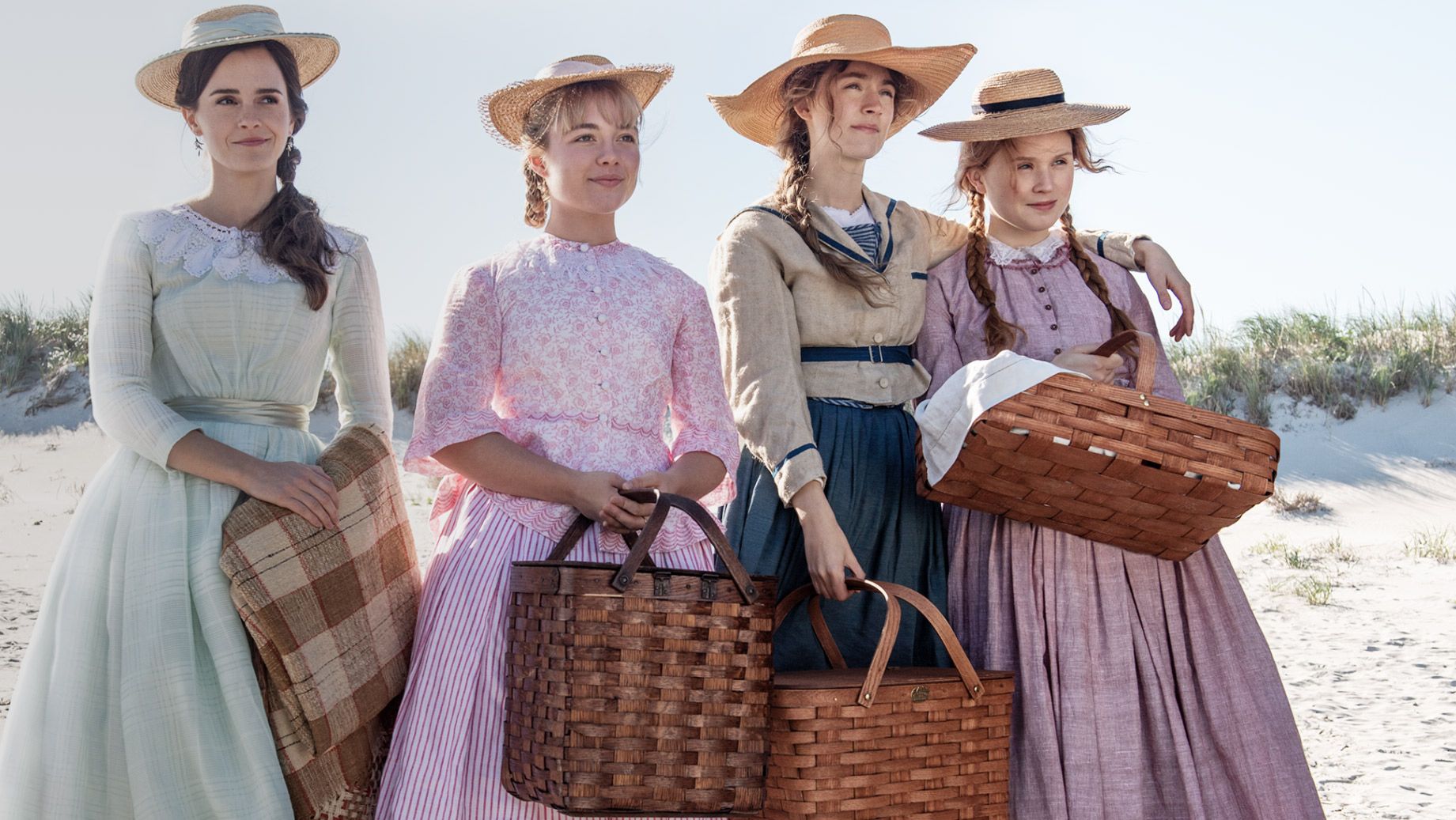
Alcott’s semi-autobiographical story of four sisters has been adapted many times, including a Broadway musical, a 48-chapter Japanese anime series, an opera, and films starring Katharine Hepburn, Elizabeth Taylor, and Winona Ryder. The most recent BBC version (of four) was shown in the United States on PBS. One of two major adaptations last year was a modern-day retelling with a quartet of appealing young actresses, adapted with skill and understanding by writer/director Clare Niederpruem.
So, my standards and expectations could not have been higher and it is my very great pleasure to tell you that this new film from writer/director Greta Gerwig exceeded them all. Writer/director Greta Gerwig not only loves and understands the book, she also appreciates that in 2019 we are only beginning to catch up to Alcott’s vision of what is possible for young women and for all of us. Those who do not know Alcott’s work or have only seen the early versions may think that Gerwig has “modernized” the story. But every part of it comes from Alcott (some from other writings) and every part of it is entirely consistent with her fierce, independent, and devoted spirit and rebellious energy. And Saoirse Ronan is the best Jo March yet, her long-limbed coltishness not so much “boyish” as vitally engaged in a world that cannot always keep up with her.
The book was originally written in two parts, but the second volume (called Good Wives) has been a part of what we know as Little Women for more than a century. Gerwig begins the story in the middle of the second book as the now-adult Jo (a teenager in the first volume) meets with a newspaper publisher (a charmingly crusty and wry performance from playwright Tracy Letts, last seen as Henry Ford II in “Ford v. Ferrari”). In case we are not as quick as he is to see through her claim to be bringing stories written by a “friend,” Gerwig lets us see the ink that still stains her fingers. When her story is accepted (with the moralizing parts cut out), she exuberantly races home.
Then, as we will throughout the film, we go back and forth between the two parts of the story, indicated by different color pallattes, the warmer hues for the earlier years, when the girls were all at home and their father (Bob Odenkirk) was a Union volunteer in the Civil War. There were struggles and growing pains, but there was also a sense of purpose and possibility that is not as clear in the cooler-hued older years, when Jo is in New York living in a boarding house, and Amy (Florence Pugh) is touring Europe and studying art. Pugh may be too old for Amy in the early scenes, but she and Gerwig give Amy far more depth than any previous portrayal (perhaps including Alcott’s). Emma Watson is lovely as oldest sister Meg (obligatory complaint about what was left out of this version — the scenes of Meg coming to John’s defense when Aunt March attacks him and the scene of her showing off her “new dress” to him). Gerwig’s script softens the professor’s critique of Jo’s more lurid stories-for-hire and his involvement in getting the book-within-a-book published, but the scene of his telling her that the melodramatic stories she is writing for money are not good is still an important turning point.
Laura Dern plays Marmee, a woman of character, courage, and intention. The private moment she takes in the foyer of the house to make sure she can greet her daughters with good cheer on Christmas morning after caring for the impoverished Hummels is a small master class of acting. When Marmee tells Jo that she still struggles with anger every day, we see where Jo got her inner fire and how inner fire can become the foundation for determination and principle.
And then there is Timothée Chalamet as Laurie, the sensitive boy whose temperament is protected from becoming headstrong and careless by the example of the March family, their attitude toward work and also their attitude toward fun. Like Laurie to Jo, Chalamet is a perfect match for his “Lady Bird” co-star Ronan, and we could happily watch a whole movie of them putting on plays, attending riotous meetings of the Pickwick Society, and skating on the pond.
It is still one of the all-time great coming-of-age stories of a family and an artist finding her voice. By putting making the early year portion of the film flashbacks that comment on, provide context for, and deepen the “present-day” storylines, Gerwig makes us ready for a perfect ending that brings Alcott, her fictional avatar, and the story of all of us who have tried to tell our stories together.
Parents should know that this film includes a sad death and reference to other deaths including the death of a baby, family stress and conflict, and brief smoking and drinking.
Family discussion: Which sister is most like you? Was the publisher right about the ending to the story? Why do so many women, especially writers, say that this story was their most important inspiration?
If you like this, try: the book by Louisa May Alcott and the other movie and miniseries versions of this story
Posted on December 19, 2019 at 5:09 pm
C| Lowest Recommended Age: | Middle School |
| MPAA Rating: | Rated PG for some rude and suggestive humor |
| Profanity: | Some mild language |
| Alcohol/ Drugs: | None |
| Violence/ Scariness: | Threats, dusting-style disappearances, portrayal of afterlife/reincarnation |
| Diversity Issues: | None |
| Date Released to Theaters: | December 20, 2019 |
| Date Released to DVD: | April 6, 2020 |
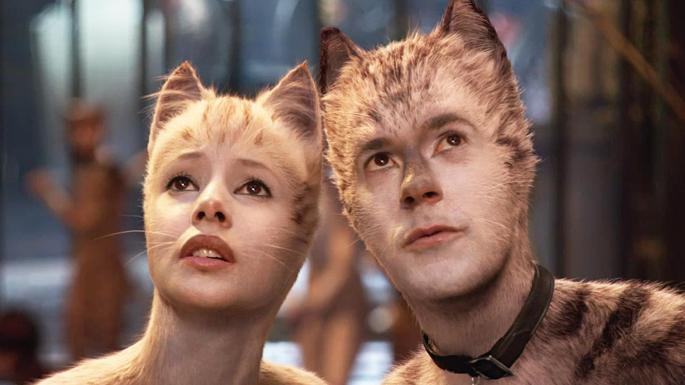
I was not hoping for much from “Cats.” I knew that the record-breaking, popular-for-decades Broadway musical did not have much of a plot, just songs with lyrics from the poetry of T.S. Eliot and music by Andrew Lloyd Webber and spectacular dancing. So that’s all I hoped for — an all-star cast singing and dancing. Some of the singing is fine, and the dancing is great, when you can see it, but the whole thing is so badly misbegotten that it does its best to keep its most entertaining elements out of sight.
I mean that literally. There’s one simple rule, going back to the days of Fred Astaire, for dance in movies: get the camera out of the way and let the audience see the dance as fully as possible. We want to see the shapes the bodies make, we want to feel the way they interact with the rhythm and with each other, and we want to see their feet. There are dance numbers in “Cats” where the camera moves away from the feet or out of beat with the rhythm. Why? They also give “Memory,” one of the most iconic songs of the last 30 years to Jennifer Hudson, one of the greatest singers of the last 30 years and have her put most of her energy into emotion instead of singing.
The movie’s credits highlight ballerina Francesca Hayward in her first film appearance, playing the young ingenue cat, Victoria. She is thrown into the garbage inside a sack at the beginning of the film, and we learn about the world of the cats as it is explained to her. The various felines introduce themselves, including Jennyanydots (Rebel Wilson) the house cat, who teaches mice and even cockroaches to sing and dance, the magician Mr. Mistoffelees (Laurie Davidson), the down-at-the-paws Grizabella (Jennifer Hudson), filled with regret and self-doubt, “the tap-dancing railroad yard cat Skimbleshanks (Steven McRae), and the wicked Macavity (Idris Elba) “the Napoleon of crime.”
Presiding over everyone is the magisterial Old Deuteronomy (Dame Judi Dench), who has the power to select one “jellicle” cat (a term Eliot made up) for a second chance at life. As cats comes forward to introduce themselves, it’s like a feline “Chorus Line,” everyone auditioning for that one big chance.
All of that would be fine if there was some joyful energy behind it, but it is mostly just dreary. Some of the musical numbers, especially McRae’s tap dance, could could have provided that lift if the camera would have stopped long enough to let us see what he was doing. Taylor Swift brings all of her considerable Swiftian panache (though an uncertain hold on an English accent) as Bombalurina, but the movie then sinks back into its trudgey tempo, leaving us to wonder at the furry costumes with ears and tails constantly twitching, so skin-tight it only emphasizes the human and decidedly un-feline forms and movements. It’s a close call what we get more of, silly “cat got your tongue”-style references, the word “jellicle” or Hayward’s lovely face, even in fur and whiskers, which director Tom Hooper keeps cutting back to. Not to sound catty, but it just reminds us how much less enthralled we are than she is.
Here’s a tip. “Cats” is a purely theatrical experience. You want to make a movie about it? Try making it about a theater troop putting it on, and try not have it turn unto “Noises Off.” Even if it did, it would be more entertaining than this version.
Parents should know that this film includes some mild sexual references, nuzzling, some disturbing dusting-style disappearances and death references, and sad songs.
Family discussion: What do you think “jellicle” means? Do you agree with Deuteronomy’s choice? Which was your favorite cat and why?
If you like this, try: “The Fantastcks” and “Nine”
Posted on December 18, 2019 at 6:23 am
B +| Lowest Recommended Age: | Middle School |
| MPAA Rating: | Rated PG-13 for sci-fi violence and action |
| Profanity: | Mild language |
| Alcohol/ Drugs: | None |
| Violence/ Scariness: | Extended sci-fi/action-style peril and violence, sad death, characters injured and killed, some disturbing images |
| Diversity Issues: | None |
| Date Released to Theaters: | December 19, 2019 |
Now, go see the movie if you do not want to hear more, and come back afterwards to see what else I have to say so you can argue with me.
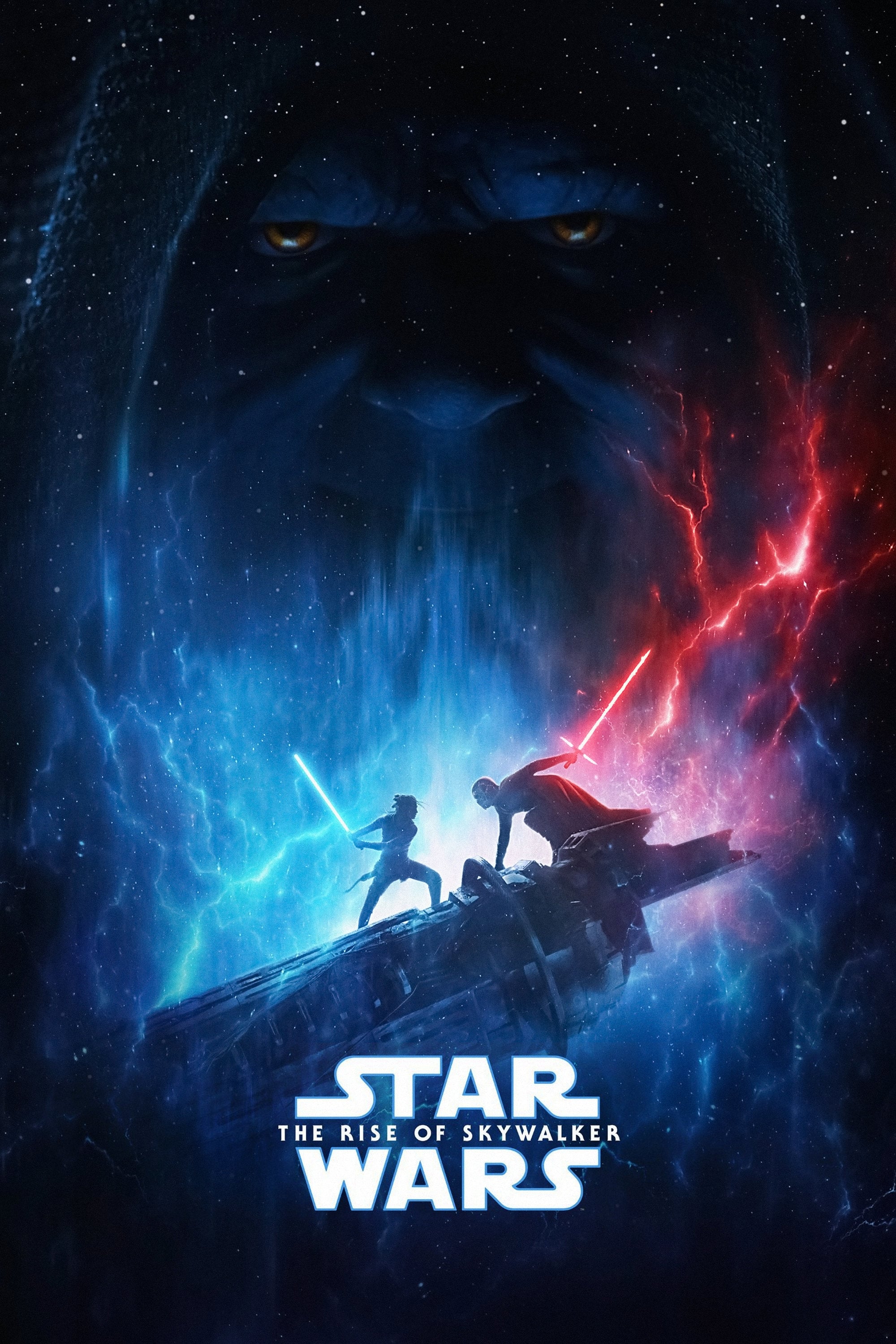
Once again, the heart of the story is Rey (Daisy Ridley), the former scavenger turned student of the force and Jedi trainee with Luke Skywalker (Mark Hamill), and her friends and colleagues, former Storm Trooper Finn (John Boyega) and hotshot, hothead pilot Poe Dameron (Oscar Isaac). Let’s take a moment to honor their superb performances, which have given so much to the series. In the midst of all of the action and hardware and locations and just-in-time rescues, all three of them have created vital, vibrant characters who give us a reason to care about all of the action. We also get to see the characters from Episode IV, including Carrie Fisher as Princess (now General) Leia, Hamill as Skywalker, Harrison Ford as Han Solo, and Billy Dee Williams as Lando Calrissian, along with droids C-3PO and R2D2 and the Wookiee, Chewbacca. And the conflicted nemesis Kylo Ren (Adam Driver) is back, along with General Hux (Domhnall Gleeson). There’s a brief surprise appearance that had people in the theater cheering, and a return to an iconic location.
So, much is familiar. At the end of “The Last Jedi” the rebel forces were almost entirely wiped out, with no response to their distress signals. And the bad guys who are ruthless fascists, want to take over that galaxy far, far, away. You might think there are only so many times someone can say “If this mission fails, it’s all been for nothing,” but I admit freely, for me, at least a couple more.
Remember how “New Hope” kicked off by sending a secret spy message to Obi-Wan Kenobi? Well, here we are again, with a message from a mole — perhaps we might call him/her a whistleblower — inside the bad guy organization. I do not want to give too much away by saying what they are calling themselves now or who is behind it. I will only say that the message shows they are planning some very bad stuff and the Death Star looks like a slingshot by comparison with what they have now.
So It is time to get Rey back from Luke’s remote island retreat, something between a spa and boot camp. One question is whether Kylo Ren will be on board. He is literally offered “everything” if he will just prove himself by killing Rey, and the glints of red reflecting in his eyes suggest that rage is still his primary motivation. His connection to Rey, including a sort of psychic Skype communication they have with each other across the galaxy, could make him waver. Or, it could make her waver. He offers her the same “everything” he is tempted by.
This is not about the set-up, though; it is about the adventure, and J.J. Abrams takes us from one planet to another, with chases, escapes, explosions, and new characters. I was disappointed that this movie did not pick up on some of the most intriguing elements of “The Last Jedi” and even more disappointed that it countermanded one I considered among the most significant, SPOILER ALERTS tilting some of the series’ most fundamental existential premises away from individual determination toward a less appealing notion of destiny pre-ordained. I did not care for some new Force powers, which also undermine the original trilogy’s premises, or for some of the developments of the last half hour. I did enjoy some new characters, including one from Poe’s past played by Keri Russell and a rebel alliance-friendly group who ride horse-like creatures and even use a bow and arrow, a nice break from all the laser beams and spaceships. There’s a kind of nutty detour to a sort of Ren Faire that was a hoot. One of my favorite characters continues to be the Millennium Falcon (pronounced both FALL-kin and FAAL-kin here!), and I loved every minute it was on screen. I got a kick out of the callbacks, including an “I’ve got a bad feeling about this.”
Abrams was given thousands of threads to tie together, and if what he wove is uneven it is heartfelt and mostly a lot of fun to watch. That is all the force I need.
Parents should know that this film includes extended sci-fi/action peril and violence with some graphic and disturbing images, sad deaths, and characters who are injured and killed.
Family discussion: How did what she learned change Rey’s ideas about herself? Why did Leia pick Poe?
If you like this, try: the other “Star Wars” films and the work of Joseph Campbell, who was one of George Lucas’ inspirations in creation the series