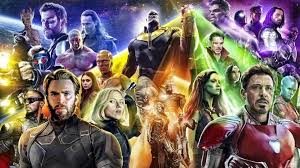
Feige, 45, and Marvel Studios have taught a moviegoing audience who may have never even thought about picking up and flipping through a comic book before, how to absorb a narrative over the course of differentiating stories, characters, and uniquely made worlds. With movies plotted until 2022, the studio shows no sign of slowing down, despite their reported break over the next year following “Spider-Man: Far From Home.” It is the most widely regarded and well-known story of the 21st century, to the point that a movie like “Avengers: Endgame” has a more than fair chance at breaking the opening weekend box office record that the “Avengers” film before it set almost a year prior — — which was $257.6 million mind you.
Rated PG-13 for sequences of sci-fi violence and action, and brief suggestive language
Profanity:
Some brief language
Alcohol/ Drugs:
None
Violence/ Scariness:
Extended fantasy/superhero violence and peril, characters injured and killed, some disturbing images
Diversity Issues:
None
Date Released to Theaters:
March 8, 2019
Date Released to DVD:
May 28, 2019
Copyright 2019 DisneyI often say that superhero movies depend on the quality of the villain. A small amendment — sometimes it depends on a cat. And the cat in this movie, named Goose for reasons we will discuss later, is a delight in this very entertaining Marvel film, making way for the upcoming “Avengers: Endgame” and for the first time giving a female superhero a starring role.
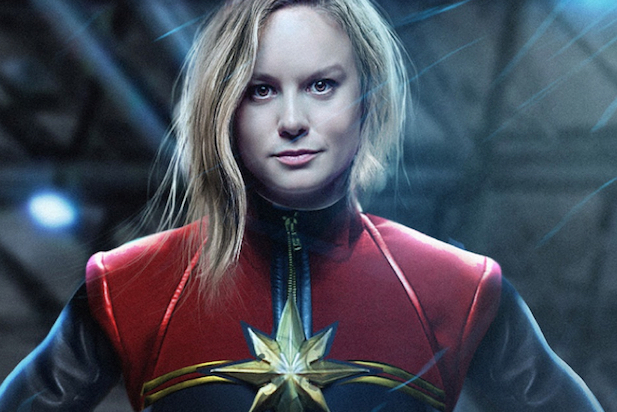
Oscar-winner Brie Larson plays Captain Marvel, though that is not her title in the film. She does not have a rank or a superhero name. In fact, she is not sure what her actual name is. The Captain Marvel character has appeared in different forms in comic books over the years, mostly male. So even the most deeply committed fanboys and fangirls may not come to this film with a detailed backstory in mind, though fans of the comics will have some quibbles with this adaptation anyway. We meet this character as she meets herself. At first, she is known as Vers, a member of an elite fighting force of a race called the Kree, with a sensei/mentor/commanding officer named Yon-Rogg (Jude Law), who trades avuncular quips and punches with her in training sessions.
The Kree are lead by a God-like entity known as the Supreme Intelligence, who is to complex to be comprehended in its true form. So it appears to each person (if I can call the Kree “persons” since they appear human) in whatever form is most meaningful to him or her. To Vers, the Supreme Intelligence appears as Annette Bening in a leather jacket, as it might to any of us, when you come to think of it.
The mortal enemies of the Kree are the Skrull, a lizard-like race with the ability to shape-shift so that they are indistinguishable from any living being, down to the DNA. Their leader is played by Ben Mendelsohn, for once using his real-life Aussie accent, a great choice for a character who is not the usual super-villain. Speaking of which, the usual super-villain, Ronan (Lee Pace) does make an appearance.
When the Kree are ambushed by the Skrull, Vers escapes to another planet, which turns out to be Earth in 1995. Her rocket crashes into a Blockbuster video store, which makes sense because there was one on just about every corner back then.
And you know who was also around back then? A young Nick Fury and Agent Colson played by digitally airbrushed Samuel L. Jackson and Clark Gregg. Fury has a full head of hair and two working eyes. He does not believe that the young woman described by a witness as “dressed for laser tag” is from another planet. What she is wearing is her Kree military jumpsuit, until she lifts a Nine Inch Nails t-shirt and some ripped jeans from a mannequin.
Soon Vers and Fury (he says even his mother calls him “Fury”) are on the road, trying to get the whatsit to keep it away from the whosit (avoiding spoilers here), picking up Goose the cat along the way, as Vers begins to remember the life she once had on Earth, a military pilot named Carol Danvers, with a mentor who turns out to be…a scientist/engineer played by Annette Bening. Carol also had a difficult childhood (played as a young girl by the gifted Mckenna Grace) and a devoted friend, a single mother who was also a pilot (Lashana Lynch, both tough and warm-hearted as Maria Rambeau).
Carol’s name-tag broke in the accident that wiped out her memory. The Kree only saw the half that read “Vers,” which they used as her new name, because apparently the Kree can read the English language alphabet, but that’s okay because they can also breathe our air and look like humans, so just go with it. When she begins to literally put the pieces together, she begins to tap into her real power, not just the ability to shoot super-powerful photon beams out of her fists, but her determination, courage, and integrity.
Carol and Maria have a real need for speed “Top Gun” need-for-speed vibe, which explains the cat’s name, a tribute to the Anthony Edwards character in the film. And Carol’s grunge look and riot grrrl outlook fit in well with the 90’s references in the film, the songs on the soundtrack, of course, but also the technology that feels like it is from the era of the Flintstones, like dial-up modems, the Alta Vista search engine, and pagers.
Larson is fine, especially in her easy banter with Jackson, but the character is a bit bland. In one of the movie’s climactic moments, the question of exactly what her powers are and who controls them is fluffed in a way that removes some of the dramatic tension. But the movie has a couple of clever twists that keeps it involving, with some pointed but never pushy references to refugees and how we learn who to trust as we learn who we are. Props to Marvel, though, for not giving us a love story, as it would just be a distraction. Plus, we get to discover why the Fury of our era wears an eye-patch and Jackson gives one of his most natural and charming performances ever, making Goose a close second as the film’s most appealing character.
NOTE: Stay all the way to the end of the credits for two extra scenes.
Translation: Extended comic book/fantasy action, peril and violence, characters injured and killed, some disturbing images, chases, crashes, brief sexual reference, reference to unhappy childhood, betrayal
Family discussion: What would Supreme Intelligence look like to you? How did Carol decide who to trust?
If you like this try: the Avengers movies, including “Guardians of the Galaxy” and “Captain America: Winter Soldier”
As we see in movies like “Get Out,” “28 Days Later,” and “Dawn of the Dead,” horror can be more than scares and carnage. It can reflect and challenge our assumptions. Two new articles provide some fascinating commentary on these themes.
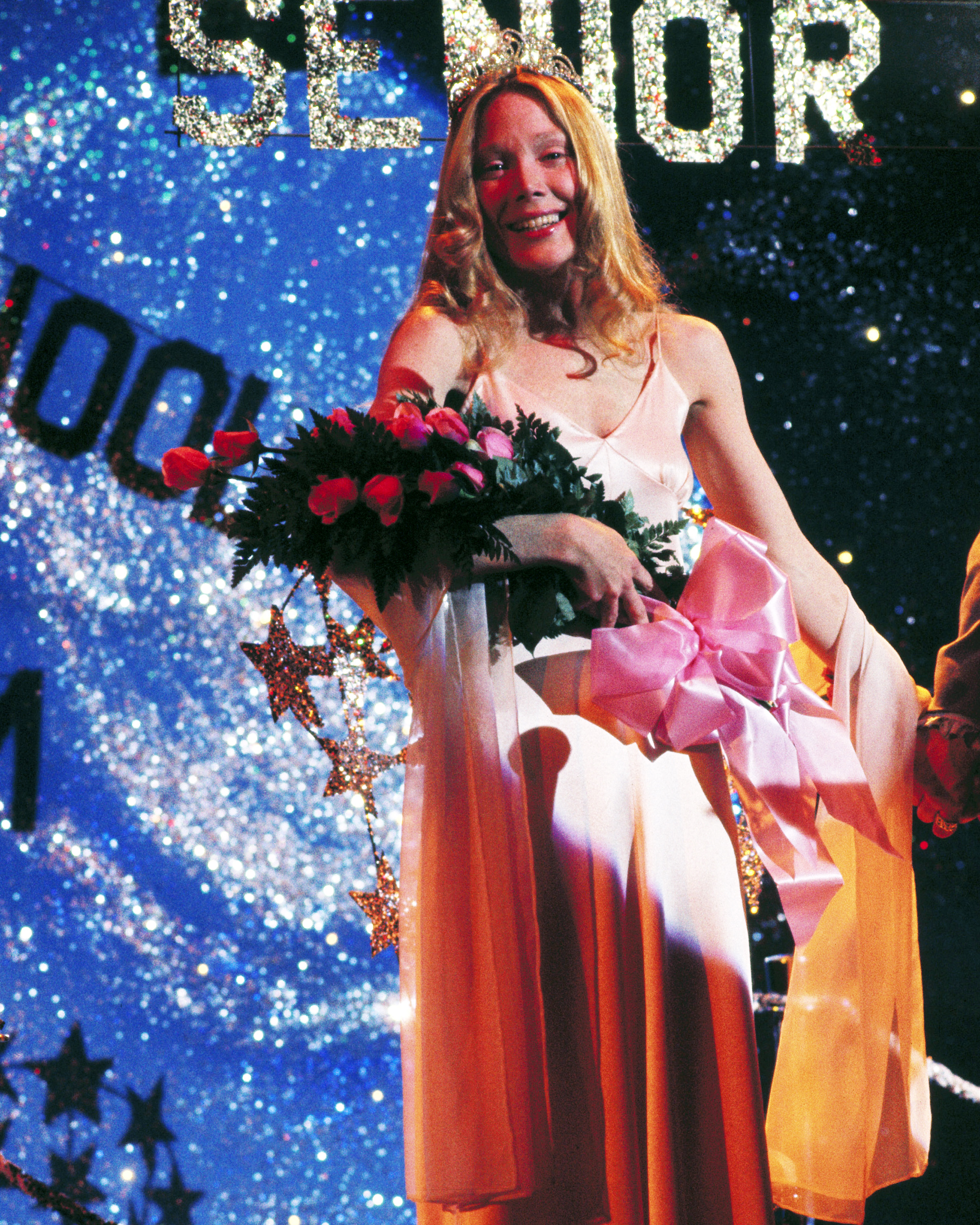
Copyright 1976 Red Bank FilmsMary Beth McAndrews writes on Reel Honey about “reclaiming female exploitation” in horror. “Recently, female directors have been working to reclaim this exploitation by appropriating these tropes to create empowering horror narratives. These films are still violent, but they do not solely depend on the suffering and abjection of their female characters….These directors and writers are just a few of the women in horror working to change the trajectory of the horror narrative and how we view the female body on-screen. Yes, horror is a genre built on violence and gore. But these women are re-evaluating the use of that exploitative violence into something thoughtful, empowering, and equally gory. The monsters they construct are not so fantastical and the scenarios they portray are much more real, giving their violence more meaning and purpose. It is not just about reveling in women’s bodies in pain; it is about understanding their pain.”
Copyright Universal 2017And on Medium, Marcus Benjamin writes about a new documentary: “Horror Noire: A History Of Black Horror’ Makes The Case For Empathy In A Scary World.” Traditionally, he says, “Outside of dying, tending to the the main character’s need was our number one function. This was all done while doing a disservice to our own lives, which we may or may not have had on screen because no one cared enough to give them one. Or in the case of Rachel True’s character from The Craft, someone decided to cut out portions of the film altogether that explored her family life and other struggles….When you’re not surrounded by people of races other than your own, you don’t develop the empathy gene for them. How can you begin to comprehend how a black person feels about blackface if you don’t have any black people in your circle to tell you? Or if you’ve didn’t grow up with any black friends? Or if you grew up in a racist city or town? Despite all your efforts to learn, you’ll likely have a cultural blindspot or two. Similarly, when the history of cinema is filled with blackface or monsters and gigantic apes as stand-ins for black people, that means entire generations grew up believing black people were always lesser.”
Jeremy Fassler Ranks the Oscar-Winning Animated Shorts
Posted on February 25, 2019 at 3:24 pm
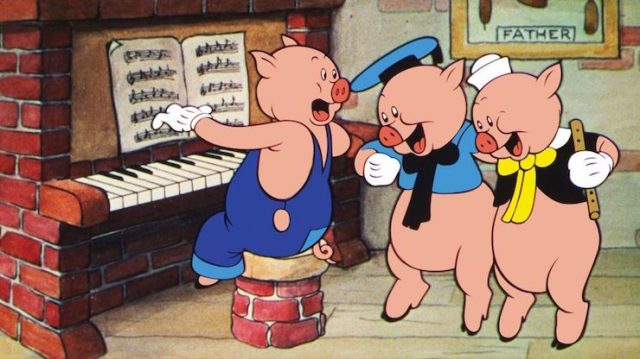
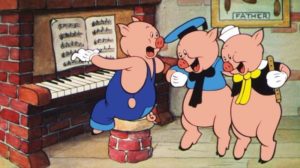
Copyright Disney 1933It was a delight to read Jeremy Fassler’s ranking of all of the Oscar-winning animated shorts for New York Magazine’s Vulture. From Disney’s “Three Little Pigs” (which introduced the song “Who’s Afraid of the Big Bad Wolf?”) at #12 to the Hubleys’ “Moonbird” (#30), Herb Alpert songs (#59), and “The Hole” (#7) (John Hubley also worked on #4, “Gerald McBoing-Boing”) and Nick Parks’ “A Close Shave” (#43) and “The Wrong Trousers” (#1), from powerhouses like Tom and Jerry and Disney to one-offs like the Polish director who ended up in jail with his Oscar after he misplaced his ticket and got into an altercation with the security guard who would not let him back into the theater, it is an entertaining and insightful look at some of the greatest animated talents of all time.